

Occupational Therapy Students Apply Lessons Learned for OT Leisure Wellness Group
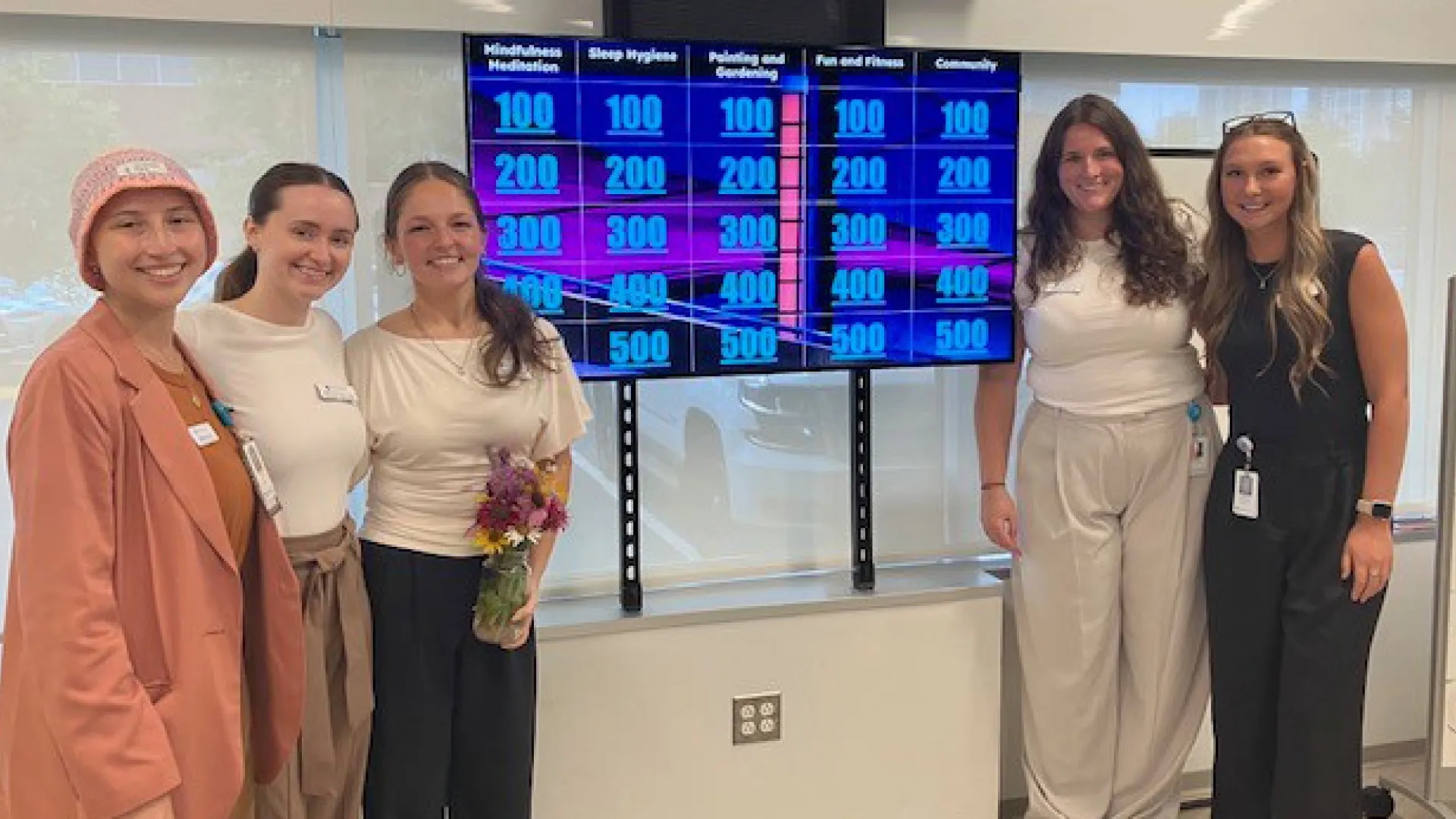


Recovering from neurological conditions such as stroke, brain injury, spinal cord injury, or Parkinson’s disease can be an isolating experience. Maintaining an active and socially connected lifestyle is often vital for overall well-being. This summer, occupational therapy students at the MGH Institute of Health Professions worked on addressing this need through an eight-week OT Leisure Wellness Group for clients.
Offered through the Tabor/Connor Family Occupational Therapy Center for Learning, Participation, and Rehabilitation (CLiPR), the program provided clients with opportunities to engage in meaningful activities focusing on physical wellness, mental health, and social connection. The eight-week program include 14 clients split into groups that met on Tuesdays or Wednesdays. Each session was facilitated by rotating teams of four to five OTD students, ensuring all 42 second-year OTD students participated over the summer.
For second-year OT students, it served as valuable hands-on experience aligning with their mental health coursework. The students developed activities to foster client engagement, planning presentations and games to help with social connection, mindfulness and meditation sessions, fun and fitness exercises and discussion on things like sleep hygiene.
“The topics are similar each year, but the activities vary depending on the students who create them,” said Pauline Fiorello, a clinical instructor in the CLiPR. “They use Coles’ Seven Steps group model from their mental health course to create the activities. They are so creative and they just run with it. I review their plans and give them feedback to make sure the message is as clear as possible for the participants.”
To encourage participation, clients were invited to bring an icebreaker, a joke or riddle, and a good news story each week, promoting active involvement and conversation. Following student presentations, participants engaged in related activities and then took part in debrief sessions to share feedback, ask questions, and reflect on their experiences.
In one of the final sessions, students Shannon Conte, Madeleine Pouw, Elizabeth Stenson, Isabel Pupo Wiss, and Hanna Overholt designed a Jeopardy-style game to teach clients positive and negative coping skills for stress management. The game integrated topics from throughout the program, allowing clients to compete in teams and apply what they had learned, while celebrating their progress.
“Running the OT leisure wellness group was a highlight of my time so far at the IHP,” said Pupo Wiss. “Our team was tasked with leading the final group of the summer, with the goal of bringing together many topics explored throughout previous weeks, including physical activity, planting and gardening, sleep hygiene, positive coping skills, and more. Developing and leading this session gave us the opportunity to apply our clinical reasoning while also facilitating meaningful social connection among group members.”
Beyond developing clinical skills, the experience gave students insight into occupational therapy’s broader impact—highlighting OT’s role in fostering connection and community for individuals in recovery, often outside traditional rehabilitation settings.
“This was such an amazing experience,” recounted Overholt. “Watching these clients form relationships, apply beneficial knowledge, and help students grow truly showed how groups can make a difference in anyone’s lives."
Ultimately, the program was a success, leaving a lasting impact on many participants. One client expressed her appreciation by offering to donate at the conclusion of the summer groups.
“Hearing participants share that they felt less isolated and more connected to a community was extremely rewarding,” shared Pupo Wiss. “The experience served as an important reminder of the meaningful role leisure can play in promoting well-being.”