Bachelor of Science in Health Sciences designed as bachelor completer program with healthcare focus

For nearly 50 years, the MGH Institute of Health Profession has been known as a graduate school that has sent thousands of healthcare leaders into the workforce to make a difference. Now, undergraduate education is a larger part of the portfolio with the launch of the Bachelor of Science in Health Sciences degree. 

The new degree is designed for learners transferring from a two-year college or comprehensive university, those who began undergraduate work but never finished, and those working at Mass General Brigham who want to advance their career. 

“This Bachelor of Science in Health Sciences completion program is a direct response to the critical need for accessible degree pathways for individuals who have some college but no degree—a barrier that limits career advancement across healthcare and many industries,” said Reamer L. Bushardt, PharmD, PA-C, DFAAPA, professor and provost. “With strong support from Mass General Brigham and other healthcare employer partners, we are proud to offer a flexible, workforce-aligned program that empowers people to complete their education and advance in high-demand health careers.” 

The Bachelor of Science in Health Science (BSHS) is part of the new Department of Health Sciences – to be guided by Dr.  Kim Mace – and is housed under the School of Health and Rehabilitation Sciences

“Some students coming into the BSHS program are preparing for graduate study in fields like PA, nursing, or PT, while others are looking to advance in their current roles or explore new directions within healthcare,” said Mace. “The program has different concentrations intentionally designed to meet students where they are and help them take the next step with confidence. For some, that includes pathways that offer guaranteed admission into a graduate program; for others, it’s about building career readiness or making connections in a new professional setting.”
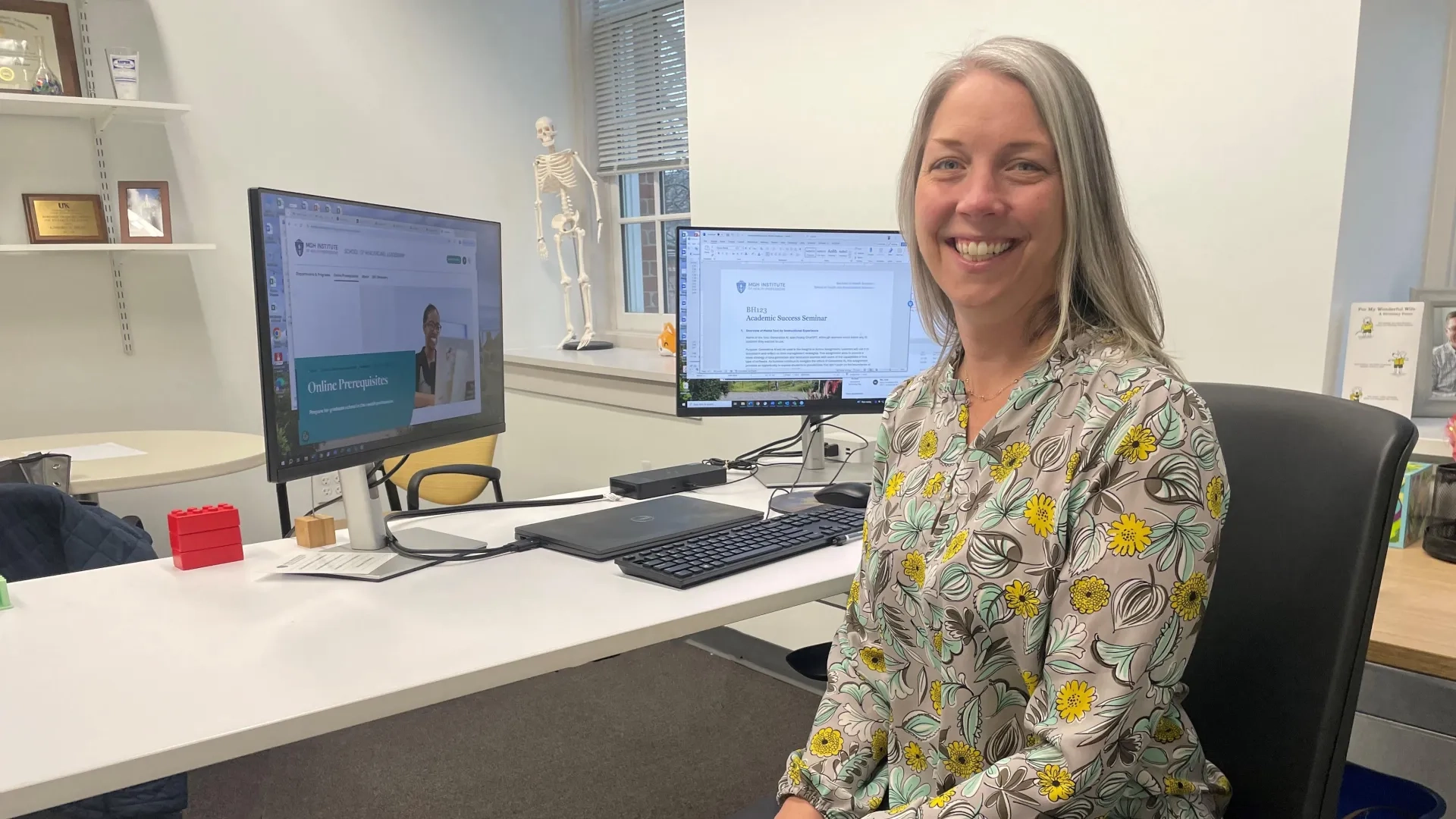
kim mace in front of a computer
Kim Mace is Program Director of the Bachelor of Science in Health Sciences degree completion program, the MGH Institute’s first traditional undergraduate degree.

The MGH Institute has executed several articulation agreements with regional colleges and universities that would steer graduates to the Institute to complete their bachelor’s degree; other articulation agreements are in the works. 

“The Bachelor of Health Sciences is a well-known degree that's a feeder to many of our graduate programs,” said Laura Plummer, dean of the School of Health and Rehabilitation Sciences. “And because it will allow people a pathway from an associate’s degree to a bachelor's degree on to our graduate program, there are many more possibilities for students to get into the health professions and advance their careers.”

First classes will be held in the fall.

“The Health Sciences degree aligns with our mission of building a stronger healthcare workforce- to be able to provide care for a complex society,” said Plummer. “It's very exciting to think that we have these linkages for students, who can explore health professions in high school, continue in a local community college for free, and then come here and earn a bachelor's degree and gain the necessary skills to thrive in a health career.”

The Return on Investment 

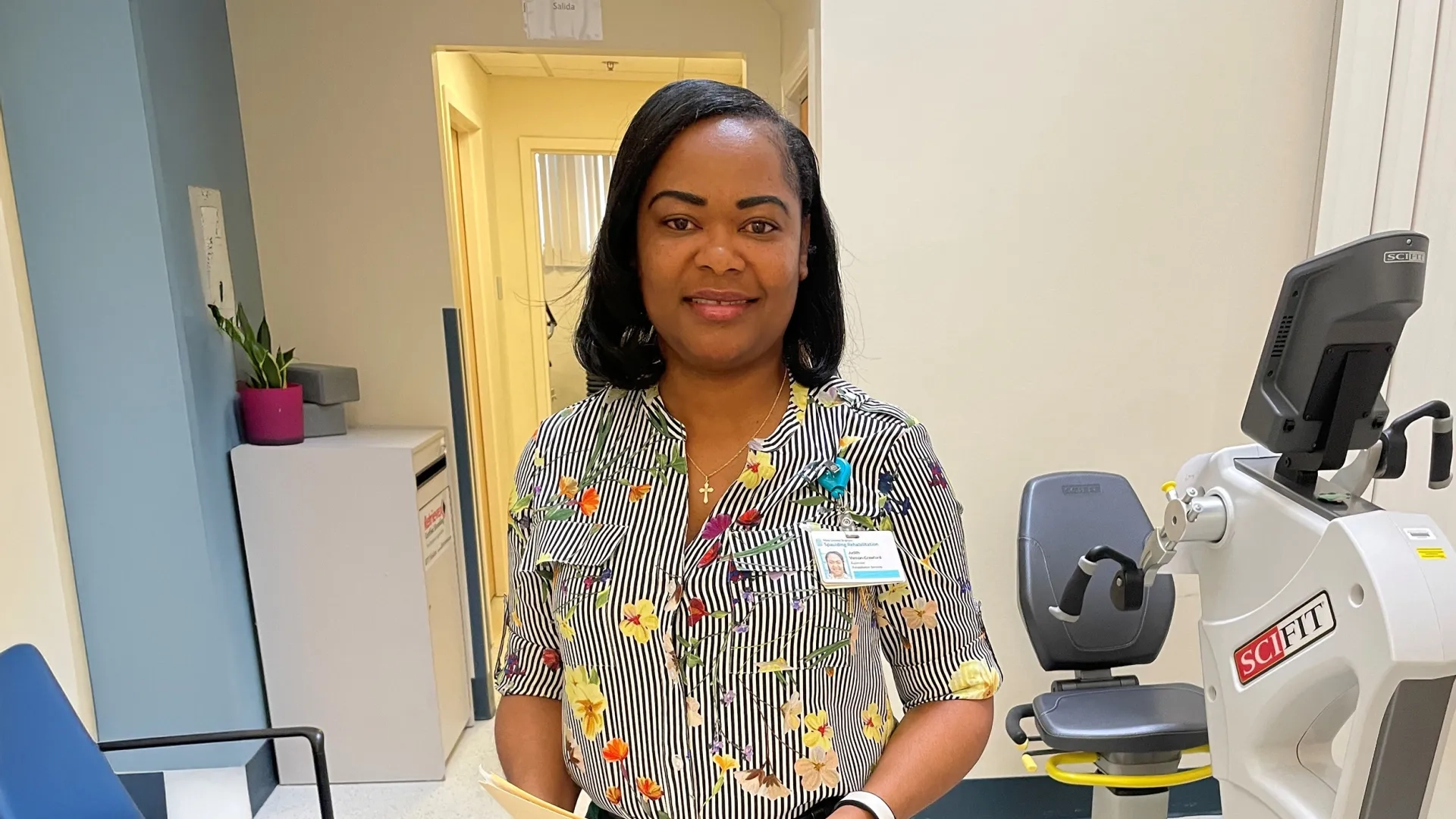
Students and those already in the workforce, which is where Mass General Brigham employees like Judith Vernon-Crawford come in. A 15-year MGB employee, Vernon-Crawford earned her bachelor’s degree while working because she knew there would be a career ceiling without it. 

“I definitely think so,” said Vernon-Crawford, a Jamaican native. “In most cases when a job is posted, it might say bachelor's degree preferred. Having that higher level of education is important. If I didn’t have my bachelor's degree, I don't think I would have been given the opportunities that I've received.”

Vernon-Crawford credits her hard work and bachelor’s degree as key for her career trajectory. Today, she is a support operation supervisor with direct reports working on Spaulding Network endeavors. Previous to this role, she worked at Spaulding North Shore where she supervised 25 patient service representatives who work in the Spaulding outpatient facilities in Lynn, Peabody, Cape Ann, Jewish Community Center, the Y.M.C.A. in Marblehead, and Salem. 

“Here is an opportunity for you to go back and achieve those dreams that seem unattainable,” said Vernon-Crawford. “It's a matter of finding balance, and knowing that if you modify your dreams, you can definitely make things happen. So, for me it was like, ‘Yes, I have a full-time job,’ but when my kids went to bed, I stayed up for a few hours to get my work done.”

The Mass General Brigham Connection 

Mass General Brigham Human Resources and Workforce Development categorized a considerable percentage of its workforce as having some undergraduate credit but not a bachelor’s degree - a barrier to career advancement and social mobility.  The program’s curriculum offers flexibility for working professionals and competencies that MGB has defined as essential for the current and future workforce.

When you add the free tuition for community college in Massachusetts to the Tuition Reduction Incentive Plan that offers a 40% discount to Mass General Brigham employees, the Bachelor of Science in Health Sciences is a financially attractive and practical option. 

“This program is about unlocking additional pathways and creating meaningful opportunities for our employees to grow their careers within our organization,” said Mary Ellen Schopp, Chief Human Resources Officer for Mass General Brigham. “By partnering with the MGH Institute, we’re creating flexible and affordable pathways for career mobility—helping employees advance into high-demand fields like nursing, rehabilitation, and health administration. This initiative is a true investment in our people and in the future strength of our health system.” 

“By shaping transfer pathways, employees can also transfer in-credit earned at other two- and four-year colleges, or take advantage of free community college coursework, to further lower the cost of a bachelor’s degree,” said Bushardt. 

The complex and fast-paced health system that is Mass General Brigham is more than ready for a bachelor completer program like this, one that encourages career mobility and workforce retention. 

Just ask Vernon-Crawford.

“It may be difficult when you start out trying to balance it all, but in the long run it pays off,” reflected Vernon-Crawford. “There is a vast difference in salary of what I made when I began and what I’m making now. Had I not taken advantage of going back to school and getting my bachelor's degree, I don't see how that would have been possible.”