

Improving Simulation through Faculty-Simulated Participant Partnerships
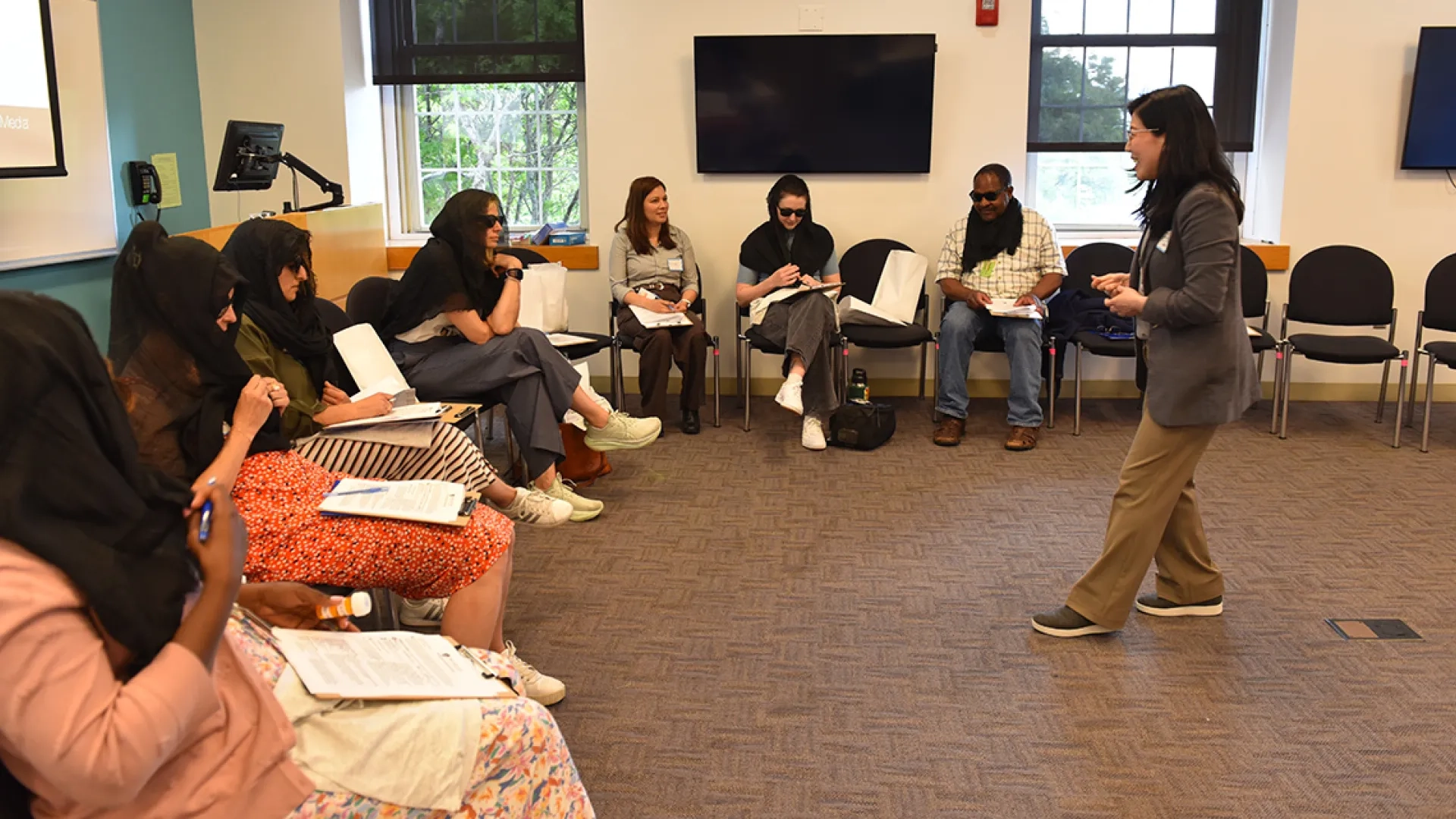


Healthcare simulations with simulated participants (SPs) give MGH Institute students opportunities to practice clinical and professional skills in safe, realistic learning environments.Late last month, faculty members deepened their understanding of how to partner with SPs to create an even richer learning experience for students.
More than 20 faculty members took part in Co-Creating Simulation: Faculty and Simulated Participants as Teaching Partners, a workshop run by faculty and staff from the Institute’s Center for Interprofessional Education and Practice to help faculty to feel more prepared to engage SPs in their students’ simulations.
“In the fall, we conducted a faculty needs assessment and 42% of faculty who responded indicated they would benefit from targeted training to facilitate simulations with SPs,” said Assistant Dean of Interprofessional Practice in the Center for Interprofessional Education and Practice Rachel Pittmann. “Given this response, we developed this faculty development workshop to support our faculty in knowing how best to partner with SPs.”
Faculty members had hands-on experiences at three stations during the faculty development workshop. One station focused on the faculty’s role in defining the essential components of a case using the SP-case development template. That included translating course learning objectives into SP objectives to help SPs understand the expected student competencies and provide important behavioral anchors for consistent role portrayal.
Another station looked at the pre-simulation SP training to help support SPs’ readiness for case portrayal. One hands-on example was asking faculty to take the perspective of an SP, asking them to wear dark sunglasses when learning how to portray someone with a migraine and light-sensitivity. Another was having faculty develop consistency in their portrayal of a specific level of sadness. Both situations enabled faculty to take on the perspective of an SP and gain insights into the strategies that will help the SPs provide a consistent educational experience based on what is written in the case descriptions and is in the training they receive prior to the simulations.
The last station looked at what faculty need to consider in relation to the needs and psychological safety of the SPs. By clearly communicating role details in case documents, SPs can make informed decisions about participating in simulations that may be emotionally or personally challenging to portray, including the decision to decline participation. Faculty also discussed the importance of developing simulation schedules that provide SPs breaks to give the SPs the chance to “de-role” or step away from the emotionally demanding characters they sometimes portray.
This workshop for faculty followed a similar training event for the SPs in the fall.
“These workshops and the recent launch of a simulation and skill lab resources course in D2L aim to support best practices in simulation-based learning, inclusive of faculty and SPs,” explained Pittmann. “When SPs and faculty understand each other’s needs, MGH Institute students benefit from a stronger learning environment.”