

First Leadership in Nursing Education Class Graduates with Plans of Helping Grow Nursing Workforce
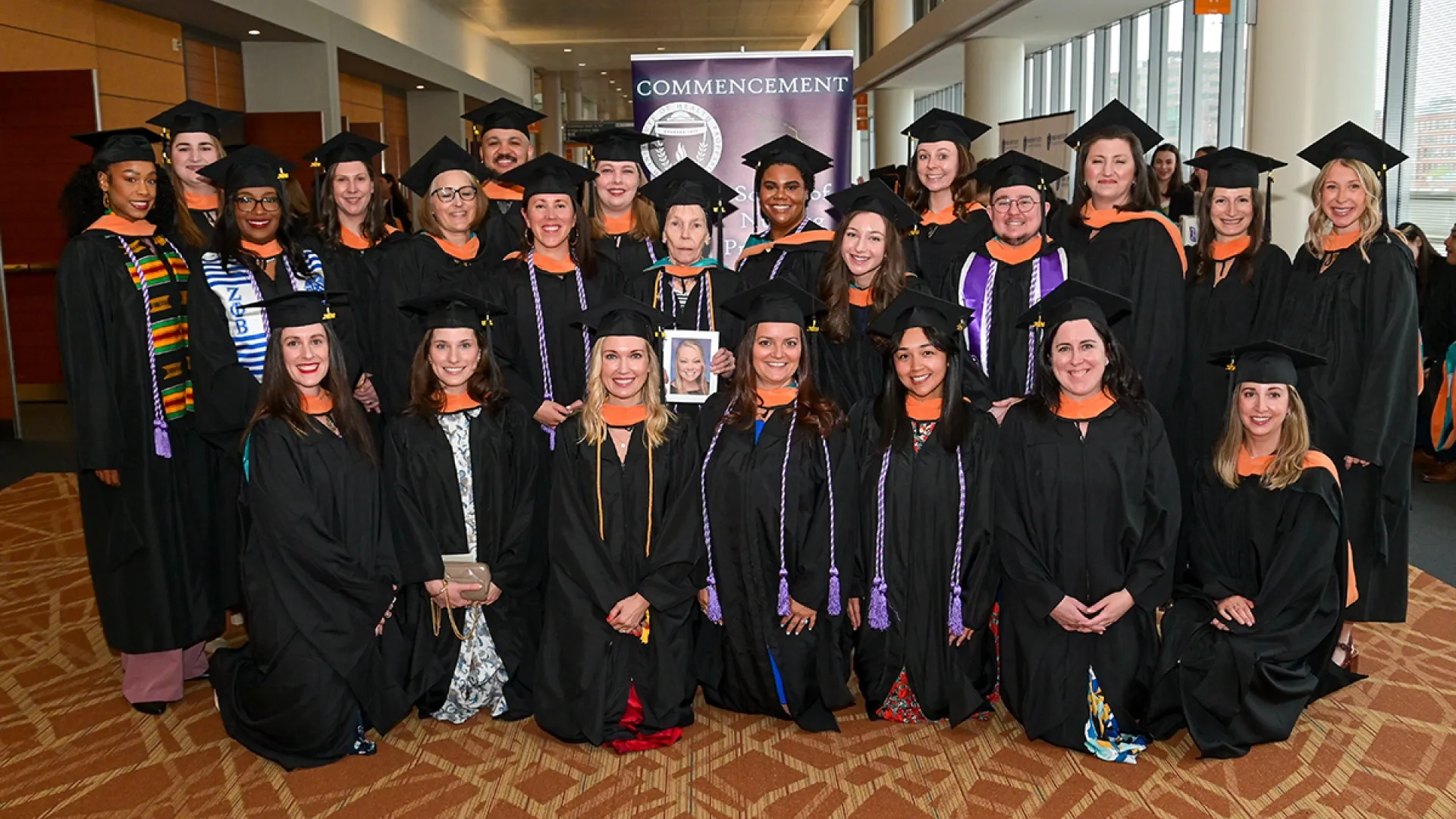


More than two dozen nurses take advantage of Department of Labor grant to fund education
Among the 665 diplomas issued on Saturday were for graduates who will help fill the nursing workforce pipeline, which will see nearly 200,000 unfilled jobs annually due to retirements and workforce exits.
The MGH Institute graduated 28 from the Master of Science in Leadership in Nursing Education — nurses who can now train students to be nurses themselves. There was one graduate last year, but this was the first class to finish the program.
“It's truly an honor,” said graduate Tiffany Vassell, ABSN ‘14. “I am so proud and happy to be a part of the IHP family, and I'm just really honored to have been selected to be a part of this cohort.”
The nurse education program was launched in 2023 after the MGH Institute and Mass General Brigham secured a nearly $6 million Department of Labor grant that was developed to help ease the nursing shortage by training nurse educators.
The Department of Labor grant money is paying the full tuition and expenses of nurses within the MGB healthcare system and other regional academic institutions who enroll in one of the Institute’s three nurse education programs.
“I'm just so grateful about from this experience - it's been so wonderful,” said graduate Elissa LeFleur, a nurse on the inpatient psychiatric floor at Massachusetts General Hospital. “I really felt a passion and a calling towards nursing education. However, having to go back to school while I still had loans from my undergraduate and nursing degrees, it just really wasn't an option. So, when this opportunity arose of tuition being covered, it felt serendipitous.”
“All the different techniques and strategies I've learned in this program have made me such a better teacher to our nursing students at the IHP,” noted Vassell, a clinical instructor at the MGH Institute.
The lack of nurse educators is the invisible problem behind the nursing shortage, causing a workforce bottleneck in the following ways:
- Colleges and universities can’t admit nursing students without enough faculty
- Nursing students cannot participate in clinical rotations unless they are supervised by a clinical instructor who meets the qualifications established by the Massachusetts Board of Registration in Nursing.
- A shortage of nursing school graduates affects how many nurses enter the workforce
“This grant is helping to strengthen pathways into nursing education,” said Rachael Salguero, Principal Investigator of the Department of Labor grant. “We know have a pool of clinical instructors to draw from. Because they have their Master’s, we can say, ‘Let’s get you into teaching.’ It’s a domino effect that will help fill those gaps.”
The grant won’t solve the nursing shortage, but the Institute’s 28 graduates, along with those who will follow over the next two years, can start chipping away at it.
“I feel like nursing has been a calling and a vocation for me, and now nursing education has become part of that calling,” said LeFleur, a 14-year nursing veteran. “I feel so strongly about providing a warm and welcoming sense of belonging to both nurses and nursing students, to create a safe and inclusive space for all to pursue their passions.”
“I’m so excited,” said Vassell, Director of Healthy Baby, Healthy Child program. “Nursing is like a universal language. We're one of the most trusted professions, and we’re able to connect with clients, patients, and community members in a way that most people aren't able to. I feel like this program has helped me to be able to develop that even more, and to be able to foster those connections even more.”