

Two Years Later, Stroke Survivors Keeping Gains Made Thanks to Research Led by MGH Institute’s Kimberley
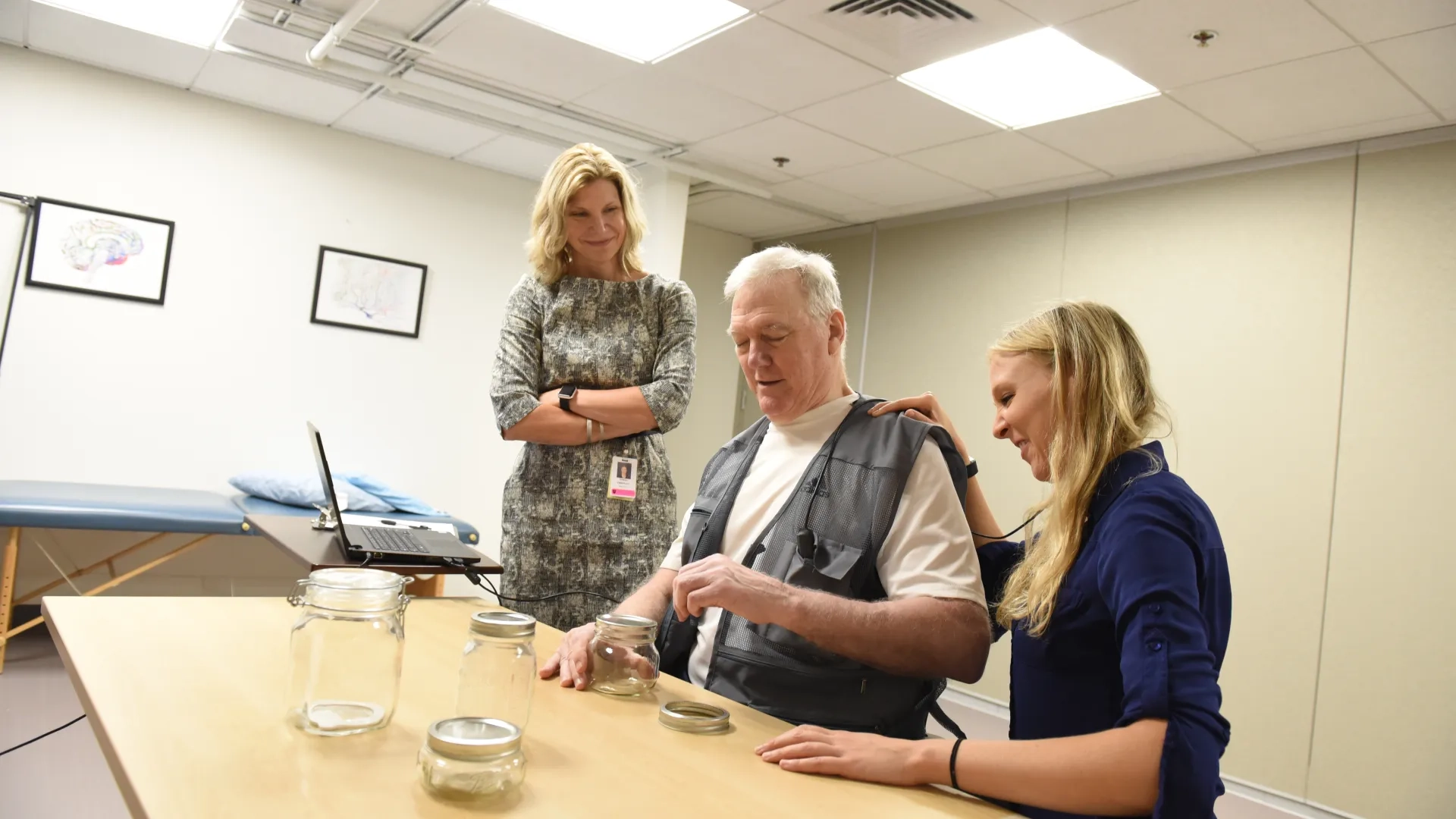


Vagus Nerve Stimulation and rigorous physical therapy prove to be life-changing combination for stroke therapy
More than two years after beginning targeted brain stimulation therapy with vigorous physical therapy, stroke survivors maintain the gains made and have twice as much function as those who do therapy without brain stimulation. Those are the findings of MGH Institute stroke researcher Dr. Teresa Kimberley, which were published this week in the journal Neurology.
The research is noteworthy for two reasons: 1) Kimberley and her team followed the progress of stroke survivors for as long as they did, and 2) these survivors didn’t suffer a decline (common in chronic stroke) but actually improved their functionality - and kept it.
“Vagus nerve stimulation paired with rehabilitation is a novel treatment for people who've had a stroke, regardless of how long ago they had their stroke,” said Kimberly, director of the MGH Institute’s Brain Recovery Lab. “So, this is not just for people who just had this diagnosis, but it's a renewed hope for a long-term benefit from somebody who has had their stroke many years ago.”
The medical device company working with Kimberley heralded the news.
While the study group included participants who suffered ischemic strokes (clots) up to ten years ago, Kimberley says vagus nerve stimulation and physical therapy even helped a survivor who suffered a stroke 29 years ago.
Kimberley says when the Vagus Nerve is stimulated, the brain is firing more than it would on its own; pairing it with physical therapy helps the brain create or strengthen new neural pathways — think of building a bridge to bypass a damaged area.
“It creates stronger connections between neurons,” noted Kimberley. “We think those bridges —- those new connections — are being maintained long term. In other words, the improved connections don’t just get a little bit stronger and then disappear. They get stronger and they keep that connection. An analogy is the bridge just passed its two-year inspection.”
Kimberley began working on pairing Vagus Nerve Stimulation (VNS) with physical therapy more than a decade ago and helped develop the rehabilitation protocol the FDA says was necessary to pair with the Vivistim Paired VNS during rehabilitation therapy, which improves hand motor function. The Vivistim device is placed under the skin in the upper left chest area and an electrode directly stimulates a nerve in the neck.
“Once the person finishes their therapy, they are able to swipe a magnet over the device and do either exercises that the therapist gave them or swipe it just when they're using their hands,” said Kimberley. “So, they swipe it when they're emptying their dishwasher or getting ready in the morning or gardening or whatever it is that they're doing anytime they're using their hands.”
Additionally, study participants say they’re enjoying a better quality of life.
“You have to have benefits that are sustained over a long period of time in order to really start to feel like it has changed your life,” remarked Kimberley. “And that’s what we have seen.”
Going forward, Kimberley hopes to apply her research to hemorrhagic strokes (brain bleeds) and see how well it works with helping stroke survivors with walking.
“There should be no reason why somebody with a hemorrhagic stroke wouldn't also benefit from this,” concluded Kimberley. “Can this be used to also benefit gait in addition to just the arm? There’s no reason that can’t work.”