

Tenth S-IHP’s CAP Class Graduates
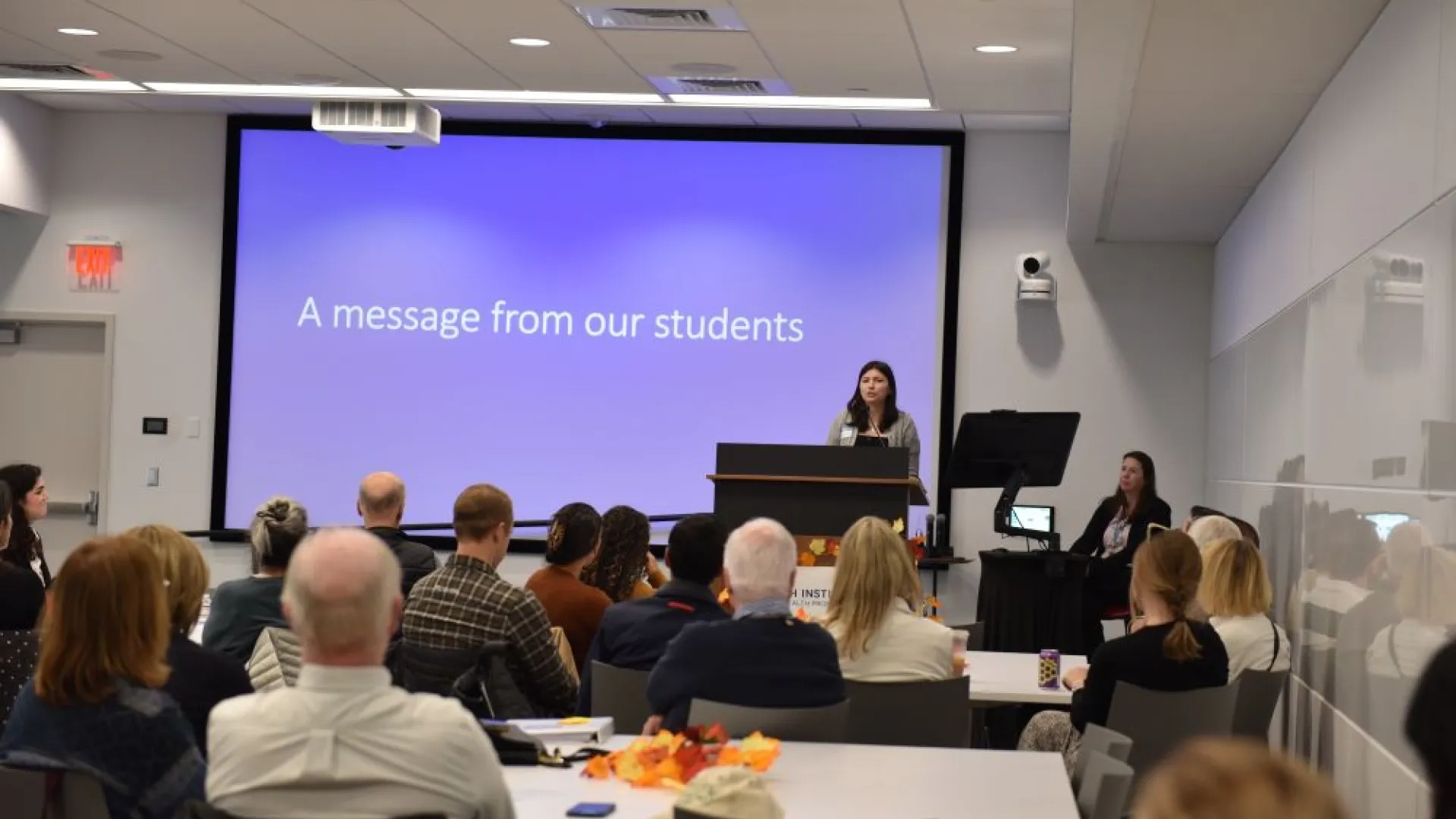


Six weeks of hard work culminated in celebration for the nine clients who took part in the Spaulding-IHP’s Comprehensive Aphasia Program (S-IHP’s CAP) and the occupational therapy and speech language pathology students who worked with them. They came together with family, friends, and members of the MGH Institute and Spaulding communities last Friday in 1CW for a graduation ceremony.
The 10th graduating class in the history of the S-IHP’s CAP program was remembered for the skills they acquired, friendships they started, food they made, miles they peddled, desserts they ate, competitions they had, and the confidence they discovered. The clients worked with Institute students in individual and group sessions with Speech-Language Pathology (SLP) and Occupational Therapy (OT) students every day as well as group sessions with professionals from Spaulding Rehabilitation Hospital on music therapy and adaptive sports.
Second-year students Hannah Indiviglio and Samantha Fitzgerald explained what that work entailed.
“My classmates and I had the opportunity to spend a lot of time with all our wonderful participants,” said Indiviglio. “We had individual two-hour sessions every morning where we worked on things like understanding language, expressing language, reading, and writing. One of our main goals in this program was to target the speech and language skills that were most relevant to each person’s personal goals and the daily activities that they wanted to pursue.”
“Occupational therapy helps people regain and redefine what participation looks like in the activities and roles that make them who they are,” said Fitzgerald to the audience. “Our OT sessions focused on supporting participation across areas of daily life that felt most meaningful to our participants. During our Tech Tuesday groups, we explored ways to use technology to stay connected like video calling, phone accessibility features, and finding resources online. In our wellness groups, we focused on topics like sleep, yoga, mindfulness, nutrition, and stress relief strategies.”
The clients then each gave a presentation where they showcased the skills they had worked on and provided some insight into their personalities and interests while Indiviglio and Fitzgerald spoke on behalf of their classmates about what working with the clients meant to them both professionally and personally.
“I speak for all the speech pathology students in the program when I say that we truly enjoyed our time working with each and every participant,” said Indiviglio. “We learned so much from all of you that we will definitely take into our future practice. All of the participants worked incredibly hard throughout this program, and you should all be so proud of everything that you accomplished.”
“I know I will personally miss our cooking Fridays, where we prepared and shared meals together using adaptive equipment and practicing real-word skills in a supporting and team-based environment,” said Fitzgerald. “We are all so grateful to them for allowing us to practice valuable clinical skills and learn beside them. Your commitment, patience, and resilience have shown us that recovery and growth are ongoing journeys. You kept showing up, trying new things, and supporting each other, even when things were hard. Watching the friendships, encouragements, and laughter shared in our space has been such a privilege. Thank you for letting us be a small part of your journey.”