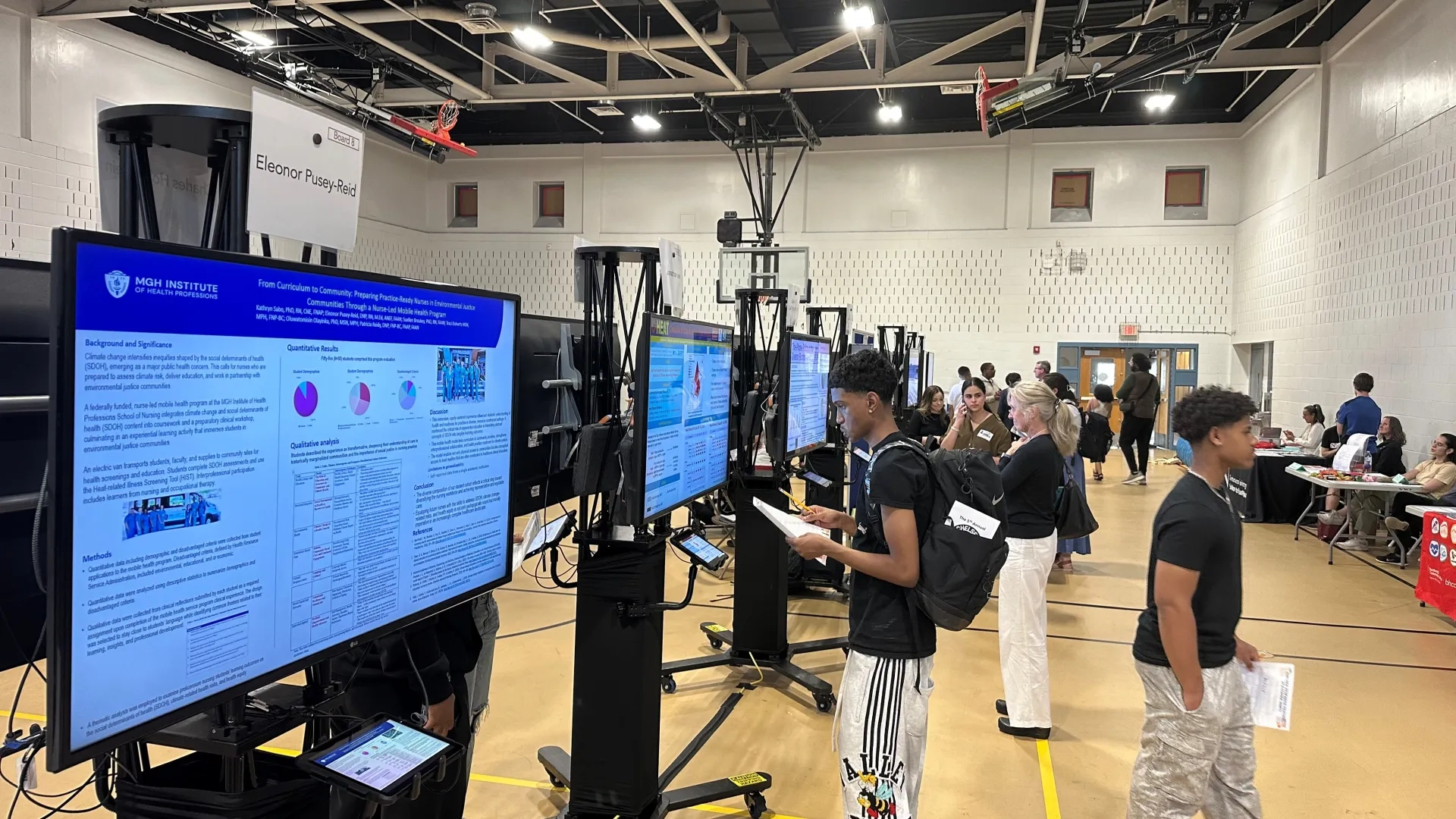
MGH Institute of Health Professions School of Nursing faculty represented the Ruth Sleeper Nursing Center for Clinical Education and Wellness and Community Engagement at Monday's 5th Annual Chelsea Research Festival. 

The festival, held at Chelsea High School and sponsored by Mass General Brigham and the MGH Chelsea Community Research Program, brought together Chelsea students, families, teachers, community organizations, local universities, hospitals, professors, and researchers to share projects focused on Chelsea and community health. The festival included two ePoster sessions, family activities, community group engagement, and opportunities for attendees to learn important health information. 
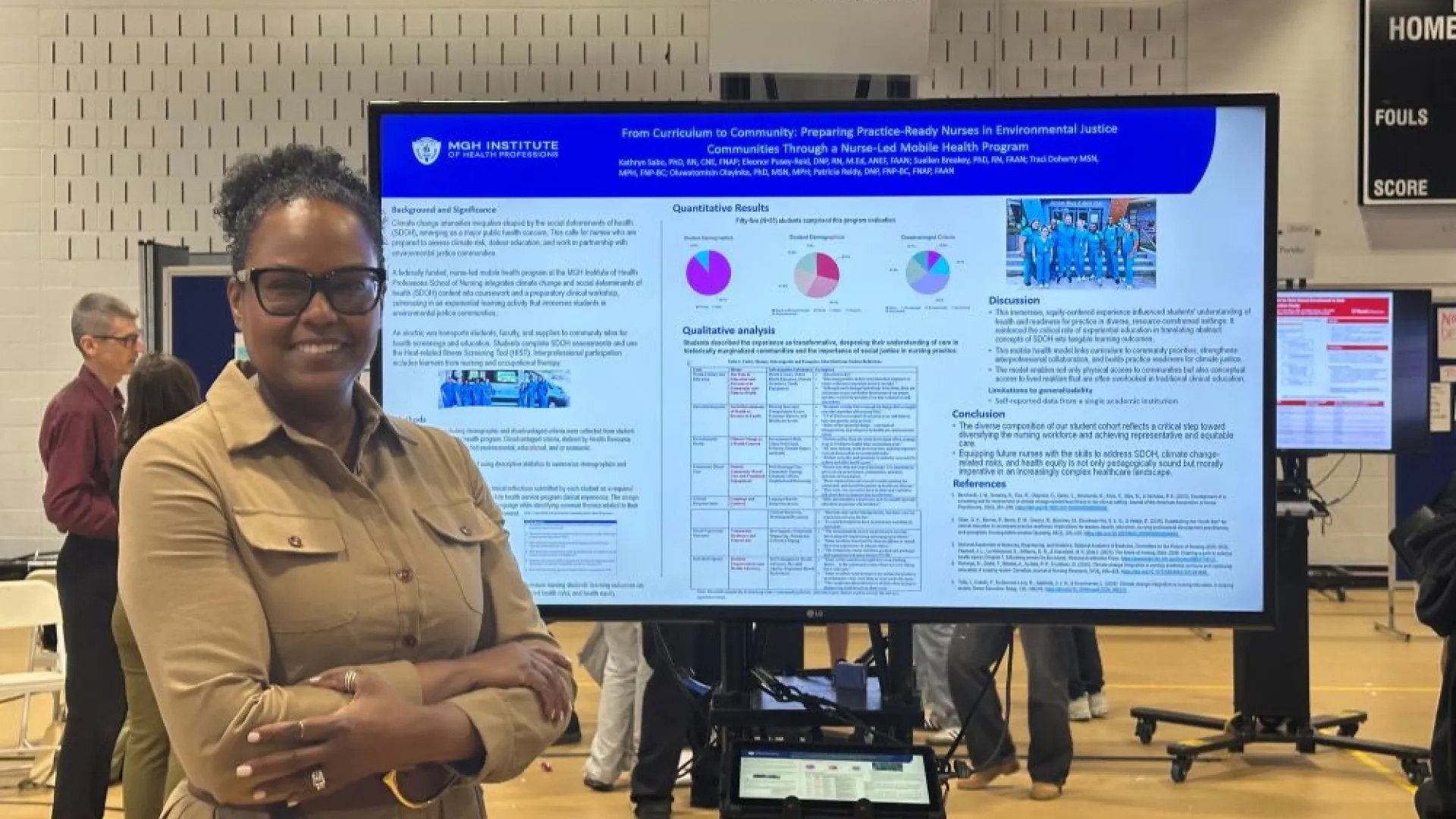
Dr. Kathryn K. Sabo, Director of the Ruth Sleeper Nursing Center for Clinical Education and Wellness and Director of Community Engagement, and Dr. Eleonor Pusey-Reid represented the School of Nursing through their ePoster presentation, “From Curriculum to Community: Preparing Practice-Ready Nurses in Environmental Justice Communities Through a Nurse-Led Mobile Health Program.” Their presentation highlighted the School of Nursing’s federally funded, nurse-led mobile health program, which integrates climate change, social determinants of health, health equity, and experiential learning into nursing education. 

Through the Sleeper Center’s mobile health program, an electric van brings students, faculty, supplies, health screenings, and education into community settings. Students complete social determinants of health assessments and use the Heat-related Illness Screening Tool as part of their preparation for practice in environmental justice communities. The program also supports interprofessional learning, including nursing and occupational therapy learners. 

For Dr. Sabo, the festival reflected the active role of community engagement in nursing education and the Sleeper Center’s commitment to building reciprocal partnerships beyond the classroom.

“Community engagement is central to preparing nurses who understand the connection between health, place, environment, and lived experience,” said Dr. Sabo. “The Chelsea Research Festival gave us a meaningful opportunity to share our mobile health work, engage with students and families, and listen to the community. This is where nursing education becomes visible, practical, and connected to real community priorities.”

The ePoster also shared findings from a program evaluation involving 55 students. Student reflections described the mobile health experience as transformative, deepening their understanding of care in historically marginalized communities and strengthening their commitment to social justice in nursing practice. The work reinforces the role of experiential education in helping students translate concepts such as climate justice, social determinants of health, and health equity into practice. 

Dr. Pusey-Reid noted the impact of seeing Chelsea High School students engage with the presentation and ask questions about nursing, community health, and the conditions affecting their own communities.

“It was impressive to see high school students interested in the role nurses play in community health,” said Dr. Pusey-Reid. “Their curiosity showed how early exposure to research, health equity, and community-based care plants important seeds. It helps young people see that health providers do not only work in hospitals. We also listen, teach, partner, and respond within communities.”

The Chelsea Research Festival offered a strong example of how MGH Institute School of Nursing faculty connect scholarship, education, and service. Through the leadership of Dr. Sabo and the work of the Ruth Sleeper Nursing Center for Clinical Education and Wellness, the School of Nursing continues to advance community-engaged learning, strengthen partnerships, and prepare nurses to address health needs shaped by social and environmental conditions.