On the Road to Independence
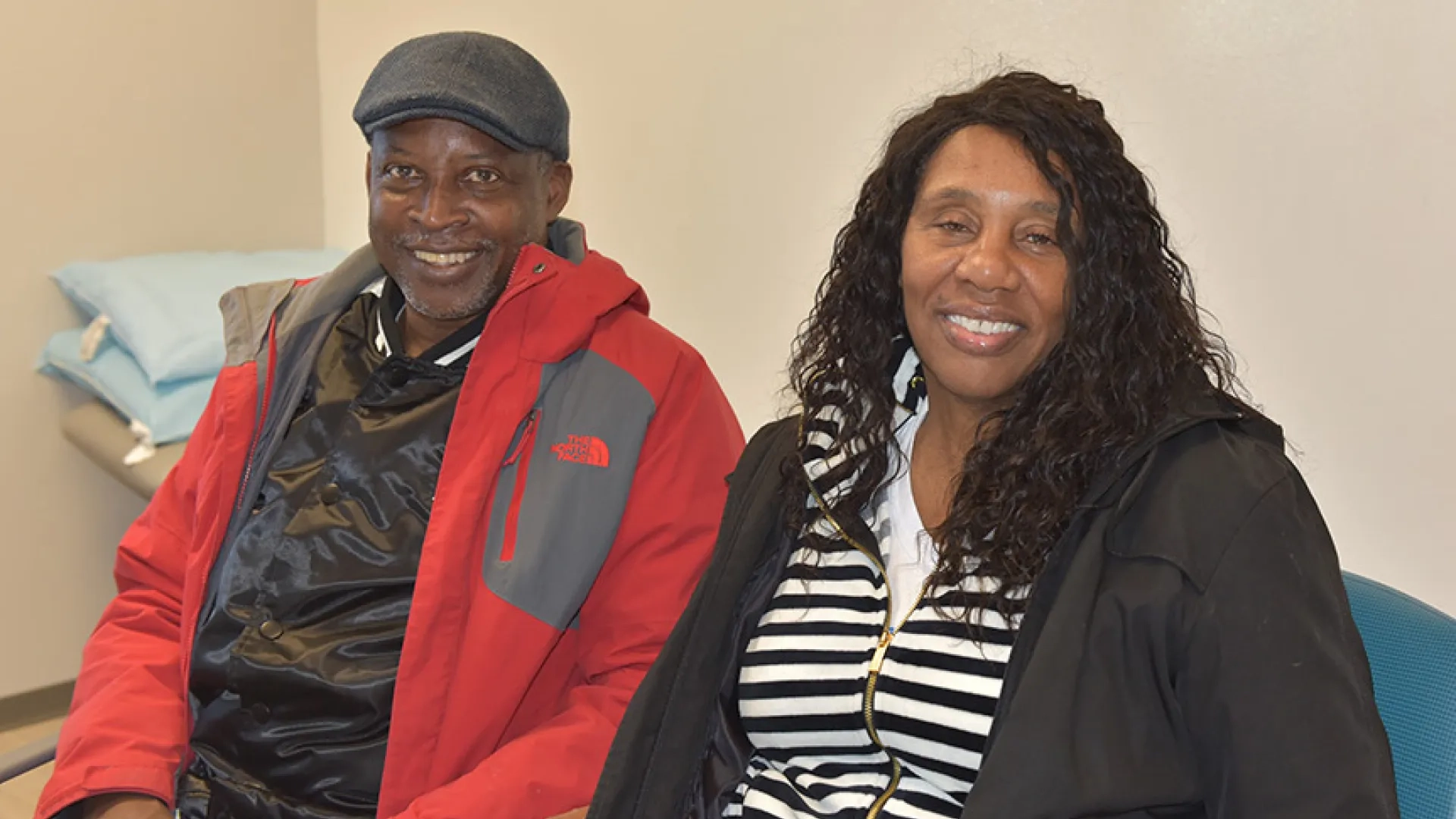


Derrick Williams’ long road back from a stroke went through the MGH Institute
When Derrick and Jodie Williams went to Las Vegas in January of 2023, they didn’t expect the trip to last as long as it did. Or to be as life changing.
They were there to see their daughter, Rojanaye, who had just finished her PhD in engineering, present her research data in a keynote speech at the Institute of Electrical and Electronics Engineers (IEEE) Consumer Communications and Networking Conference (CCNC). Just 72 hours into their stay, Derrick Williams collapsed. At the hospital, he was diagnosed with a stroke resulting from a brain aneurysm and the medical staff was not optimistic about his prognosis.
“We were given the worst possible scenarios,” said Jodie Williams. “[If he survived] they didn’t think he would walk or talk again. They also brought up the possibility of organ donation.”
Fortunately, that route was not needed, but Williams’ recovery began with an extended stay in a Las Vegas hospital, followed by a medical flight back to Boston to inpatient care at Spaulding Rehabilitation Hospital. He then had to be admitted to Massachusetts General Hospital before returning to Spaulding.
By the time Williams was receiving outpatient care at Spaulding, the family had exhausted its insurance, but he still had a long road to recovery.
“I was anxious given the fact that he still needed a lot of rehab,” said Jodie Williams.
One of the care providers at Spaulding told them that another Mass General Brigham entity could help. The MGH Institute of Health Professions offers physical therapy, occupational therapy, speech therapy, and nursing for clients who are no longer eligible to have their rehabilitative care covered by insurance. Under the supervision of licensed faculty clinicians, MGH Institute graduate students provide clinical care through the Dr. Charles A. and Ann Sanders IMPACT Practice Center and the Tedy’s Team Center of Excellence in Stroke Recovery — at no charge.
“Unfortunately, our health care system often does not allow clients to be seen in traditional outpatient settings for as long as we have worked with Derrick,” said Pauline Fiorello, a clinical instructor at the MGH Institute Occupational Therapy Center for Learning, Rehabilitation, and Participation (CLiPR). “Given our wonderful pro bono centers, a client like Derrick has the opportunity to work with our energetic and motivated OT students.”
Students and Faculty Helping and Learning
Williams’ first interaction with the MGH Institute began at the end of 2023 with occupational therapy students helping regain his independence.
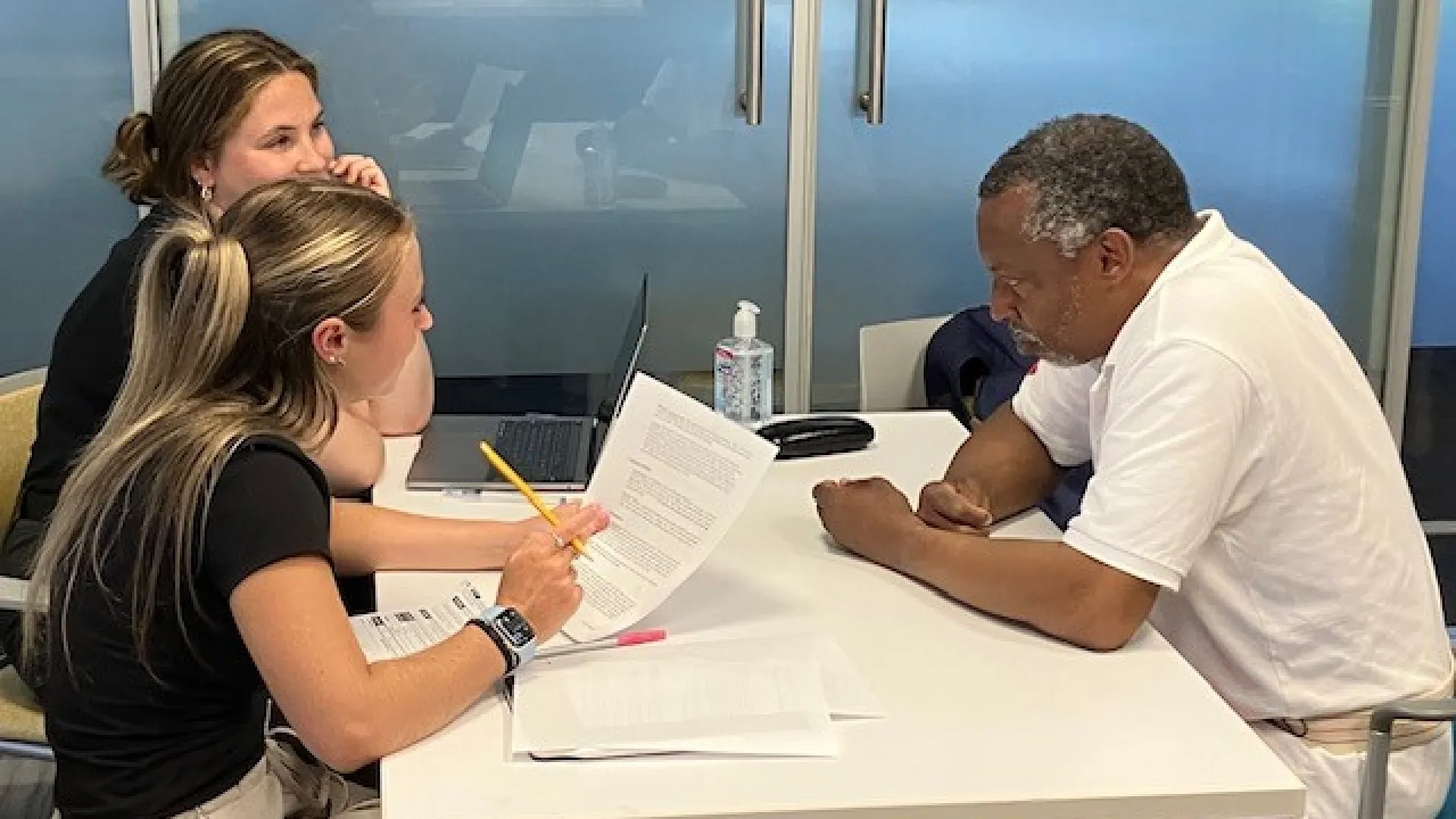
“At the beginning of each semester, the OT students worked with Derrick to help him establish his goals using a self-directed goal assessment called the COPM (Canadian Occupational Performance Measure),” explained Fiorello. “Derrick identified goals such as making a cup of tea, socializing again with friends, and to return to driving. Using task analysis, the students addressed the skills necessary for Derrick to reach these goals.”
Bailey Dietzman was one of those OT students. Williams had worked with other students over a few semesters before beginning to work with Dietzman as a part of one of her OT CLiPR elective courses.
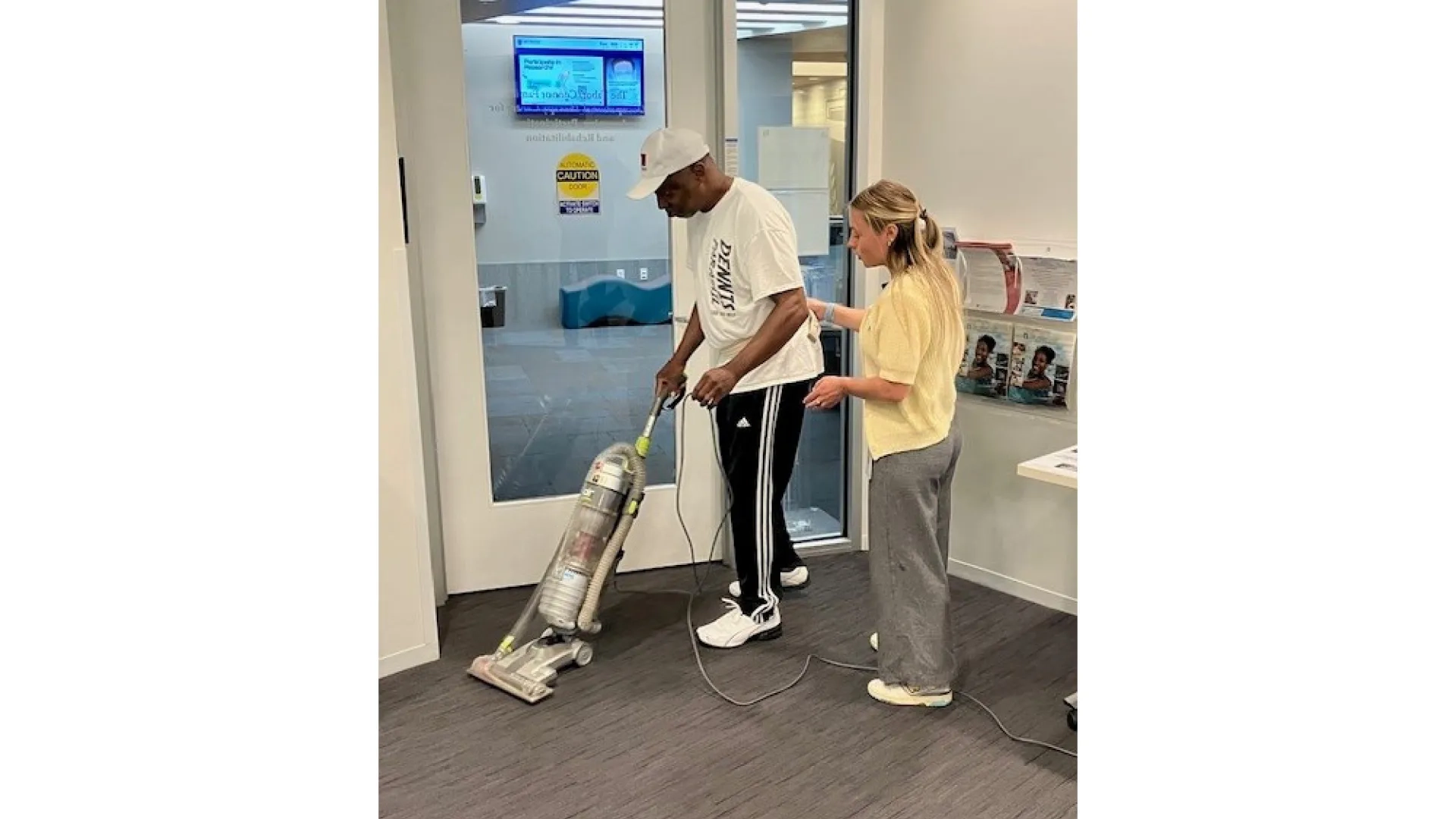
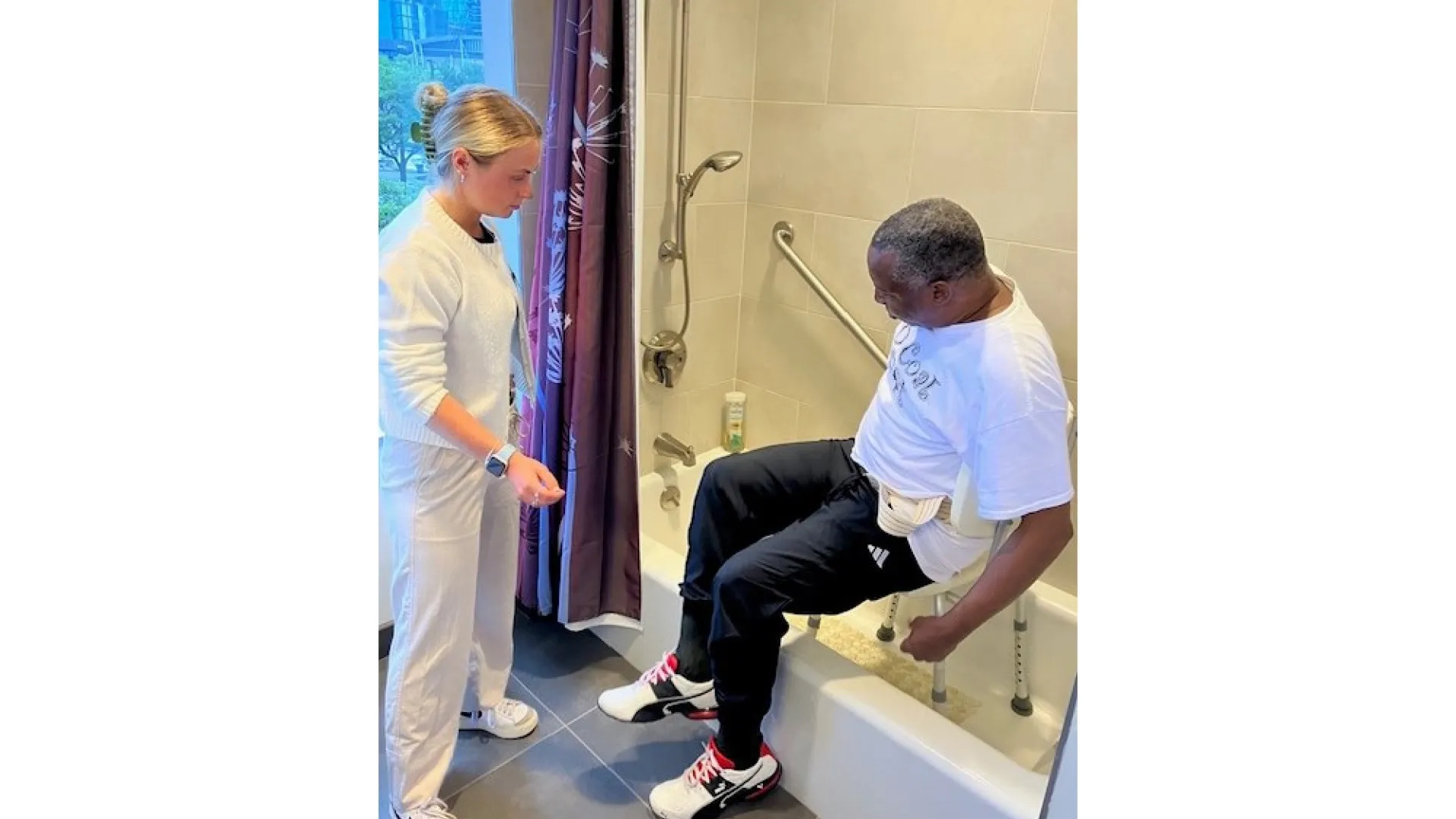
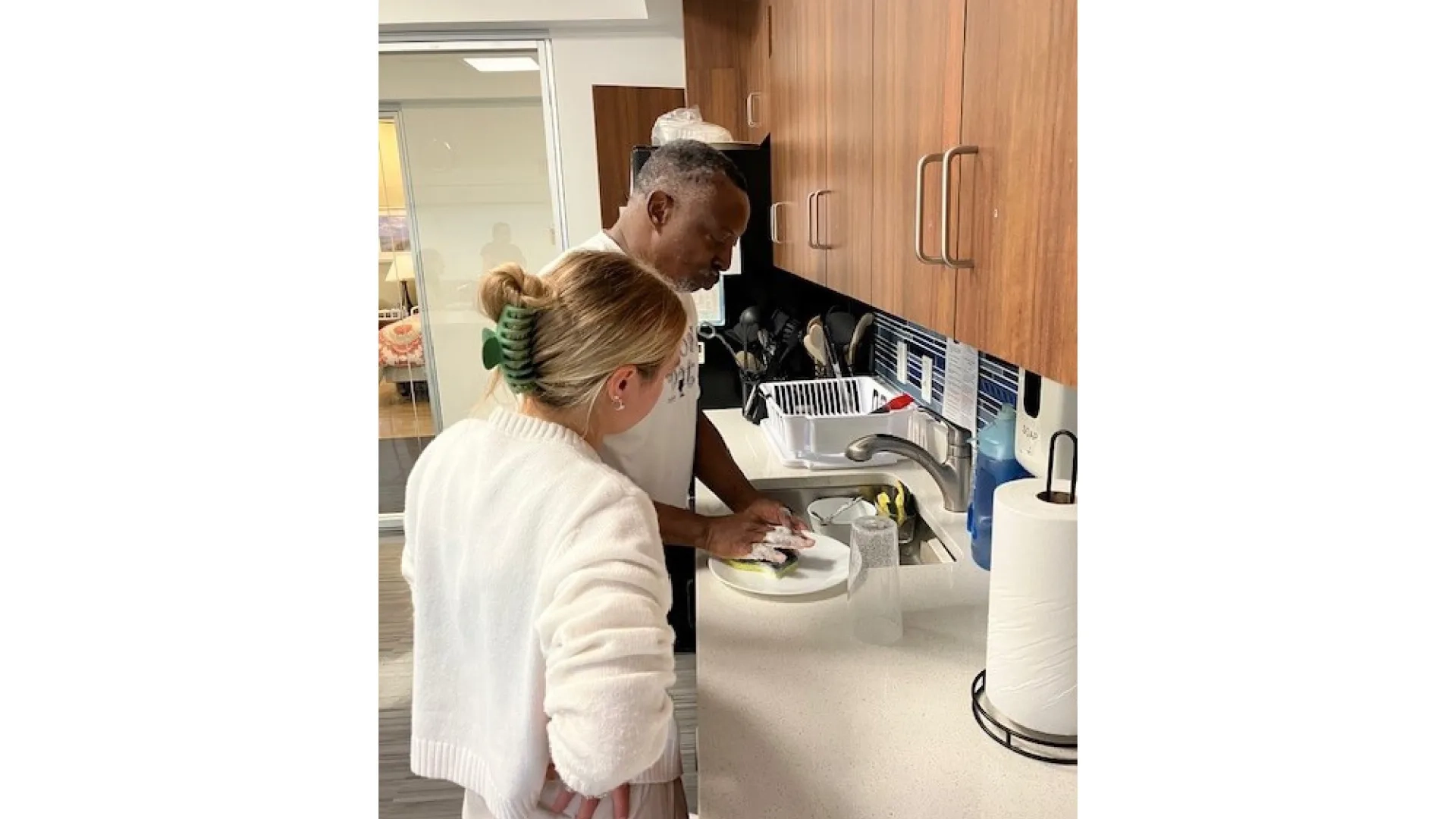
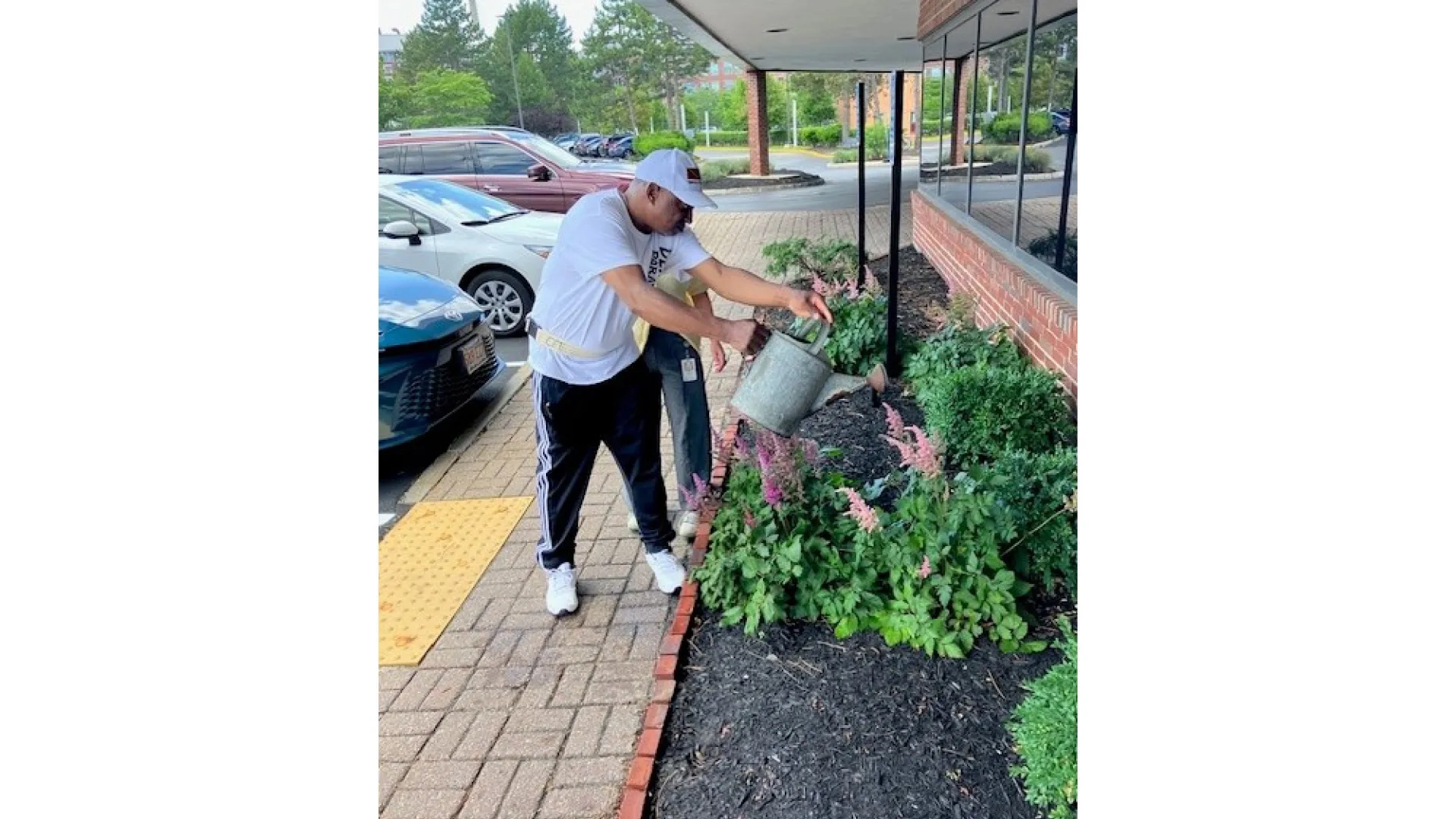
“During our sessions, we focused on a variety of functional and meaningful activities, including making plans with a friend, pouring hot liquids, watering plants, vacuuming and sweeping, managing a blood pressure cuff, and completing bathroom cleaning tasks,” said Dietzman. “These activities targeted independence, safety, and confidence in daily routines following his stroke.”
The next year, Williams continued to do individual occupational therapy sessions and also took part in a wellness group run by OT students. In addition, he started physical therapy and speech therapy. When Williams began, he was using a walker, which he referred to as his Mercedes, and through his physical therapy sessions, was able to progress walking without it.
“The way they encourage people to do these things is great,” explained Derrick Williams. “I am excited to get the challenges they give me. I used to keep fit a long time ago but slowed down as I got older. Then this happened. So, when they bring things to me that I used to do a long time ago, I say I did that before, so I'm not afraid to try anything, like kayaking and biking.”
Through the Tedy’s Team Center of Excellence in Stroke Recovery, Williams received more than clinical care — he became part of a community dedicated to long-term recovery and wellness. In addition to his therapy services, Williams has participated in Tedy’s Team Center activities designed to promote confidence, physical activity, and social connection, including the 2025 Waterfront Wellness Walk. These programs, made possible through philanthropic support from former New England Patriot Tedy Bruschi and his wife Heidi through their organization, Tedy’s Team, extend recovery beyond the clinic walls and help individuals like Williams reengage in meaningful, active lives after stroke.
Williams continues to have PT and speech therapy sessions at the MGH Institute and has defied the predictions of the doctors in Las Vegas by being able to speak, walk, and eat on his own. During his individual and group sessions, Williams worked hard to reach his goals while his wife recognized how much the team of students and faculty contributed to his success.
“We spent an extensive amount of time here,” said Jodie Williams. “I kept highlighting to the instructors that the institution does an amazing job at selecting the students because they were all so empathetic and committed. They were very inspiring to my husband. There was never a day that anyone displayed anything other than wanting to see him succeed.
“There were days I cried in gratitude for the skill set that was taught through OT. I cry when I see Dev from physical therapy,” she continued, referring to Associate Professor Devashish Tiwari. “He was just such an amazing instructor, caretaker, and clinician with the attitude that ‘I will not quit on you, therefore you will not quit on yourself.’”
The time the students spend with clients in both individual and group settings allows them to get to know their personalities. With Williams, that meant he could share his funny side.
“They give me a hard time,” Williams said with a laugh. “They said, ‘When you came here, you had a Mercedes and now you’re walking with nothing.’”
“Derrick is a great individual to have with us during the group exercise classes,” said Jimaldy Baez, DPT ’27. “He brings so much laughter and banter to the group to uplift the energy and keep everyone motivated for the session.”
Besides having someone to kid around with during sessions, the students who worked with Williams received real-life experience.
“Working with clients through the IPC has been an invaluable part of my OT education,” said Dietzman. “These hands-on experiences allow me to apply what I learn in the classroom while building therapeutic relationships and confidence as a future occupational therapy practitioner.
“Derrick was a wonderful first client to work with in my OT education,” Dietzman continued. “He was motivated, patient, and willing to engage in new challenges, which made each session both rewarding and educational. Working with him reinforced the importance of client-centered care and adapting activities to support meaningful participation in everyday life.”
In addition to practicing their skills, students also learned unexpected lessons.
Mayilian Wei, DPT ’27, helped lead a physical therapy exercise class where Williams benefitted from physical activity and social interaction while she gained valuable insights from him.
“Working with Derrick reinforced how a successful group dynamic is built on both listening to others and openly sharing your own perspective,” said Wei.
The Family Connection
The students not only work with real clients, but also their families. Having that support enables clients to continue to work on the skills they learn and can impact their recovery.
“With the support of Jodie to encourage Derrick to carry over what he learned in his OT sessions to performing these tasks at home, Derrick made tremendous gains,” said Fiorello.
Including families also gives them an understanding of how they can handle some of the challenges that may arise.
“My husband couldn't speak at all, and he had issues with swallowing, so he would choke while eating,” recalled Jodie Williams. “In speech therapy, they used tools that we weren't even aware of where they could monitor his throat and recommended bringing in different types of food that they could monitor as he swallowed. It allows him now to sit and eat a meal on his own without him choking or without me having to bang his back every second. And in the event he does choke, they got me involved as his caretaker with a plan: ‘If he's doing this, then this is when you need to do as an intervention. If not, then he's okay,’ which also took some of the stress level off of me.”
In addition to giving the caregivers important information that will help the client, the students, faculty, and staff are also conscious of what the caregiver is experiencing.
“What's significant is how they focus on the overall patient and also the family,” shared Jodie Williams. “There were days where I would come in and they would remind me about my role as a caretaker, and how important my care is too. They will go out of their way to find resources.
“It's like you come in as a patient, but you're treated like a family member.”