

PhD Student Working to Improve Learning Outcomes of Students with Trauma and Learning Disabilities
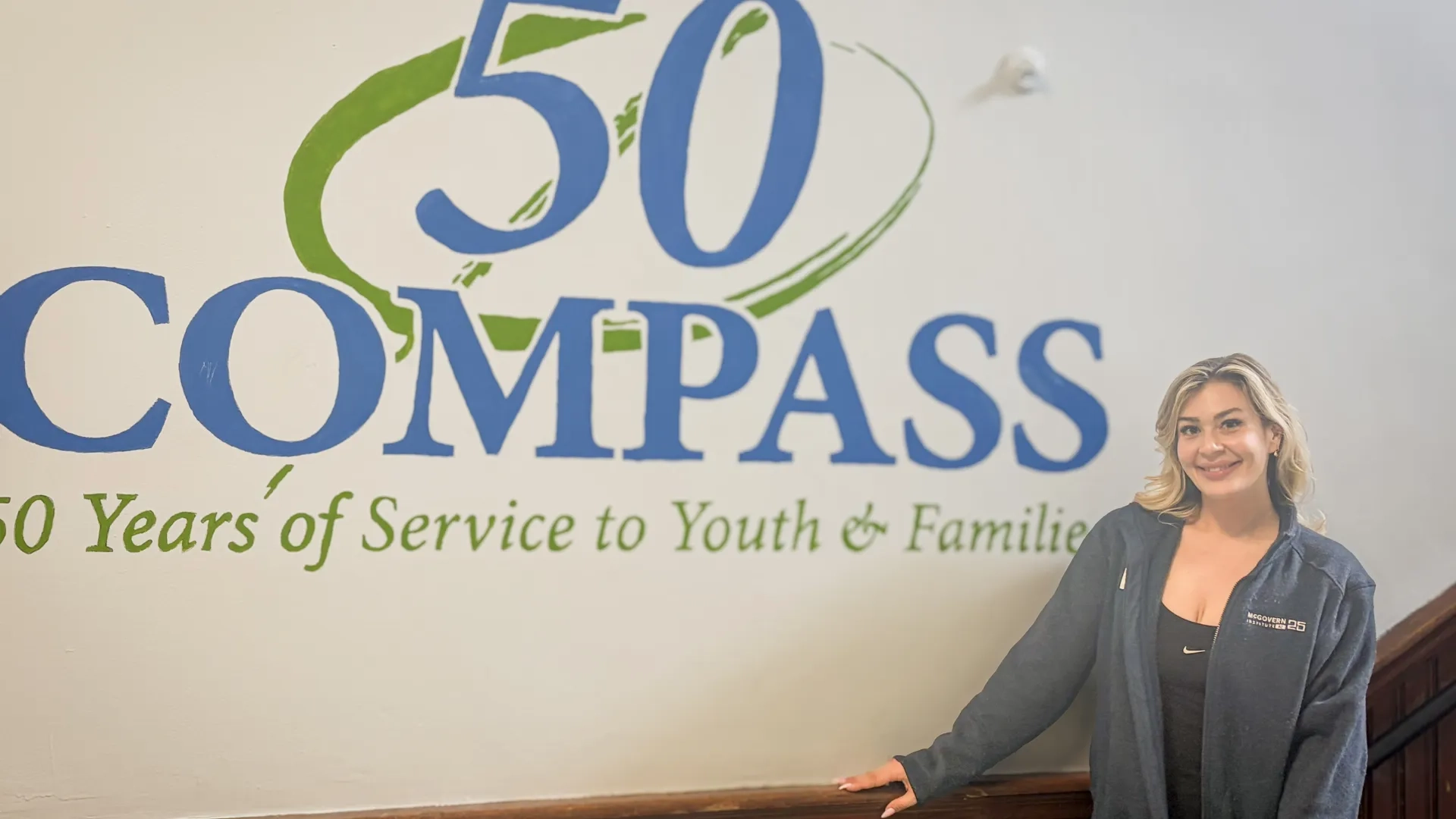


Rachel Norton views literacy as a civil right and healthcare issue
Rare is the person who can simultaneously impact an organization both at the direct-care and administration levels.
Rachel Terra Norton is one of those people.
Norton, who earned her master’s degree in speech-language pathology from the MGH Institute in 2021 and currently is pursuing her PhD in Rehabilitation Sciences , works at the COMPASS School, a therapeutic day school serving students ages 6–21 with emotional, behavioral, and learning disabilities who are referred from school districts across Eastern Massachusetts. She was drawn to the Dorchester, Mass. school in part due to what she discovered while writing her master’s thesis, Traumatic Stress Incidence, Executive Functions and Social-Emotional Learning in Adolescents with Language-Based Learning Disabilities within the Context of COVID-19 that focused on the difficulties many 16-to-18-year-olds experienced during the pandemic when education pivoted to distance learning.
“Many students across middle and high school grades demonstrate significant literacy challenges, sometimes arriving without ever having received a diagnosis or appropriate services related to their reading disability,” Norton said. “They’re being pushed through school and labeled with a behavior problem. And a lot has to do with the different trauma stressors they’re experiencing outside of school, which can be compounded further when the education system itself becomes another source of traumatic stress.”
At COMPASS, she observed there wasn’t a reading specialist on staff, and advocated adding a position she felt was needed to provide more comprehensive services.
“The school's strength has always been on the emotional and behavioral side, but literacy wasn't part of that conversation yet, and literacy isn't just an academic skill,” said Norton, who is particularly interested in looking at how socioeconomic factors play a role in a child’s reading difficulties. “It's a civil right, a healthcare issue, and central to the whole school experience. I brought what I learned at the IHP in implementation science and multi-tiered systems of support and said, ‘As an SLP, how can I address this need?’ The work to catch up some students is significant, but that doesn't mean we don't do it. I believe it's a critical piece of the story that's missing for these kids.”
Her work at COMPASS extends beyond directly working with students. She has designed and implemented a trauma-informed reading program, works with staff so they better understand the importance of how executive functioning skills play a key role in student success, and advocates at the district level for students whose needs were overshadowed by behavioral labels.
“She understands deeply that language and literacy go hand in hand, and she brings that perspective into every collaboration,” said Terence Belli, the school’s clinical director. “Her big-picture thinking, combined with her ability to connect with kids, sets Rachel apart from other providers.”
Norton is pursuing her doctoral degree in the Institute’s Brain, Education, and Mind (BEAM) Lab, led by lab director Professor Joanna Christodoulou, EdD, who was her masters’ thesis advisor. For the past four years, Norton has played a substantial role in the Reading, Executive Function, ADHD, and Dyslexia (READ) study, a collaboration between the BEAM Lab and MIT’s Gabrieli Lab that explores how ADHD impacts reading when it co-occurs with dyslexia, using brain imaging tools and clinical assessments.
“I'm working to merge what I've learned about neuroimaging at MIT with implementation frameworks and social determinants of health to understand how we adapt interventions for older students who missed that early window,” Norton said. “My research is about improving access and intervention with a trauma-informed lens so that students with learning challenges can participate not just in academics, but in society.”