

MGH Institute Adds The Citadel and University of New Hampshire to Admissions Partnership Program
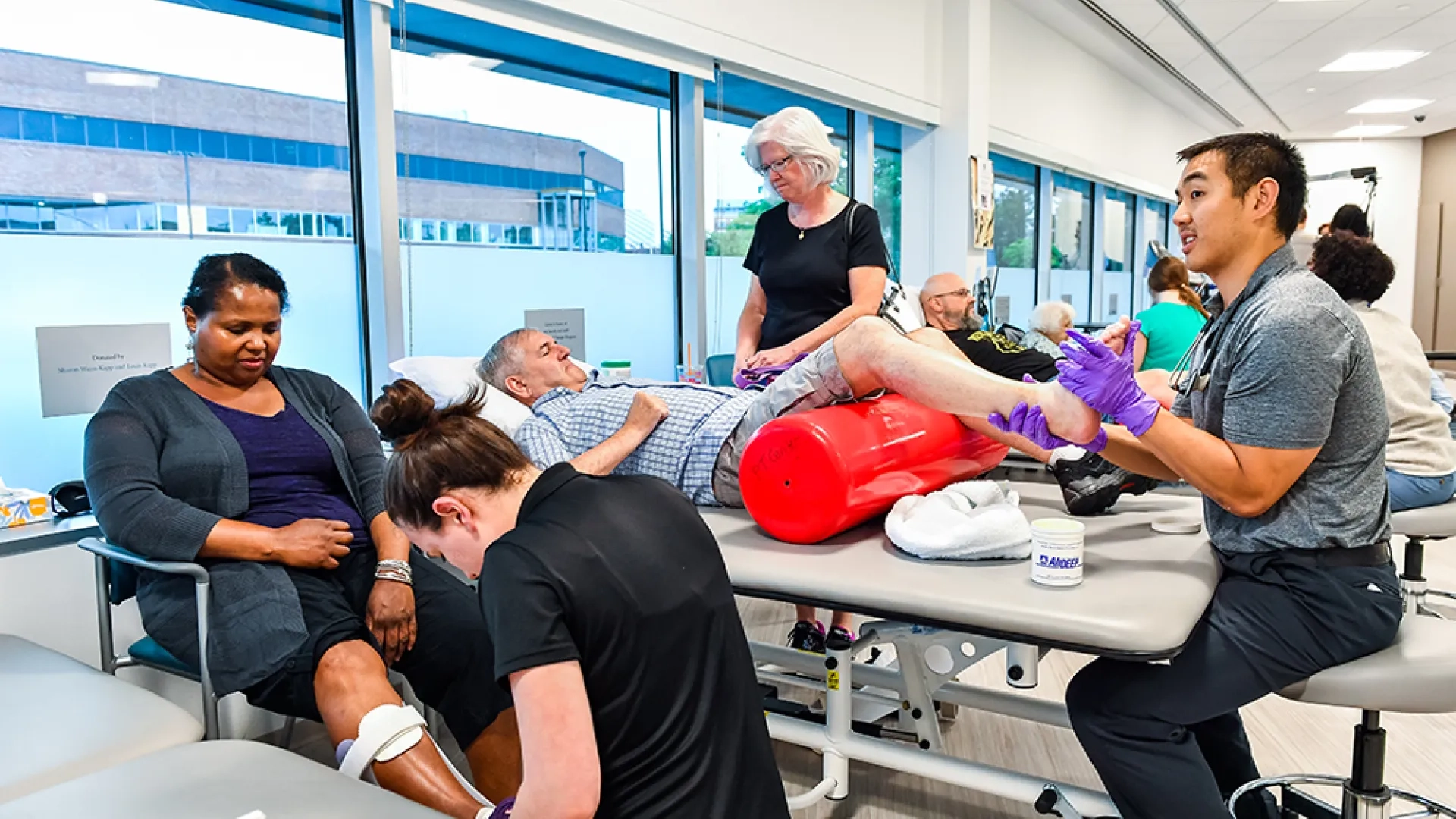


Agreements means streamlined pathways for students to enter high demand careers
The MGH Institute continues to add more academic partners to its network of colleges and universities who want to provide their graduates with a streamlined pathway into graduate school that could lead to a career in a high demand healthcare field.
Qualified graduates from The Citadel – The Military College of South Carolina – and the University of New Hampshire now have guaranteed admittance into MGH Institute programs such as physical therapy, speech-language pathology, audiology, healthcare data analytics, and health administration.
“UNH’s depth as a flagship public research university complements the Institute’s distinctive role as an urban graduate health sciences university,” said Kevin Finn, associate provost of student affairs and dean of students at the MGH Institute.
“The Citadel’s long-standing commitment to developing principled leaders—grounded in honor, discipline, and service—has been evident to me throughout my career,” said Reamer Bushardt, provost of the MGH Institute. “Having grown up in South Carolina and worked closely with their faculty and trained many Citadel graduates, I have seen firsthand the strength of its educational model and the character of its students. That foundation aligns exceptionally well with the mission of the MGH Institute, where we prepare the next generation of healthcare leaders within a world-class academic medical system embedded in Mass General Brigham.”
As the cost of higher education continues to rise, students increasingly want assurance that their education will lead to meaningful career opportunities. At the same time, healthcare systems across the country are facing significant workforce shortages.
That’s why the MGH Institute of Health Professions has been working to address both challenges through a growing network of admissions partnerships designed to create clearer pathways into graduate healthcare programs. Launched last fall, the partnership network also includes Suffolk University, Providence College, Bridgewater State University, Bryant University, and St. Michael’s College.
Through these agreements, qualified students can access streamlined admissions pathways into graduate and doctoral programs.
“The Citadel's partnership with MGH Institute of Health Professions represents an exciting step forward in expanding opportunities for our cadets and students interested in the healthcare profession," said Darin Zimmerman, Ph.D., dean of The Citadel's Swain Family School of Science and Mathematics. "Through this collaboration, we are creating a pathway that combines The Citadel’s strong foundation in leadership and health with advanced, practice-focused education. Together, we are preparing graduates who are not only academically grounded, but also ready to make an immediate impact in the field of healthcare.”
“This agreement will expand opportunities for UNH students to access in-demand health professions while helping address regional workforce needs,” said Kirsten Corazzini, dean of UNH’s College of Health and Human Services. “Students will also have a clearer and more supported pathway from their undergraduate experience into competitive graduate programs.”
The initiative also comes at a time when the healthcare industry is facing significant workforce challenges, with hundreds of thousands of positions unfilled nationwide.
For students, the partnerships can offer a more direct line of sight between their undergraduate studies and future careers, helping them plan ahead with greater confidence. For partner institutions, they provide an opportunity to provide their students with access to healthcare career pathways without the need todevelop additional graduate programs.
“As higher education becomes increasingly expensive, students want to know their education is worth their time and investment," said Finn. "These academic programs and partnerships provide pathways to high demand careers in the healthcare sector. That’s where schools like The Citadel and the University of New Hampshire see the value in the MGH Institute’s premier graduate health professions programs.”
The agreement provides students with a clearer academic roadmap as they move from undergraduate study toward advanced healthcare training, while also strengthening the healthcare workforce pipeline. By partnering with The Citadel, the Institute is now extending its pathway network outside of New England.
“This partnership creates a powerful pathway from a rigorous undergraduate experience to advanced graduate education,” said Bushardt. “We are excited to build opportunities that not only expand access to graduate education but also cultivate the kind of leadership our country’s healthcare system and communities both need and deserve.”
Together, the partnerships reflect a shared goal: helping students move more efficiently from undergraduate education into high-demand healthcare careers.