

Green, Hogan Among Select Group to Forecast Future of Communications Science Disorders
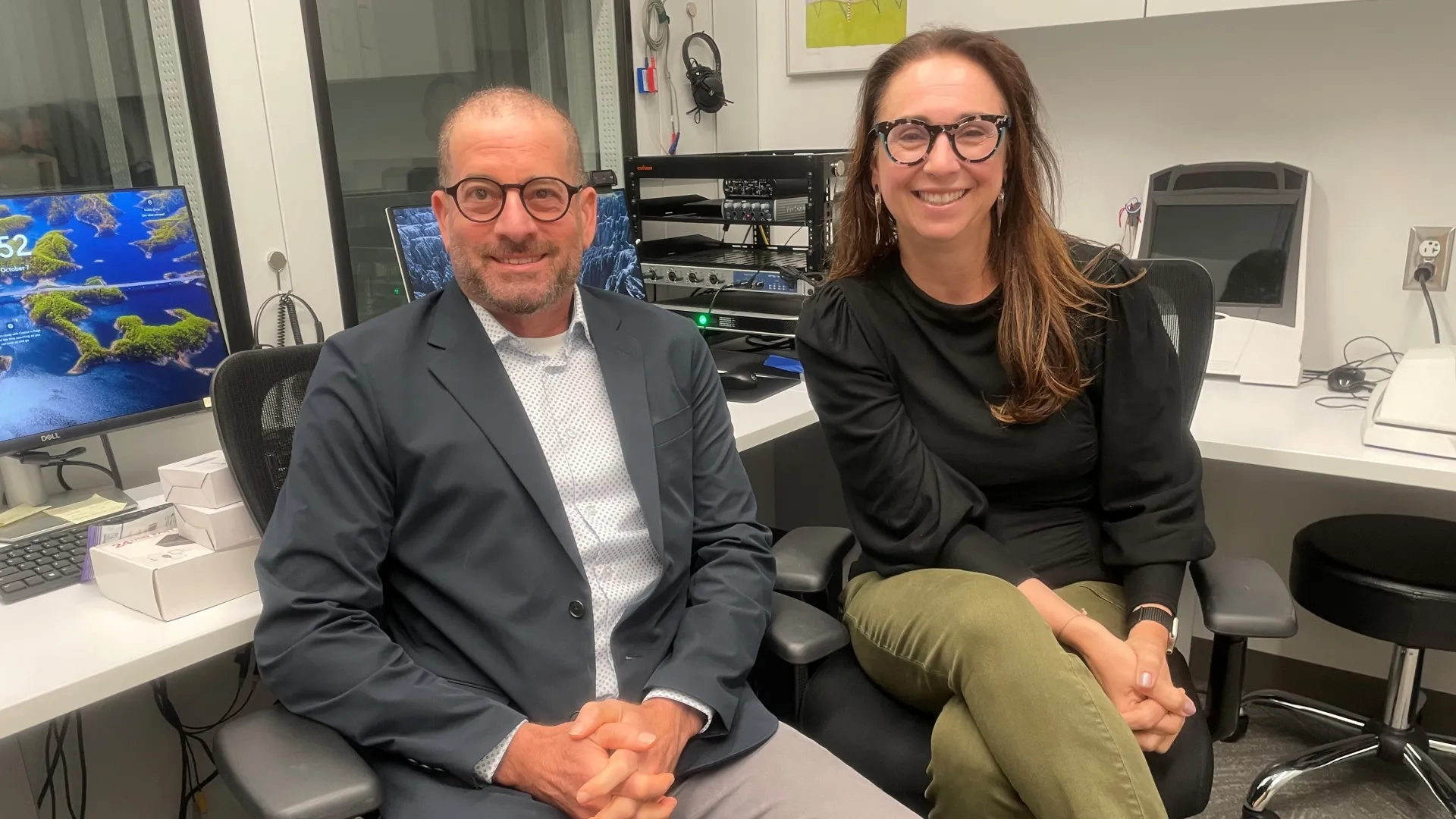


Later this year, communications science disorders will celebrate the 100th anniversary of its organization, then called American Academy of Speech Correction, and now referred to as the American Speech-Language-Hearing Association (ASHA). To commemorate the centennial, the MGH Institute’s Tiffany Hogan and Jordan Green were among a select group of 20 national leaders who were asked to look into the future and predict what the next 100 years would bring in their respective fields.
Green, chief scientific advisor for the MGH Institute, writes about the speech clinic in the year 2125 and the influence of artificial intelligence — how AI instantly analyzes a child’s voice and provides clinicians with a detailed diagnosis that addresses both the concerns and the underlying reasons. With AI becoming ubiquitous — from ambient sensors to ever-present digital companions — he asks whether communication will be reduced to slick, hurried transactions, eroding the friction through which empathy and social skills grow. He calls for an ethical compass to guide adoption — one anchored in privacy, dignity, inclusivity, and emotional safety.
“Being asked by ASHA to imagine the next 100 years of communication sciences and disorders was both exciting and sobering,” reflected Green, the Matina Souretis Horner Professor in Rehabilitation Sciences and Director of the Speech and Feeding Disorders Lab. “It was an exhilarating mental exercise to envision bold new possibilities — neural implants, AI companions, thought-to-speech training — while acknowledging that my ideas will probably underestimate the speed of scientific progress. At the same time, it was sobering to face the ethical and human questions these advances inevitably raise. The exercise reminded me that our future will be defined as much by how we safeguard human connection as by how far technology takes us.”
Read Green’s glimpse into the next 100 years:
More Than Words: AI, Human Connection, and SLPs’ Evolving Role
Hogan, director of the Speech and Language (SAiL) Literacy Lab, looks into the future classrooms and sees teachers weaving language-rich activities while AI monitors each child’s linguistic growth in real time, making up personalized language screening and intervention systems, which once seemed so futuristic, feel as natural as using spell-check. Hogan also hopes the future finally gives developmental language disorder (DLD) the recognition it deserves (only 20% to 30% of the nation’s five million children with DLD get the support they need) and that one day, there is a comprehensive support network (physicians, librarians, and community program leaders) that follow people with DLD throughout their lives.
“It was an honor to be asked to do write a piece for this special issue celebrating ASHA’s 100th anniversary,” noted Hogan. “I had already been outlining points for an invited ASHA talk so this was the perfect forum to flush those ideas out. It was uplifting to think about positive possibilities.”
Read Hogan’s Look into the Next 100 Years: