

Celebrating Pride Month
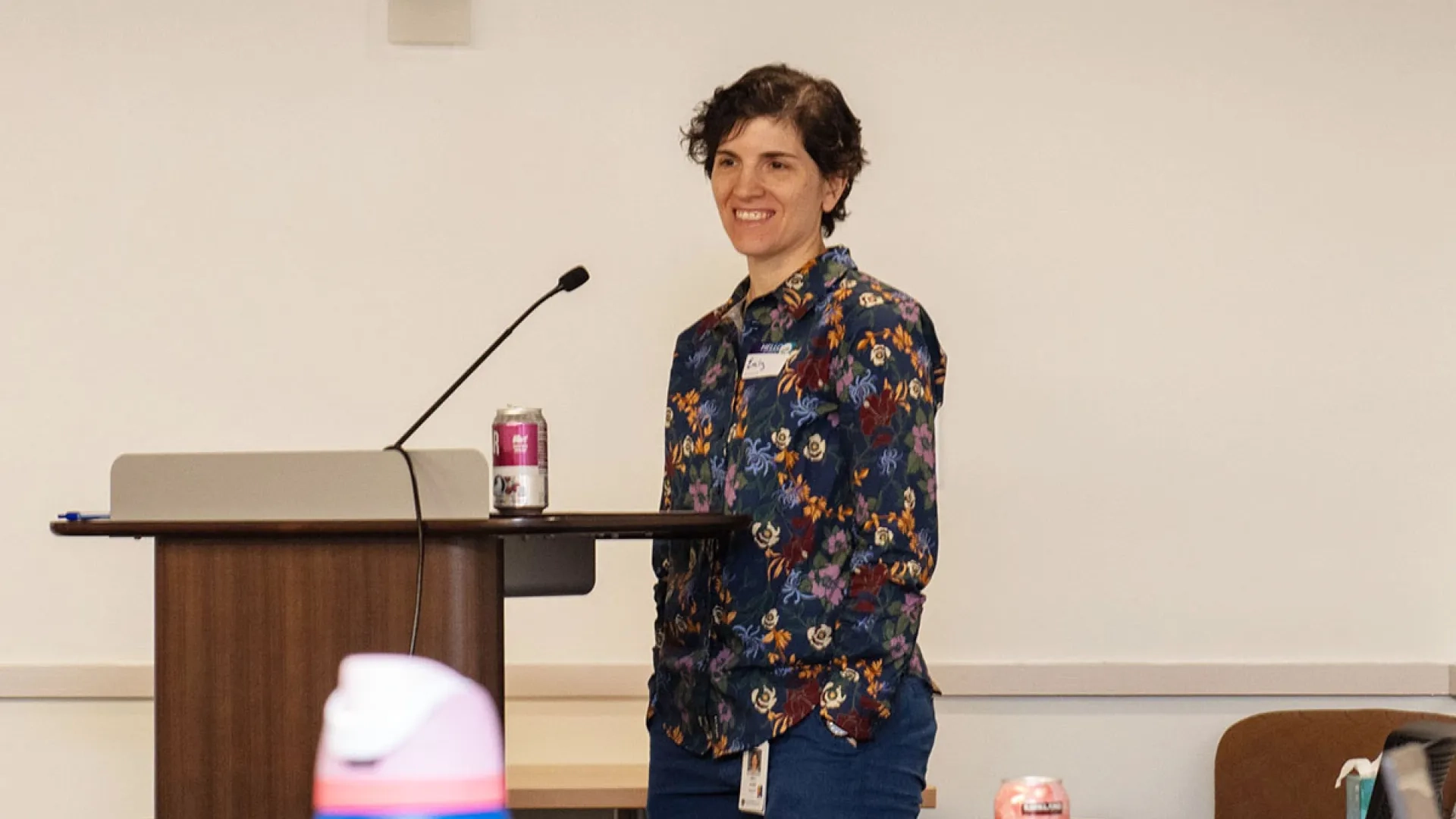


Pride Month at the MGH Institute is coming to an end but the impact of the activities developed by the Pride Committee will continue past the end of June. The events represented not only the chance to support, celebrate and reflect with the LGBTQ+ community, but the expansion of LGBTQ+ celebrations and resources at a time when other institutions are reducing their support.
The month kicked off with the Pride Keynote panel. There was an opportunity to march with Mass General Brigham’s LGBTQ ERG in the Boston Pride parade and observe Pride flags in front of Shouse and 2CW. A book drawing is still open until the end of the month and the Institute held its first-ever Lavender Graduation in April in an effort led by 2026 SLP graduate Helen Cohen.
“We had some truly compelling speakers who shared stories about the intersectional experience of Queer Latinx folks living and working and being patients in the Commonwealth,” said Physician Assistant Studies Instructor Emily Rosen, who moderated the panel discussion that kicked off the month. “I have heard from friends at many other colleges that are eliminating or scaling back on these kinds of events.”
The scaling back is not limited to a few isolated places. Michelle Wallace, the Mission, Values, and Community Excellence Department Coordinator, leads the Pride Committee and also serves as board member of Consortium of Higher Education LGBT Professionals, that is tracking the closure of LGBTQ+ centers across the country.
“We are hearing stories about Lavender Graduation celebrations being canceled, and we are seeing our queer colleagues in higher education resist erasure on their campuses while continuing to show up as mentors and advocates for students,” explained Wallace.
Those mentors and people who speak at events like the Pride Panel are invaluable resources to younger people both at the MGH Institute and in the real world.
“As a younger queer person, it meant a lot to me to hear from the perspectives of queer folks older than me,” said Genetic Counseling student Aya Latif of the panel members. “Growing up, I didn't know how to picture my adult life because I could not see myself in the adults around me. Seeing older queer people living full, authentic lives gave me a glimpse of what was possible and what the other side of the tunnel could look like.”
Near the end of the keynote session, there was a discussion about how people can continue making an impact in their communities during their "golden years."
“Simply existing as an older queer person can be really significant for someone in my shoes,” emphasized Latif. “Not everyone can say that their presence alone has the power to expand another person's sense of possibility.”