

BRIEF: OT Students and Faculty Celebrate ADA Day at Boston City Hall Plaza
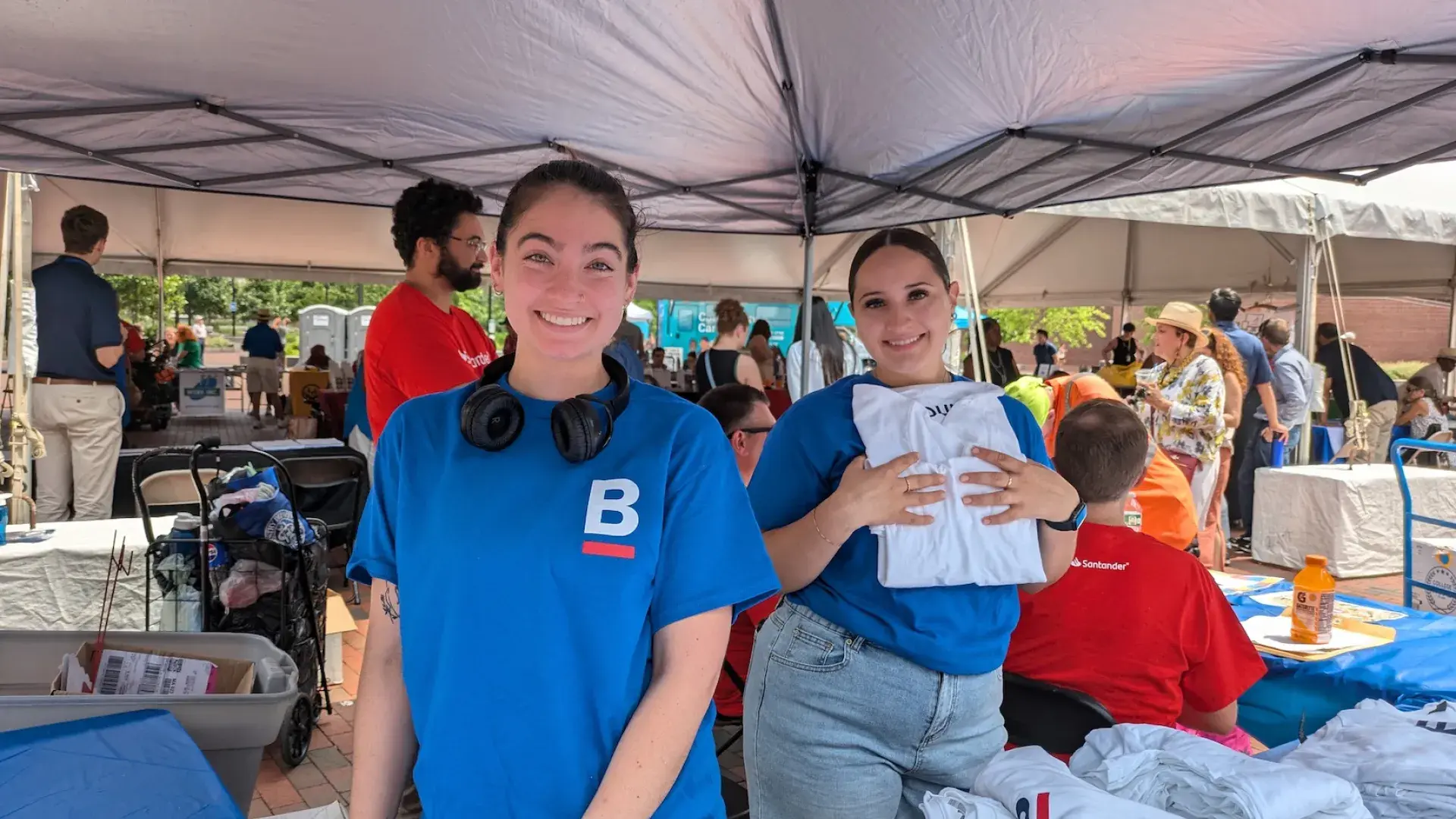


Thirty-four years since lawmakers passed the Americans with Disabilities Act (ADA), Occupational Therapy students and faculty at the MGH Institute attended ADA Day at Boston City Hall Plaza, a festive and informative event held by the City of Boston to celebrate this monumental civil rights law.
Many occupational therapists work with disabled patients, said OT Assistant Professor Kelly Spellman, who attended the event at Boston City Hall alongside the Disability Employee Inclusion Alliance Employee Resource Group (ERG) at Mass General Brigham. For her patients with spinal cord injuries (SCI), the ADA has been “instrumental” in ensuring they can access the same resources as nondisabled people, she said.
“Most people with SCI are wheelchair users, and the ADA allows wheelchair users physical access to public spaces and public transit,” Spellman said. “The ADA allows people with SCI to be more engaged and participatory in all of their daily occupations — which is the main goal of occupational therapy.”
Born from years of being unable to access certain buildings, events, or employment opportunities, the 1990 law prohibits disability-based discrimination, in turn giving disabled people the grounds to fight discrimination, should they experience it. The City of Boston hosted ADA Day to celebrate this legacy and announce a new, common format for collecting data on the 78,000 Boston residents with disabilities.
“The ADA has done a lot for the disability community, but there is still so much left to do,” said Spellman, who highlighted one grassroots initiative to improve accessibility on airplanes, which resulted in President Joe Biden signing a bill to update how airline staff transfer wheelchair users onto planes.
Volunteers from the Institute passed out t-shirts, water, and ice packs as participants scoped out various disability-related booths, including a station run by the Disability Employee Inclusion Alliance ERG. Made up of employees from across the MGB network, this Alliance works to ensure MGB is an “employer of choice for all employees with apparent and non-apparent disabilities,” Spellman said.
The Alliance invited the MGH Community Care Van to provide healthcare screenings to event attendees, taking people’s blood pressure and performing A1C tests, which measure patients’ blood sugar to determine if they have type 1 or type 2 diabetes.
“Persons with disabilities are a population that experiences health disparities,” Spellman said. “We also chose to hand out cold ice packs because we knew that many attendees would have conditions that made it difficult for them to be out in the heat.”
Despite working under soaring temperatures, Spellman said she and other Alliance members enjoyed having the chance to tell people about accessibility at MGB.
“This was the first event that the ERG has held in the community, so we were all feeling energized about bringing MGB into the forefront in Boston as an inclusive employer in the community,” she added.
Learn about accessibility resources at the MGH Institute here.