Frustrating pursuit of accountability after son’s experience led to change at highest level

To hear assistant professor Kevin Berner tell it, he was just doing what an occupational therapist does when he pursued justice, the kind that helped shape the Commonwealth’s new law that bans revenge porn. 

“As health professions educators, we tell our students that treating only the illness and the dysfunction within a person isn't what's going to help them succeed,” said Berner. “The students really have to look at the entire social context including state agencies, laws, and sometimes legislation.”

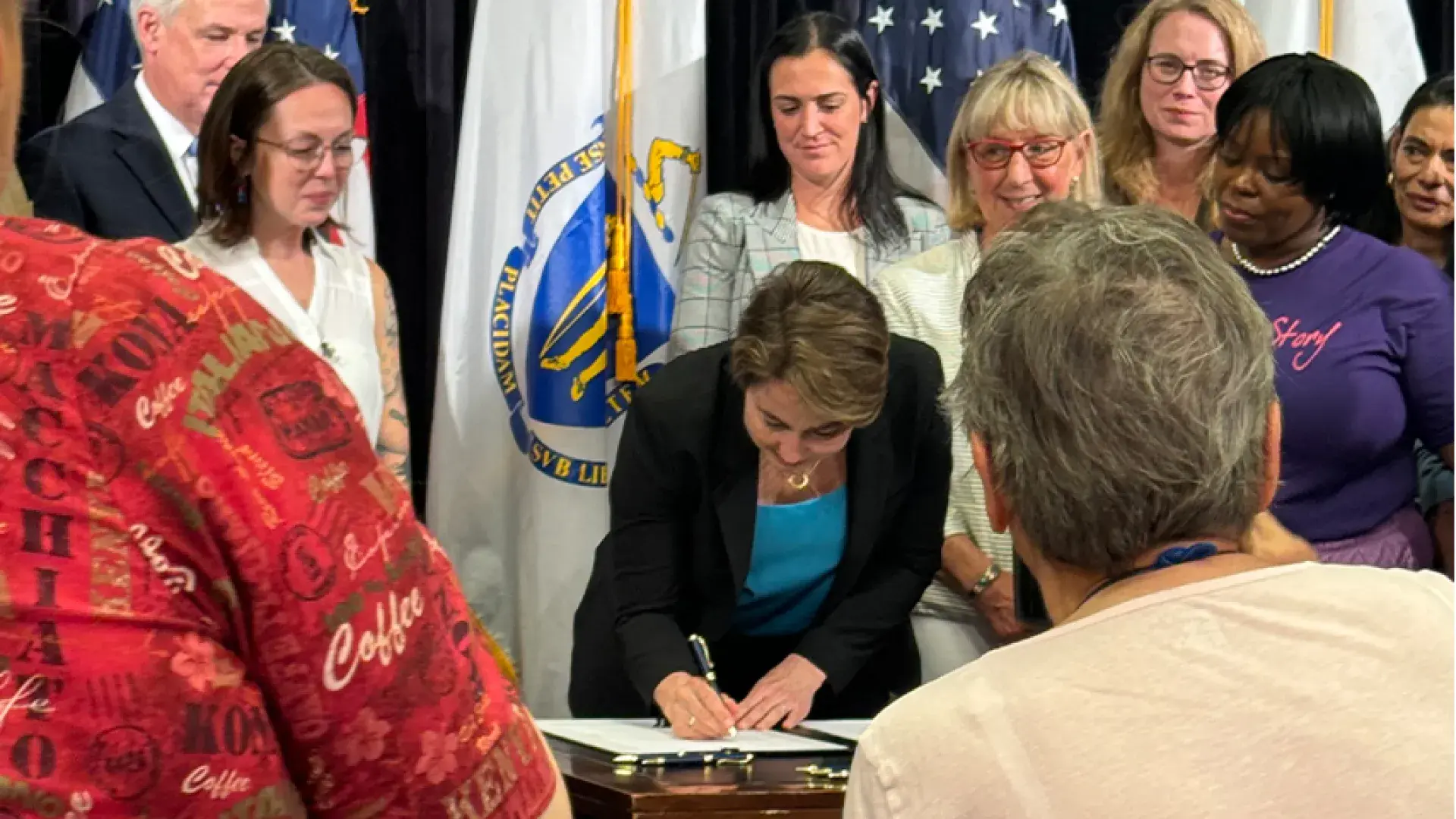
The official name for the legislation recently signed by Governor Maura Healey is, An Act to Prevent Abuse and ExploitationIt was abuse and exploitation that hit home for Berner, literally, when his 12-year son – who has learning disabilities and can be easily coerced - had inappropriate pictures taken of him two years ago by middle schoolers in his hometown of Braintree. Those images were shared multiple times among friends via phone. As chronicled by the Boston Globe, the teens were never held responsible by the school, law enforcement or the state.  Instead, community leaders seemed to circle the wagons to limit the information from being made public. 
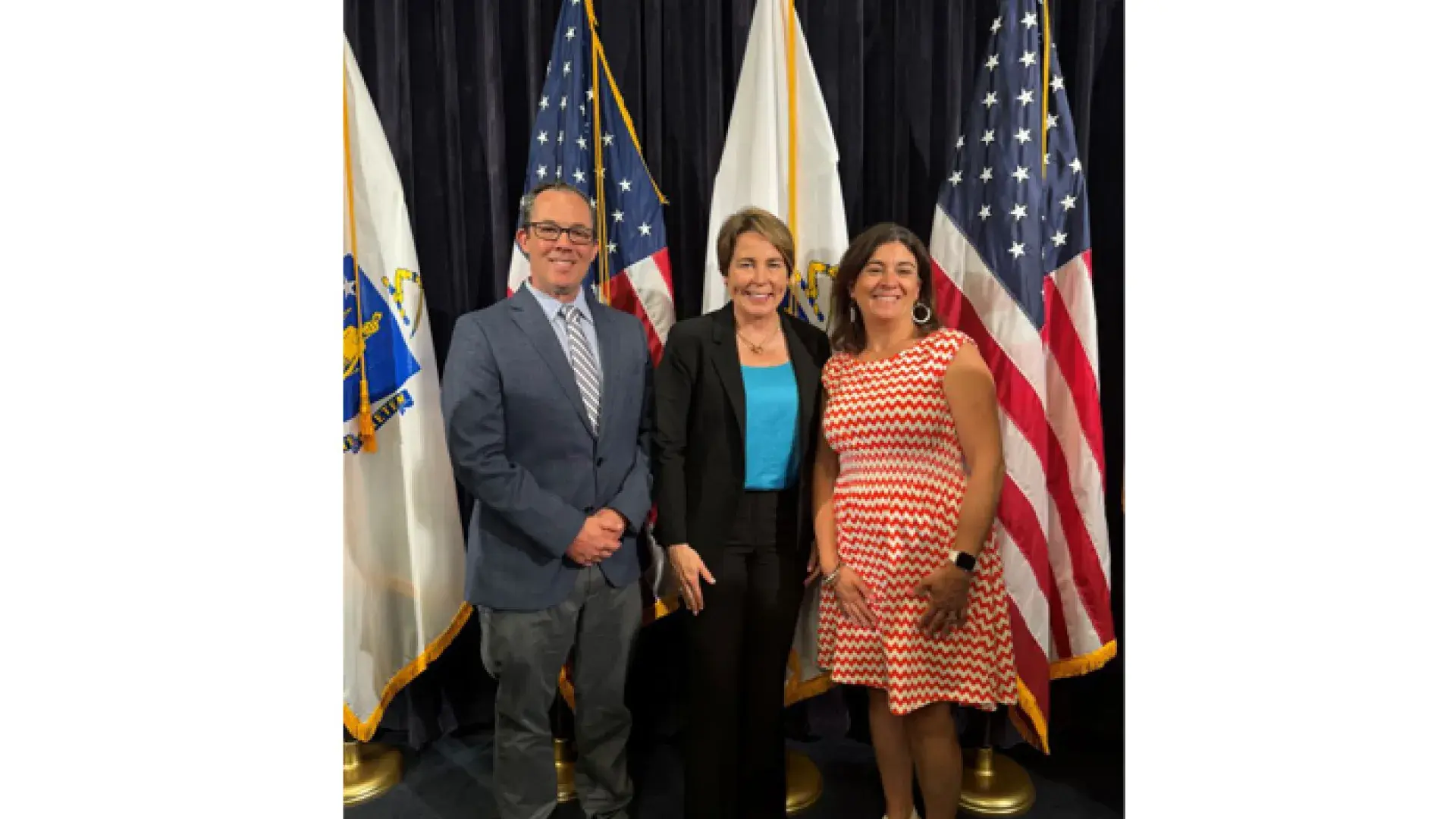
Three people stand in front of US and Massachusetts flags
Assistant Professor of Occupational Therapy Kevin Berner (l) and wife Carine (r) with Massachusetts Governor Maura Healey after Healey signed the revenge porn bill into law, legislation Berner had a role in shaping.

“I looked at this through the lens of a father and as an occupational therapist,” said Berner. “Once I saw that the system wasn't functioning the way it should have, I immediately began to examine where the system broke down, and then reached out to those who might be able to impact and make those meaningful changes to prevent it from happening again.”

Berner met with anyone who would listen; he spoke with Braintree police, the Norfolk County District Attorney’s office, Braintree government and school leaders, state legislators, and federal law enforcement agencies. He sent dozens of emails and made many more phone calls, always pleading his case for accountability. Berner found a sympathetic ear in his state senator, John Keenan, who met with Berner and his wife Carine. 

“This was a frustrating experience - we reached out to dozens of elected and appointed leaders and Senator John Keenan was the only person to consistently respond to us, and for that we are highly appreciative,” said Berner. “We wished more elected and appointed leaders would have responded to provide support.”

While the new law is meant to prevent abuse and exploitation, strengthen protections for survivors, and enhance education for young people about the dangers of sexting and deepfakes, it also adds Massachusetts to the states that are banning “revenge porn,” which is the non-consensual sharing of explicit images. And importantly for the Berners, it creates a noncriminal "diversion program" that educates juvenile offenders and holds them accountable. 

“We believe that parts of the law were a direct result of our conversation with Senator Keenan in the kitchen of our home in December of 2022,” noted Berner. “We emphasized that while juvenile offenders should not be imprisoned or put on a sex offender registry, they still need education and a level of accountability.” 

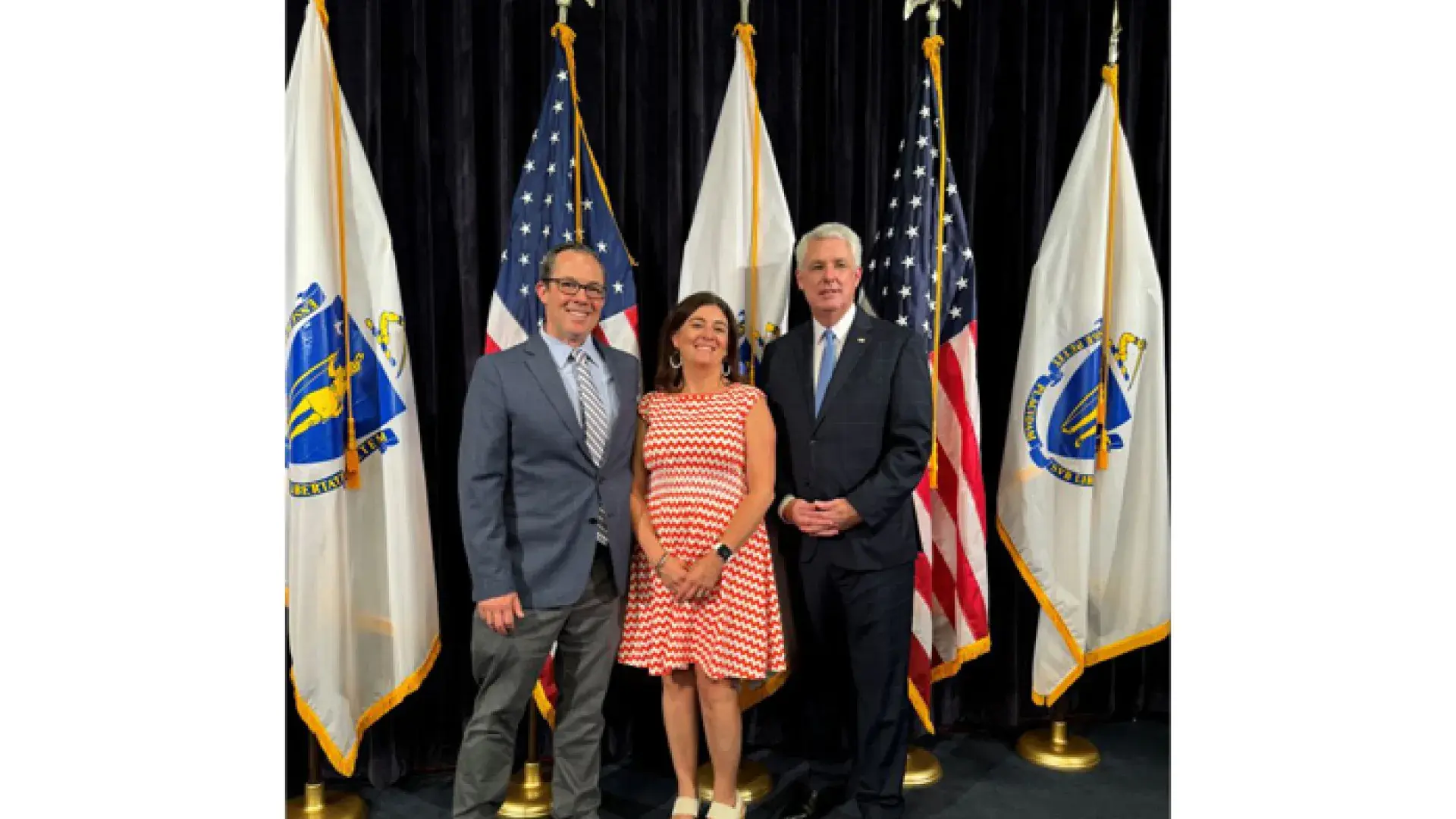
Three people stand in front of US and Massachusetts flags
Assistant Professor of Occupational Therapy Kevin Berner and wife Carine with state senator, John Keenan (l), who listened to what happened to the Berner’s son and introduced legislation banning revenge porn.

Sen. Keenan agrees that some elements in the new law were due to what the Berners went through.   

“Kevin and his family were incredibly effective advocates for change,” Sen. Keenan noted. “Their determination to prevent what they experienced from happening to others played an enormous role in moving this legislation through the legislative process and into law. If my child had survived the same experience, I hope that my wife and I would have the same courage to do everything the Berners did.”

Prior to this law, it wasn’t illegal in Massachusetts to share illicit images of a person without their consent, and youth who engaged in this behavior were rarely held accountable for their actions. These important gaps are now plugged up. 

“It holds child offenders responsible without making them and labeling them as lifelong criminals, as well as identifying and modernizing the definition of what revenge porn can be,” Berner pointed out. “It includes A.I. generated images now and expands the net as to what activities are unlawful.

“We're really appreciative of John Keenan's response, and this is an exemplar of what the potential is when the system is operating the way that it should, concluded Berner. “Having an elected official respond to a constituent complaint, meet with and listen to that constituent, and then move forward to make a change is exactly how the system was intended to function. I'm aware that many individuals reach out to their representatives and legislators and don't always receive a personalized response. We were quite fortunate, and now the state’s law is stronger because of it.”

Stronger, in part, because Berner’s persistence on the issue, which he says was fueled by his identity as an occupational therapist. He has since been nominated to join the volunteer board of directors for MassKids as a parent of an abuse survivor who is also an OT with pediatric experience.

“Although impacted personally, professional values of ethical integrity, justice, and fairness for those with and without disabilities played a role,” said Berner of his advocacy. “We're hoping that what happened to my son doesn't happen to anyone else, and if it does, the people who are responsible for dealing with it have additional tools for dealing with it appropriately. Having something that is a better fit for children who are still learning how to function, and learning right from wrong is very important for us, and for other children who may be impacted by this.”

Do you have a story the Office of Strategic Communications should know about? If so, let us know.