

Advancing Health Equity in Physical Therapy
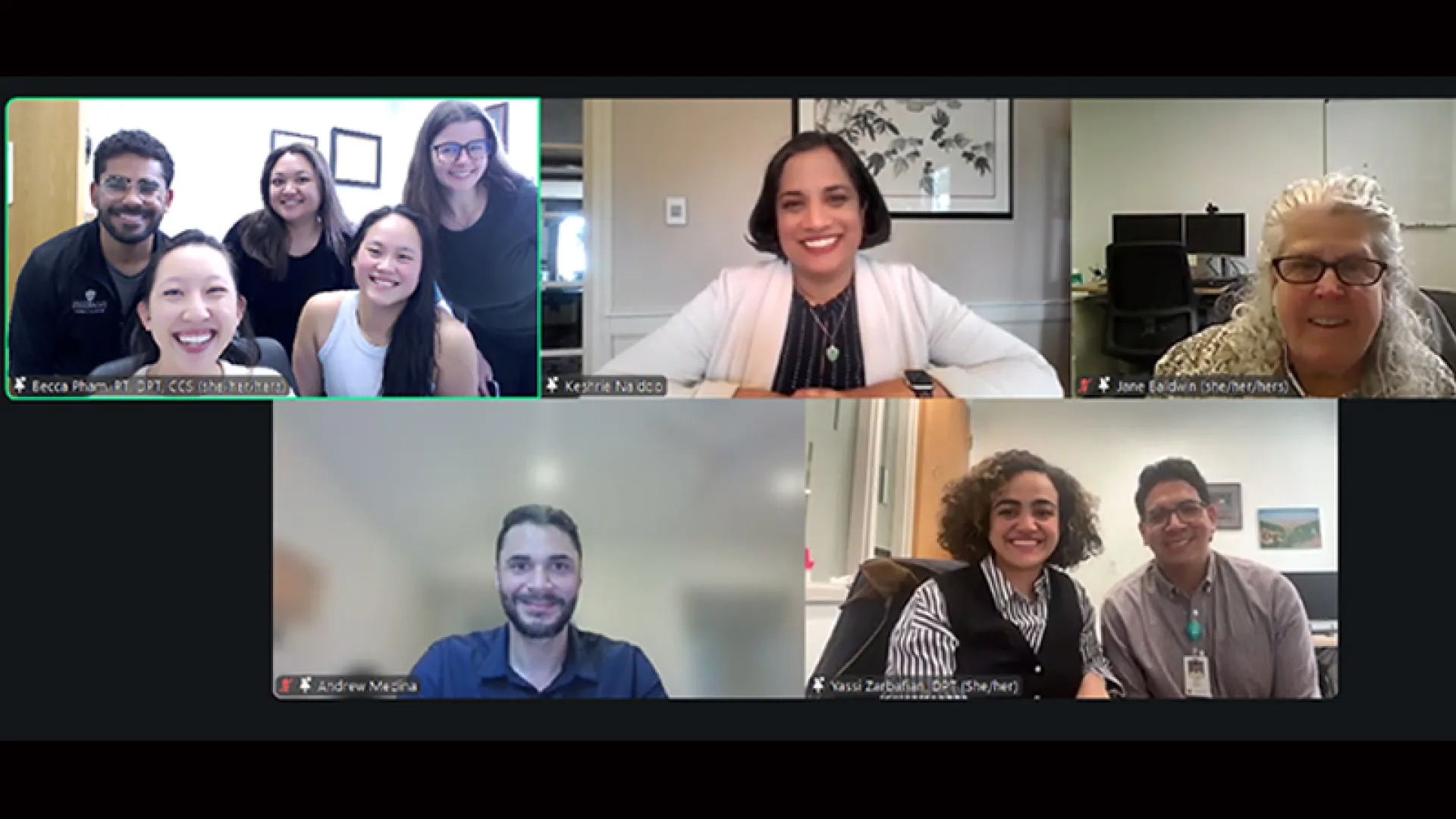


Whether it’s from their own healthcare experiences or from what they witness during their clinical experiences, MGH Institute students are often aware of health equity issues. One group of physical therapy students turned that awareness into a capstone project that became part of the virtual workshop, Elevating Physical Therapy Practice to Advance Health Equity, earlier this month.
Chiara Rego, Jima Baez, Andrew Medina, Alison Wise, and Cia Licas joined with faculty, alumni, and a local expert to explore the connection between health equity and physical therapy. Rego looked at theories of health behavior and social support to see how physical therapists can promote change; Baez looked at the impact of language barriers on care; Medina focused on veterans who experience homelessness in relation to physical therapy; Wise wanted to understand the mental health impact of vestibular disorders on physical therapy practice; and Licas addressed caregiver burnout and how it affects physical therapy outcomes in marginalized communities.
PT Instructor and conference organizer Rebecca Pham worked with the capstone group.
“They have developed an overall deeper appreciation for health equity work being done by clinicians across the MGB community and are grateful to hear the stories and experiences of other presenters/participants of the conference,” shared Pham.
Faculty members involved included Physical Therapy Department Chair Keshrie Naidoo, who discussed the ethical dilemmas that arise due to patient and caregiver bias, the importance of addressing the behavior, the challenges and considerations of doing so, and scripts and models that can be used.
Assistant Professor Jane Baldwin and public health professional Vanessa Guardado-Menjivar presented on the link between play and a healthy life. Guardado-Menjivar, an epidemiologist, leads the Play for All Project, which aims to understand how residents engage in play, identify barriers to participation, and inform strategies to promote inclusive, accessible opportunities for movement and wellbeing across the lifespan. The Chelsea public health department partnered with the MGH Institute last year to gather data on how Chelsea residents conceptualized play and what barriers to play exist in the city.
Two MGH Institute alumni, Xavier Brito and Yasaman (Yassi) Zarbafian also presented. Dr. Brito, an acute care physical therapist at Brigham and Women’s Hospital, looked at how acute care disparities shape rehabilitation outcomes. Dr. Zarbafian, an Orthopaedic Certified Specialist at Mass General, discussed promoting access, inclusion, and equity in connection to barriers in pelvic health.