

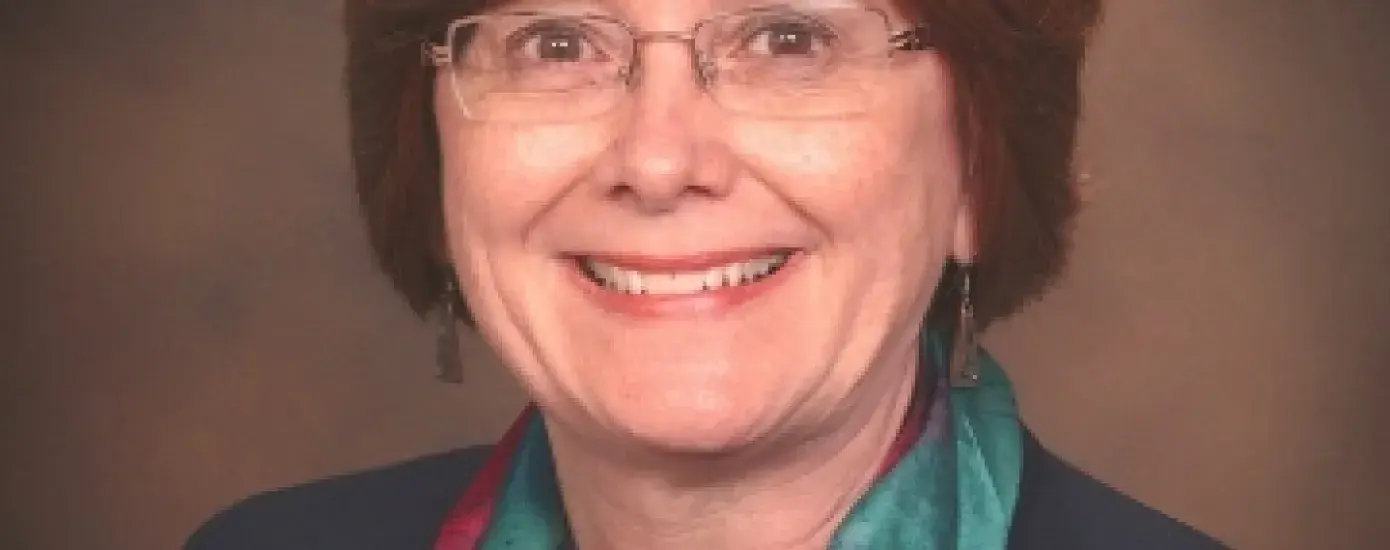


To Ellen Carr, differentiating between science-based information and the fake news circulating in many circles is more important than ever during the COVID-19 pandemic.
Carr, who graduated from the MGH Institute in 1988 with a Master of Science in Nursing, made this point in an editorial in the April 2020 edition of the Clinical Journal of Oncology Nursing. She has been editor of the peer-reviewed journal for the past three years, a position she’ll hold until 2022.
“Providing effective clinical oncology care these days includes practicing in an environment abundant with fake news, emanating from what some might otherwise consider an alternate universe,” wrote Carr, who lives in San Diego and where she earned a PhD in nursing from the University of San Diego. “So-called facts are out there – after being twisted, manipulated, and/or just plain made up – and they create a slurry of misinformation, disinformation, or a lack of information.”
Carr said the COVID-19 crisis spurred her to write the editorial, which she noted applies to all health care workers. “It’s been something that’s been bothering me for years,” she said. “With all that’s going on now, I felt this was the time to make this point.”
Recent claims about how COVID-19 started in a laboratory, a point that continues to gain headway – even within the Trump Administration – is an example. “In this unprecedented health crisis, unverified information flourishes while the World Health Organization and the Centers for Disease Control and Prevention struggle to clarify what is really happening with the virus,” she wrote in the journal.
During her more-than 30 years working as a clinical nurse specialist and a nurse case manager, Carr has treated an increasing number of patients who reject accepted medical facts. It hasn’t been uncommon, for example, for a patient or caregiver to arrive with their own Google search that details an undocumented cure for cancer and reluctant to accept their information as spurious.
“If you can’t have a conversation based on facts and science, it’s very difficult to help them,” she said. Often, she has found talking about neutral subjects such as sports can break the ice so she can make a personal connection, which can lead to discussions about establishing a course of legitimate treatment.
Carr, who earned a journalism degree and worked at Boston television station WGBH, NPR station WBUR, and on the PBS program NOVA before attending the IHP (“I went from wanting to change the world through journalism to deciding to change the world one person at a time.”), is cautiously optimistic that unbiased information will win out in the long run. “If people don’t value or accept real facts during a time like this, when will they?”