

The IHP Interview: Wolford Discusses New Center for Scholarship of Teaching and Learning
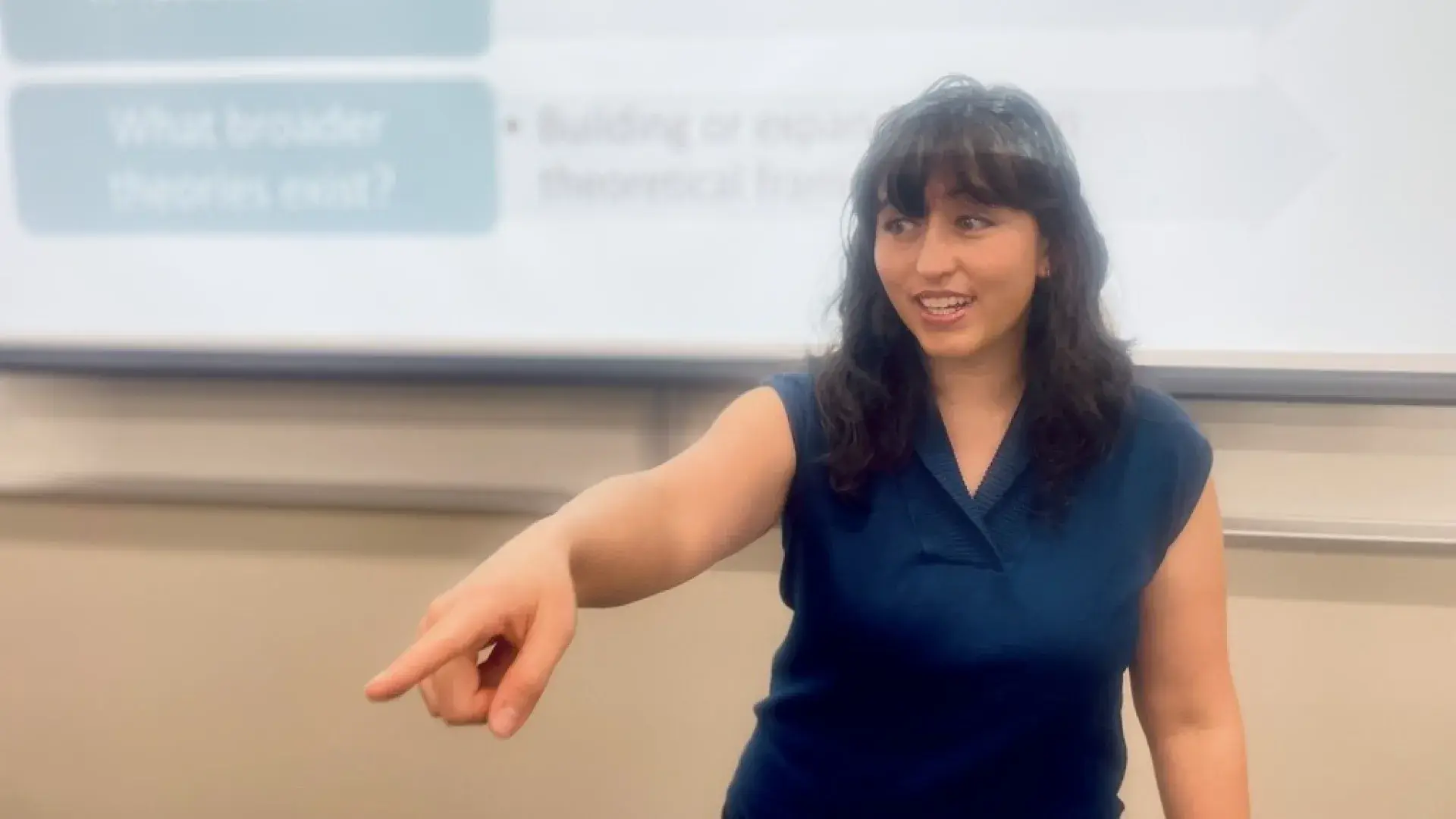


The Center for the Scholarship of Teaching and Learning (SoTL) seeks to help faculty take the expertise they teach in the classroom and translate that into research. Laura Wolford, director of the Teaching and Supporting Student Experience in Learning Lab (TASSEL), is heading up this new center. Its first event takes place this Friday. In this month’s IHP Interview, OSC’s Sean Hennessey spoke with Wolford about the need, the goals, and the tools of the new SoTL Center.
The SoTL Center is the MGH Institute’s newest initiative to support faculty scholarship. Talk about the need for it.
The faculty at the MGH Institute are outstanding educators and clinicians. They bring a wealth of expertise and innovative approaches to teaching, preparing students to become exceptional health professionals. Their deep clinical experience allows them to translate real-world practice into powerful learning opportunities in the classroom. At the same time, academia values research productivity — presentations and publications — which can feel like a separate and unfamiliar expectation. Too often, faculty are asked to contribute to research only as collaborators, without the chance to lead projects themselves. The new SoTL Center creates space for them to shape research that grows directly from their teaching expertise and creativity.
That’s where the Center for the Scholarship of Teaching and Learning (SoTL) comes in.
Exactly. The idea behind the SoTL Center is to help them be in charge of their own research careers, publish about something that they actually care about and are doing already, which is education and clinical education. We will help them take their next teaching question or their next pedagogical idea and turn that into high-quality education research. We’re also working on creating a real community around SoTL, so that faculty are connected across disciplines. This work is more exciting and meaningful when we do it together.
The SoTL Center is filling a much-needed void; after all, it’s not easy to take clinical knowledge and immediately apply that to research.
It’s not easy at all. The faculty at IHP are passionate, creative educators who bring deep expertise to their classrooms and clinical practice. Every day, we experiment with new ways to engage students, adapt to changing healthcare needs, and improve the learning experience but what we don’t do is systematically study and share those innovations so others can learn from them too.
Anyone who is familiar with health professions education knows it is a rich, interdisciplinary space with tons of unanswered questions. We want to help IHP faculty become part of that conversation, not just to improve our own teaching, but to shape the future of how we educate the next generation of healthcare professionals.
Our goal is to build a strong culture of education scholarship across the Institute. We’ll offer office hours, mentoring, workshops, and structured opportunities to do research in community.
Talk about your experience as director of the Teaching and Supporting Student Experience in Learning Lab (TASSEL) and how that will carry over to SoTL.
I've been running the TASSEL Lab for three years within the Communication Sciences and Disorders (CSD) Department, and this is what the TASSEL Lab has been doing. We have a number of faculty — some of whom have been here for 10-15 years — who haven’t been able to seek out a promotion because they feel like there's this substantial wall in front of them in terms of advancement at the IHP.
Currently, there are two research projects that are being spearheaded by these folks who haven't done this before. So I'm helping to mentor them. One project is out for publication, and one has three or four conference presentations on it. One of our members just got a grant for a new education research project. So, it's slow but it's really developed a number of the members’ clinical questions into research projects. And it's led some of them to go into an HPEd program or our speech pathology doctorate (SLPD) program, because now they have an idea of what their path might look like in that research world.
What are your goals for SoTL?
In three to five years, we want to develop a number of our clinically trained faculty into teaching and learning researchers, starting their own projects and seeing them to publication. And it becomes this self-sustaining cycle of people that can provide mentorship to other folks in these education research projects.
My hope is that what good teaching is and what good researching is comes under the same umbrella, and by that I mean all of these different assets that we have — TEAL Fellows, TASSEL, Learning Experience Design — that they all wind up working together in a really symbiotic way, where the left hand always knows what the right hand is doing, and we're all in communication with one another. And we have a really clear picture of what education looks like at the IHP, both in terms of how we're studying it, how our education research then translates into the education that we're actually providing, and how that translates into our forward movement as an institution.
Teaching is what we do. Education is what we do. So, there's the opportunity for tendrils of this to get into just about everything at the MGH Institute, and for tendrils of just about everything to get into the SoTL Center.
Even though the SoTL Center has just been launched, there are already resources available to help faculty get started. Talk about that.
That’s right. We have SoTL office hours for people to discuss their SoTL ideas or issues (book here). We’re starting SoTL Communities of Practice so that people can get a better sense of a SoTL literature base and craft education projects together. We’re making SoTL completion grants available to help turn education research into publications for faculty who have collected data for a project but need support to bring it across the finish line (apply here).
Along with resources, there are also events and touch points happening very soon too.
It all begins Friday when internationally-renown health professions leader Dr. Earle Abrahamson holds a workshop on how Scholarship of Teaching and Learning can change healthcare (register here).
We’ll hold Methods Mondays on the third Monday of the month where faculty can learn about education research methods & topics.
We’ll hold SoTL Communities of Practice sessions where faculty can connect with colleagues around shared research interests like AI in clinical education, giving/receiving clinical feedback, building interdisciplinary teams, fostering equitable education in large cohorts, and education outcomes of non-research capstone projects
And then on September 9th, we’ll have a SoTL Open House I Shouse 259 from 12:30 – 2:30 pm. So, we have a lot going on right out of the gate. We can’t wait to get started!
Do you have a story the Office of Strategic Communications should know about? If so, let us know.