

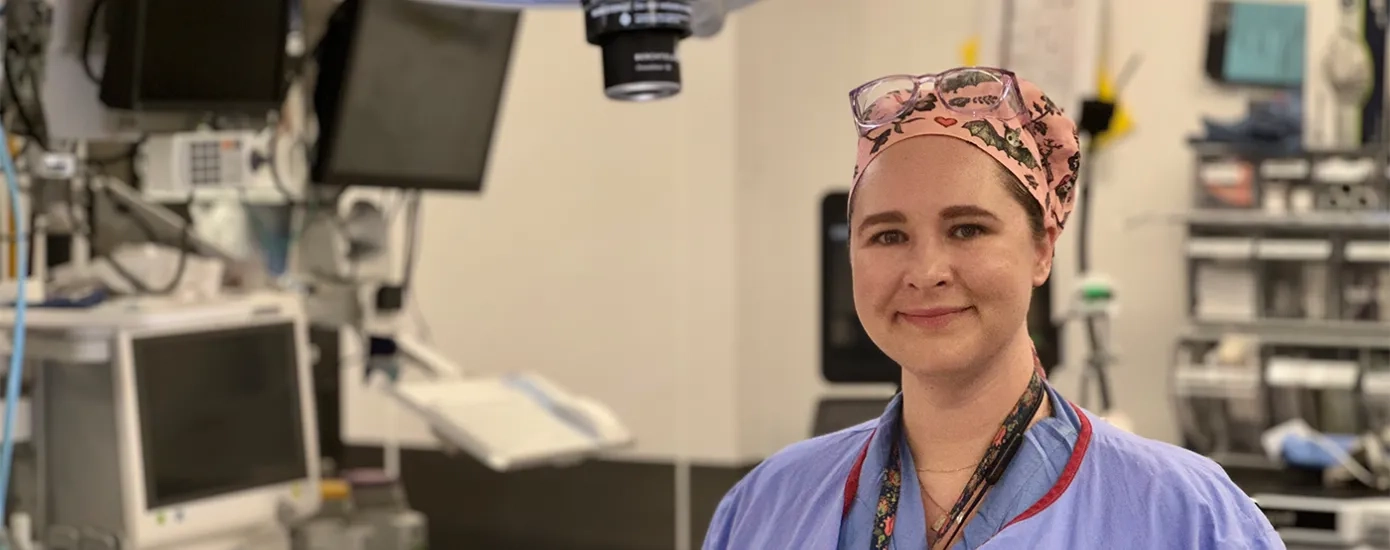


MSDA Program student | Operating Room Nurse | Massachusetts General Hospital
Ellen Bobby is an operating room nurse at Massachusetts General Hospital, where she works on the evening shift trauma team and supports a wide range of procedures, from high-acuity trauma cases to more routine surgeries. After years in direct patient care, she enrolled in the MGH Institute of Health Professions Master of Science in Healthcare Data Analytics (MSDA) program to broaden her impact, strengthen how care systems use evidence, and improve outcomes for the Boston and Massachusetts communities she serves.
Tell us about your day-to-day responsibilities as an operating room nurse.
I work on the evening shift trauma team in the operating room, so I need to be ready to move quickly and assist in many different kinds of surgeries. That can include trauma cases, including gunshot wounds coming in unexpectedly, as well as more routine surgeries. I meet a lot of people who are in vulnerable situations, and I am able to make a difference, even if it is a small one.
What led you to pursue a Master’s degree in Healthcare Data Analytics?
I wanted to do something different and make a broader impact on patient care. I was not deeply familiar with data analytics at first, but once I started learning more about how it can be applied across health care, it felt like a path that could help me contribute beyond the bedside. I also spoke with Dr. Shuhan He before applying, and his energy and excitement about the work was a major factor in my decision to apply.
What have you gotten out of the program so far?
It has been an incredible program, and it was a steep learning curve at the beginning. Before the program, I could do basic things on the computer, but coding felt very intimidating. Over time, I have learned a lot, strengthened my critical thinking skills, and learned to approach information differently. I also really enjoy the problem-solving aspect of data analytics.
You want to enhance patient care. When you finish, what do you hope to do?
My goal is to work within the broader health care system and help improve how the system functions and how care is delivered. We serve the Boston and Massachusetts community, and it is difficult to see patients experience preventable complications, especially when chronic disease outcomes are shaped by affordability and access issues. I want to contribute at a systems level and help improve outcomes in our communities.
Can you share an example of how analytics can help improve patient care?
One example is a project I am doing focused on connecting patients to voter registration and civic engagement. To me, civic engagement is part of health. It helps people have a voice in decisions that affect their lives and communities, and it can help ensure leaders are accountable. Even something like where an environmental hazard is placed, for example a garbage incinerator plant in a low-income neighborhood, can affect health outcomes such as asthma rates. Connecting patients to civic engagement is one way to support healthier communities over the long term.
How long have you been thinking about the role of data in care?
In the operating room, we have always paid attention to certain operational and clinical measures. For example, we track post-operative infections and on-time procedure starts. We also monitor process measures such as the time it takes for breast specimens to reach pathology after surgery, because timeliness can affect the quality of evaluation. Seeing teams follow trends, make decisions based on that information, and improve care made me more curious and helped me understand how analytics can drive positive changes in health care.
Has your exposure to healthcare data analytics changed how you think in the operating room?
Yes. I think more globally now, and I am more aware of the evidence behind what we do. When we use a technique in surgery or a specific drug, I am more likely to look for the background, the trials, and the proof of effectiveness, and to compare approaches. It made me more curious. Before, I associated analytics with things like shopping trends, but now I see how it can directly support better decisions in health care and better outcomes for patients.
How are you thinking about your long-term career path as you add analytics training to your nursing background?
That is part of what motivated me to think about moving away from direct patient care over time. I have seen nurses I work with who are older and need back surgery after years of lifting patients, and working through COVID and the risks involved also shaped how I think about long-term sustainability. I want to find a role where I can still have a positive effect on patient care while shifting toward work that is less physically demanding.
What kinds of roles or settings are you considering as you look ahead?
I am still figuring out the exact role, but I am interested in moving toward systems and operational improvement rather than staying fully patient-facing. I also plan to keep a per diem position in the operating room so I can maintain a connection to patient care. Ideally, I would find a role within a health system or in a healthcare startup where I can use analytics to support systems improvement.
For those considering a Master’s in Healthcare Data Analytics, what should people know about this program?
The program is supportive, and the faculty are invested in student success. I entered the program with very little technical background and was genuinely intimidated, but when I look at where I started compared to where I am now, it is a dramatic difference. People should not assume they need to be an expert before they begin. If you are motivated and willing to learn, you can do it, and growth is real.
Learn more about other MSDA Students
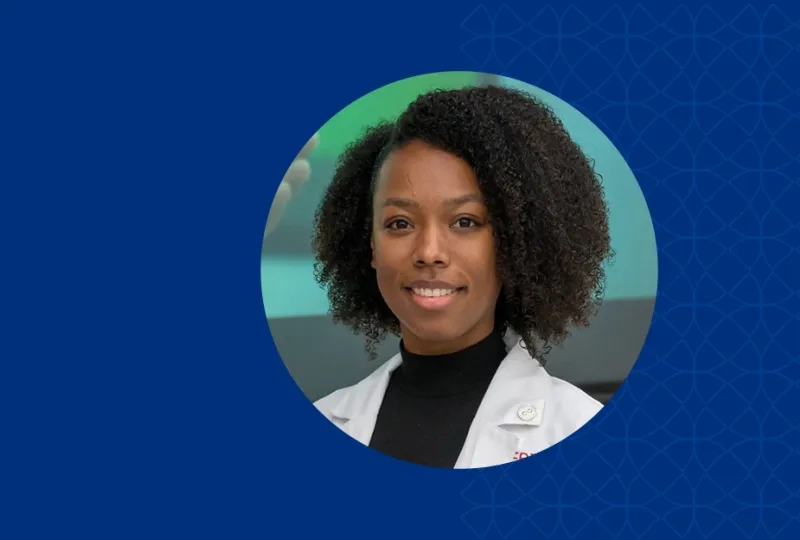
Data Analytics Student Profile: Perkell Collie
Mon, 01/26/2026
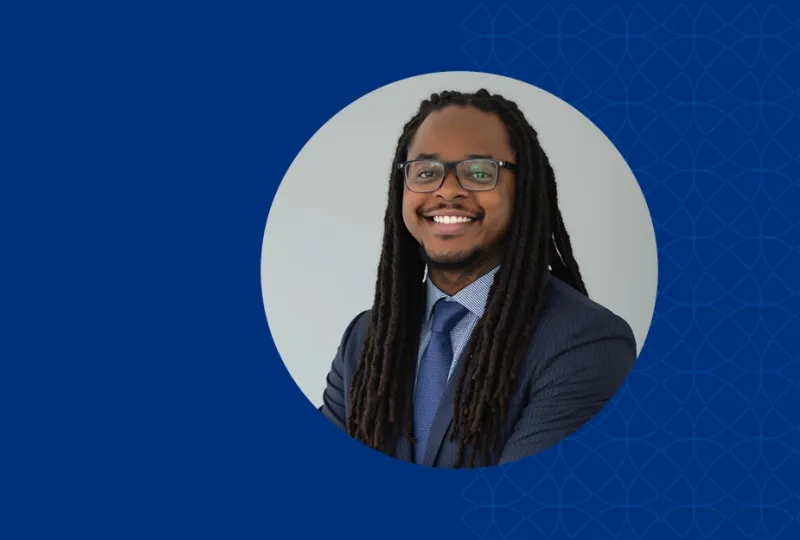
Data Analytics Student Profile: Jonathan Henry
Thu, 03/26/2026