

A Call to Help Alleviate Chronic Sorrow


When emails from Grenada began filling her inbox, Mary Beth Coughlin deleted them one by one, believing each was some sort of a scam.
Soon, the assistant professor of nursing at the MGH Institute of Health Professions School of Nursing began getting phone calls. Lots of them. All from Grenada. She ignored those as well until one day she decided to see who was on the other end. “I was ready for a knockdown,” Coughlin admitted. “I was ready to say, ‘Stop calling me!’”
On the other end of the line, however, wasn’t a scammer at all. It was Marian Hanso, a mother from Norway who currently is teaching high school in Grenada. She wanted to talk to Coughlin about her research on chronic sorrow.
“I was happy she picked up the phone,” Hanso said with a laugh, admitting that she called the researcher for months before they finally connected.
What Hanso was reaching out to Coughlin about was the nurse practitioner’s research on a long-term sadness felt by the chronically ill and their caregivers. As the mother of a 13-year-old daughter with Asperger’s syndrome, Hanso knew that same sense of sadness all too well. So much, in fact, that she received a $25,000 grant from the Norwegian Non-Fiction Writers and Translators Association to write a book on chronic sorrow to help parents of autistic children cope with their feelings.
Problem was, there were few articles and even fewer studies. When Hanso began to look for literature on the subject, she discovered Coughlin was cited again and again by other researchers. Then she found Coughlin’s dissertation on the topic and her research that showed that parents of children with autism experience the same long periods of sadness often felt by other adult caregivers. The path to learning more about chronic sorrow–and writing her book—was leading straight to Coughlin’s door.
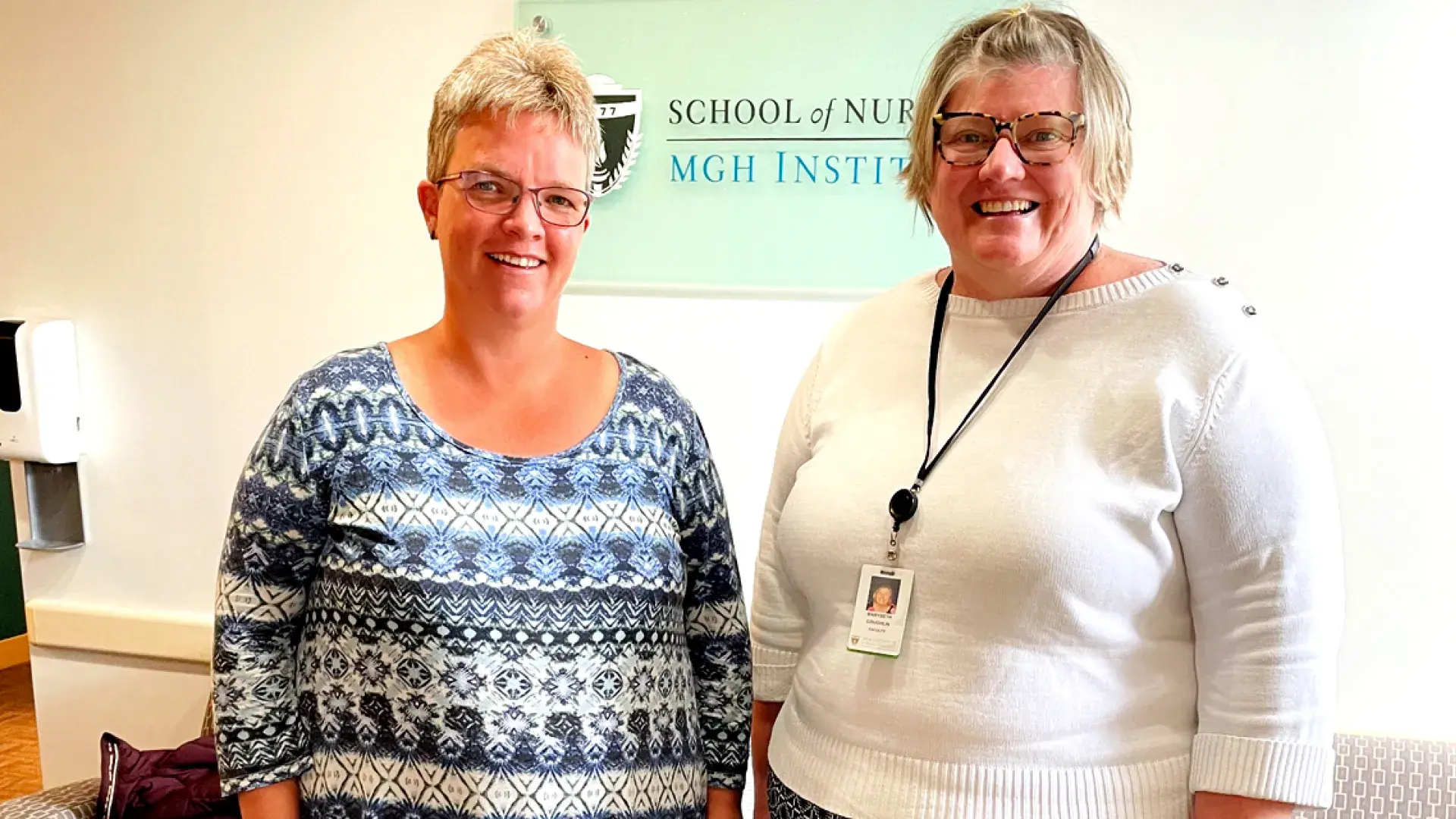
During that initial phone call, Hanso said she wanted to fly to Boston to meet in person to learn more from one of few researchers looking at the effect childhood autism has on parents. “It was unbelievable,” Coughlin recalled of the meeting that lasted several hours. “I felt proud, in a way, that my work was being recognized.”
Ironically, her dissertation manuscript that she used for her study had just been rejected the week before the visit took place. “I was devastated and feeling sorry for myself,” she said, especially since the paper recently had been given a first-place award at a regional medical conference.
Meeting Coughlin was just what Hanso needed, as it not only helped her understand the chronic sadness and stress she has experienced in dealing with her own child, it also taught her to take care of herself. Taking a few tips from Coughlin’s writings, Hanso now looks to family and friends for support and has developed a new mindset to help her daughter live her best life possible. She also has found ways to see the humor in life that was once lost to her.
For Coughlin, the experience has put everything in a different perspective. “The best part is that my tiny bit of research made its way to Norway to a person who felt she lived with what I wrote about and wants to help other parents,” she said. “To me, that’s the best kind of award there is. If it reaches the people who need it, it’s worth it.”