

Alumni in Practice: Where Creativity Meets Care in Occupational Therapy
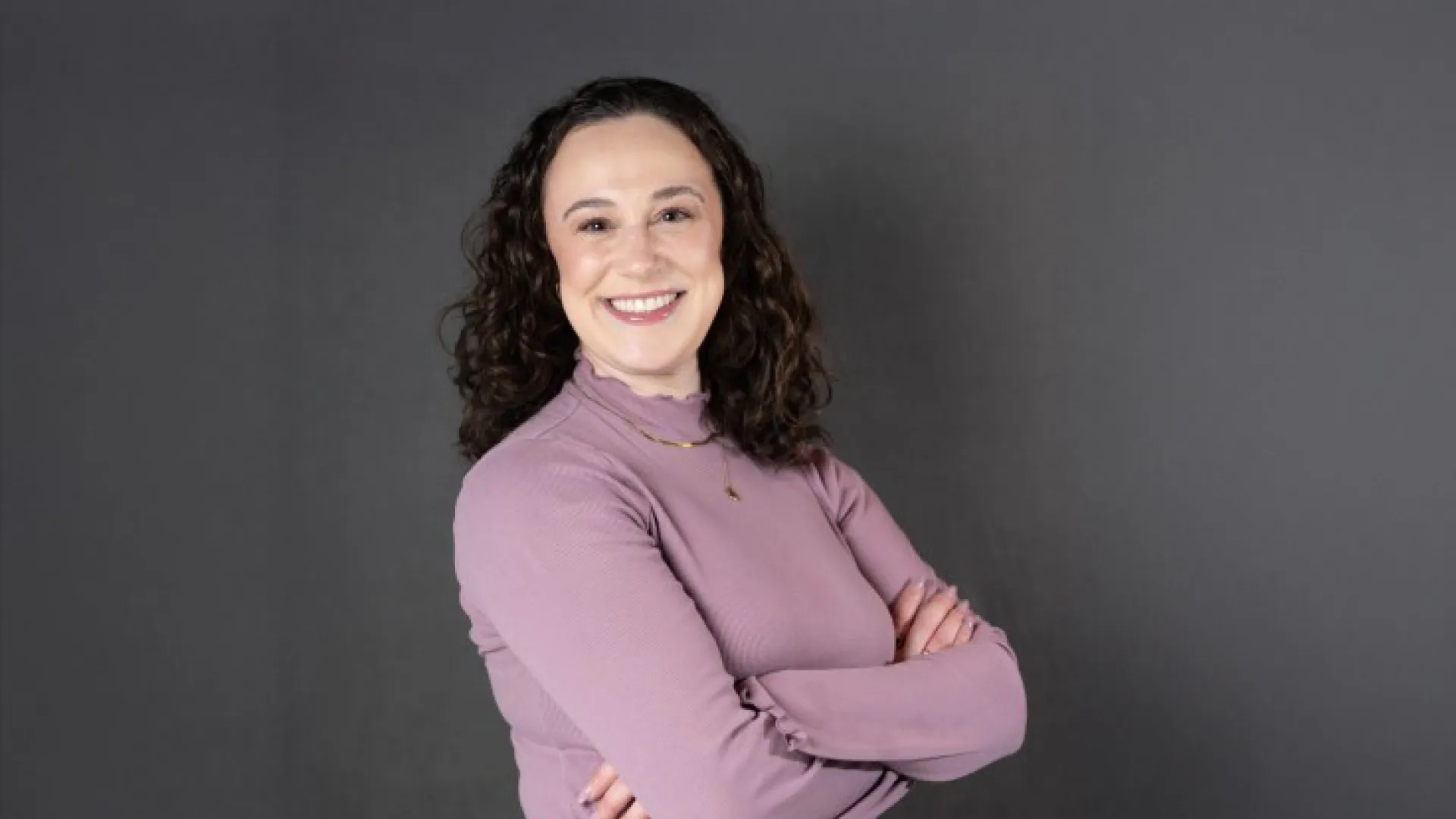


For Sarah Attanasio, OTD ’22, a career in occupational therapy brought together a long-standing interest in science with a desire to make a meaningful difference in others’ lives. Today, she works at Rebecca School in New York City supporting neurodivergent students through play-based, individualized approaches that prioritize connection and growth. In this interview, she reflects on the experiences that shaped her path and the work that continues to inspire her.
What drew you to pursue a career in occupational therapy?
Science was always my favorite class in school and learning about the human body always intrigued me. I spent high school job shadowing various healthcare roles—neurologist, pediatrician, veterinarian, physical therapist, you name it, but nothing seemed like the right fit. My mom is a special education teacher and always told me growing up that I should become an occupational therapist, but I needed to figure it out for myself. So, I finally shadowed an occupational therapist at the school my mom worked at, and I fell in love with it. I love that occupational therapy is a career where you get to be creative and have fun while having a huge impact on others’ lives.
Can you share a bit about your current role and the population you serve?
I am a school-based occupational therapist at the Rebecca School in NYC. The Rebecca School is a DIRFloortime school for students 3-22 years old with neurodevelopmental delays in relating and communicating. I spend my days assessing, creating individualized interventions based on the passions of my students, and simply playing in the sensory gyms. My job is to support growth across the functional emotional developmental capacities through play-based interventions while also addressing the fine, gross, and visual motor skills that are needed for my students to access their academic programming and daily activities.
What are some of the most important skills or strategies you use in your work each day?
In my daily role, I must be a strong collaborator with my transdisciplinary teams, I must have patience and presume competence of all, and most importantly, I must be playful. There’s a quote that I’ve been hearing: “Children don’t want to learn from someone they don’t like.” With that in mind, it’s important for me to be able to get on their level and consider the whole picture when creating interventions.
How did the IHP prepare you for your current role?
During my program, the IHP emphasized interprofessional collaboration, and I remember having classes where we worked on case studies with our peers in the PT, PA, and SLP programs. As an OT, the therapeutic frameworks emphasize evaluating the individual as well as their environment and the specific occupations they engage in when assessing for occupational performance challenges. In pediatrics and especially in the population that I work with, where many of my students are non-speaking, us clinicians also must collaborate with the families of our students, as they are always the experts of their children. This experience with interprofessional collaboration early on in my schooling has been imperative to the work I do every day.
What do you wish more people understood about the role of occupational therapists working with neurodivergent populations?
I wish more people understood that the key to working with this population is that supporting authentic participation should be prioritized over compliance. As an OT working within the DIRFloortime model, our goal is to support children in engaging with their environments in ways that feel safe and meaningful, rather than trying to make them fit specific expectations. This work is guided by an understanding of sensory processing, communication differences, and emotional regulation, allowing for individualized supports. With that, it’s important for us clinicians to view behavior as a form of communication, recognizing that dysregulation signals an underlying unmet need, rather than immediately punishing a child for poor behavior. Lastly, it’s important to remember that progress isn’t always linear or immediately visible and not to give up. Progress can look different for everyone, and progress could simply look like increased comfort, stronger self-advocacy, or a growing ability to navigate challenges with greater independence.
What are you currently working toward or excited about in your professional journey?
I’m currently working toward advancing my certification in DIR/DIRFloortime and deepening my understanding of relationship-based, developmental approaches. I’m excited about continuing to build my skills and sharing those skills at conferences in the future regarding utilizing DIRFloortime strategies to support regulation, communication, and meaningful engagement for the students I work with.
What advice would you give to health professionals interested in this area?
I’d suggest trying out a variety of clinical placements and really throwing yourself into each experience, especially opportunities to work with the neurodivergent population if that is something that you think would be of interest to you. That exposure can really help you figure out what feels meaningful and what you’re drawn to as a clinician. In the end, you’ll be happiest when you’re working with clients and in areas that genuinely excite you and make you feel fulfilled.