

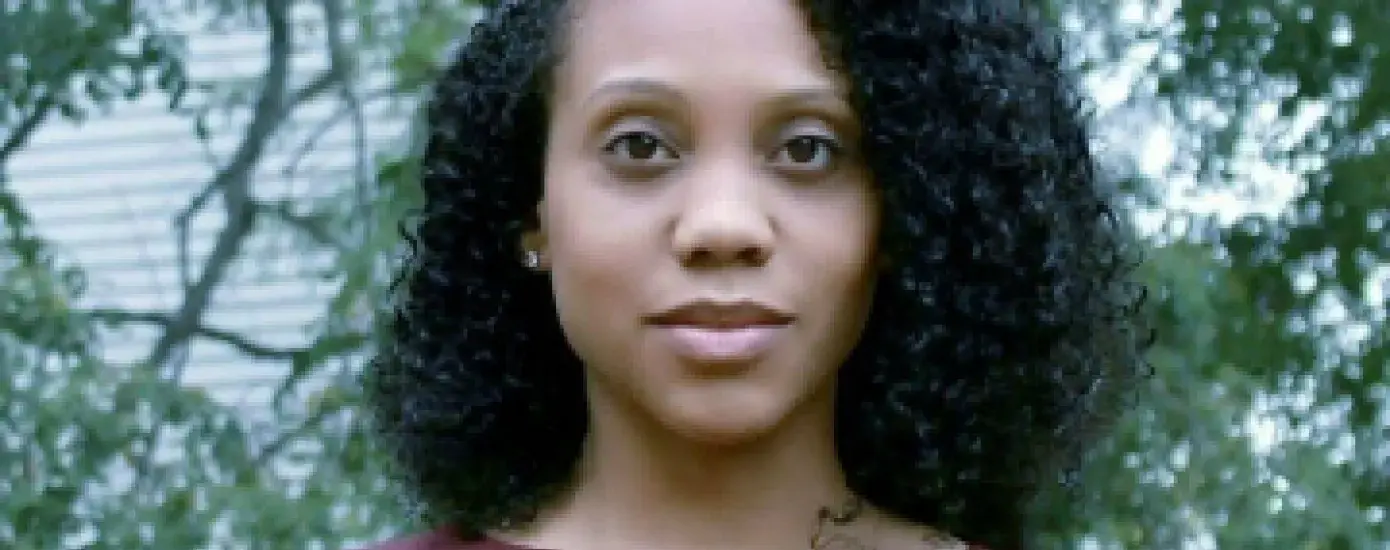


Elizabeth Hylton has found a bright path to her future. It came in the form of a bridge. Not just any bridge, but two gateway structures that define both Boston and Worcester.
Hylton, a 2010 Master of Science in Nursing graduate of MGH Institute of Health Professions, requested that the state Department of Transportation light both the Leonard P. Zakim-Bunker Hill Memorial Bridge in Boston and the Kenneth F. Burns Memorial Bridge in Worcester on June 19 in recognition of Juneteenth. That was the day in 1865 – two and a half years after the Emancipation Proclamation which officially made slavery in the United States illegal – when Union general Gordon Granger read federal orders in Galveston, Texas, announcing that the unlawfully enslaved in Texas, were free.
Klark Jessen, a transportation department spokesman, said the agency handles about two dozen similar requests annually from civic and non-profit groups, but this year marks the first time both bridges will be lit in the red, yellow and green Pan African colors in celebration of Juneteenth. “It’s a small thing but hopefully it will create conversation,” said Hylton, a psychiatric nurse practitioner at a Worcester clinic.
The idea of creating conversation around Juneteenth grew out of discussions between Hylton and her sister, Bridgette L. Hylton, and friends Sanam Hakim Zaer and Phillip Blumberg, all of whom were interested in educating people about the date’s significance. “Our mission was to make a difference for the people who hold this holiday close to their hearts,” said Elizabeth Hylton.
Their efforts paid off, and not only in the bridge lightings. The town of Shrewsbury, home to both sisters and the other group members, has issued a proclamation formally recognizing Juneteenth. Town officials also agreed to promote the day on the town’s website and social media pages. For Hylton and her colleagues, it was a small but significant victory.
The group has other things on tap as well. They’ve already asked Shrewsbury to create an anti-racism committee to look into how the town’s agencies and departments, including police and schools can become more inclusive. And they’re planning to petition the school department to replace Columbus Day with Indigenous Peoples Day on the Shrewsbury school calendar.
Hylton said she’s hoping to look into policing policies in Worcester as well after an 11-year-old patient exhibited signs of mental distress when police pointed a gun at him during a drug raid at the home of a friend. “This is just a bouncing-off point for us,” she says of the bridge lightings.
Part of the 35-year-old Caribbean American’s interest in anti-racism may rest with her experience as a shy 11-year-old schoolgirl who felt the sting of racism when another child pointed to her and cruelly said, “at least I’m not her skin color.”
Working with patients who have experienced racism has helped her understand its repercussions, especially when it comes to health care. “It’s not only about Black Lives Matter,” she says. “It’s about a lack of access to health care, a lack of access to good food, a lack of access to clean water.”
“These are conversations that need to be happening in homes, in schools, and in hospitals,” she says of the inequities that minority communities face. “This is a nationwide problem that needs to be addressed on all levels.”
Hylton is hoping to address that inequity gap through civic action. On Juneteenth, the simple red, yellow and green lights on two Bay State bridges will remind others that they can make a difference, too.