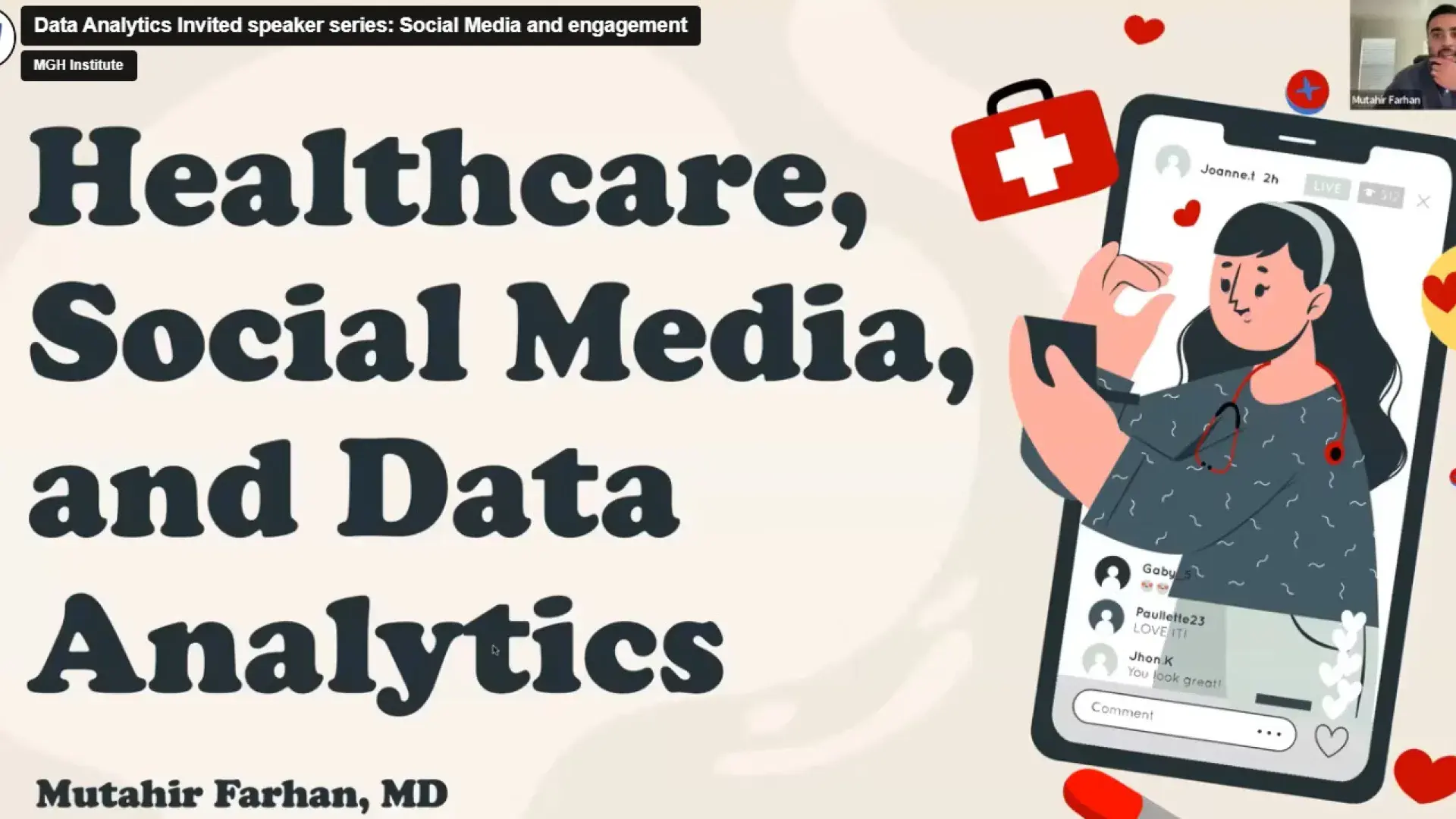
Social Media in Medicine: Dr. Mutahir Farhan’s Vision for a Digitally Empowered Healthcare Community


In today's digital age, social media has become a powerful force in shaping public opinion, sharing information, and fostering community. For medicine, traditionally confined to clinical walls and academic journals, this evolution presents both an opportunity and a responsibility. Dr. Mutahir Farhan—internal medicine physician, digital educator, and founder of MadMedicine—shares a compelling message about why physicians must not only understand social media, but actively engage with it to lead the conversation on health.
In a presentation delivered as part of the Data Analytics Invited Speaker Series, Dr. Farhan breaks down the current trends in digital communication and offers a roadmap for how medical professionals can meaningfully contribute to online health discourse.
Why Physicians Need to Show Up Online
Dr. Farhan begins by painting a clear picture: patients are already online, searching, watching, and forming opinions about their health long before they enter a doctor’s office. Platforms like TikTok, YouTube, Instagram, and even Twitter (X) are now major sources of health information—often unvetted and sometimes dangerously inaccurate.
“If we’re not part of the conversation, someone else is,”
He argues that physicians have an ethical imperative to meet the public where they are—online—and to do so in a way that is not only informative but engaging and digestible. His own journey with MadMedicine, a platform producing short-form videos that simplify medical topics, stands as proof of what’s possible. With hundreds of thousands of followers across platforms, his message resonates: people crave clear, science-based information.
MadMedicine: Making Medicine Understandable
Dr. Farhan’s content focuses on simplifying complex medical subjects—from explaining lab results to demystifying chronic conditions like diabetes or high blood pressure. Through humor, storytelling, and relatability, he’s built a brand that bridges the gap between the medical world and the public.
He emphasizes that credibility, consistency, and clarity are key pillars. But more importantly, humanity—being real and relatable—helps build trust. This isn’t about branding for the sake of popularity; it’s about making healthcare feel accessible, empathetic, and relevant.
The Role of Analytics: Turning Insight into Impact
A major takeaway from Dr. Farhan’s talk is that successful digital communication in medicine isn’t guesswork—it’s data-driven. Social media platforms offer powerful tools that allow creators to understand what works and what doesn’t. These insights can be transformative for physicians trying to reach and educate a broader audience.
Key analytics strategies discussed include:
- Audience Demographics: Knowing who is watching (age, gender, location) helps tailor content for better relevance and impact. For instance, content about women's health may need different framing if your primary viewers are women in their 20s vs. women in their 40s.
- Watch Time and Retention Rates: These metrics reveal how long viewers stay engaged. If viewers drop off in the first 15 seconds, you may need to rework your hook or simplify your introduction.
- Engagement Metrics (Likes, Comments, Shares): These are signs of resonance. High engagement suggests that a message not only reached an audience but sparked thought, emotion, or discussion—key for education and influence.
- A/B Testing and Iteration: By posting variations of similar content and studying the results, physicians can refine their approach. You don’t need to guess what works, Your audience tells you—through the data.
He encourages physicians to view analytics not as a vanity scoreboard but as a feedback loop—an ongoing conversation with your audience that helps you serve them better.
Overcoming Barriers: “You Don’t Need to Be a Tech Expert”
One of the most empowering messages from Dr. Farhan is that you don’t need to be a tech-savvy influencer to make a difference. Many physicians are understandably hesitant about putting themselves out there—concerned about time, privacy, or professionalism. But Dr. Farhan offers practical advice: start small, stay authentic, and focus on value.
He also addresses the fear of criticism. You’re going to get pushback. But that’s part of growth. You’re not here to please everyone—you’re here to educate and help.
A Call to Action: The Digital Future of Medicine
As the presentation concludes, Dr. Farhan’s message is clear: social media is not optional for the future of healthcare—it’s essential. Whether it’s correcting misinformation, guiding public understanding during health crises, or inspiring the next generation of healthcare professionals, the physician’s voice belongs in the digital arena.
You have knowledge that can save lives, Share it. Online is where the world is listening.
Final Thoughts
Dr. Mutahir Farhan’s work is a powerful reminder that modern medicine isn’t just practiced in hospitals and clinics—it’s practiced in tweets, reels, and comment sections too. The digital world is not a distraction from clinical care; it’s an extension of it.
Through strategic use of content, analytics, and authentic communication, healthcare professionals have a real opportunity to lead the future of health education. The tools are already in our hands—what we do with them is up to us.