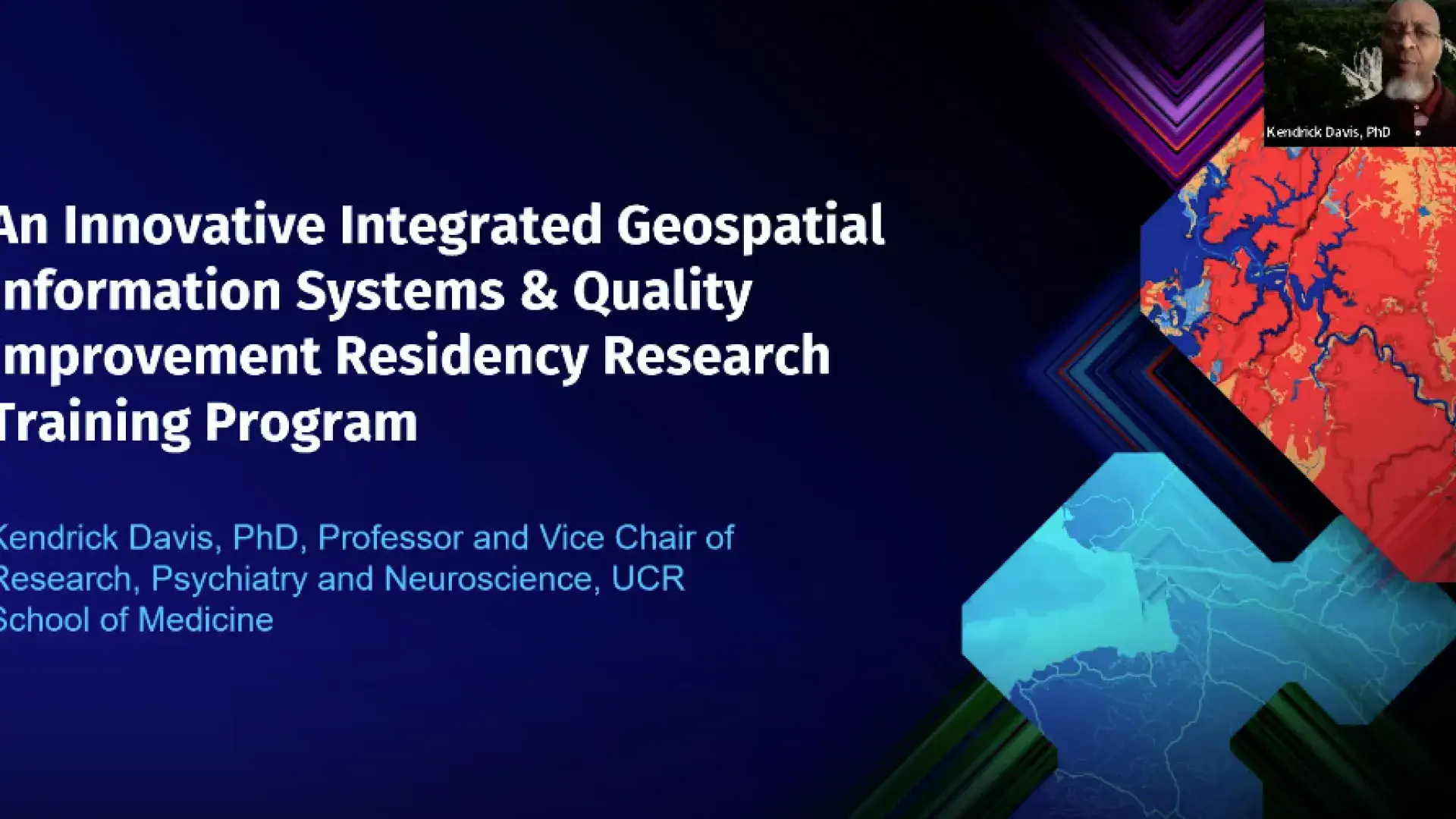
Reimagining Residency: How GIS Can Transform Medical Training



Inland Southern California is no stranger to health disparities, but a bold new residency curriculum is turning geographic challenges into learning opportunities. Led by Dr. Kendrick Davis at the UCR School of Medicine, this program integrates Geographic Information Systems (GIS) with quality improvement (QI), cultural psychiatry, and psychometrics to reshape how psychiatry residents understand, assess, and intervene in the real-world health needs of their communities.
This isn't just a research project—it’s a reimagined residency experience, grounded in data, equity, and place-based medicine.
Why GIS in a Residency Curriculum?
GIS—technology used to visualize, analyze, and interpret spatial data—might seem like an unlikely companion to medical training. But when residents are asked to address complex problems like poverty, access to care, and chronic health outcomes, maps become more than visual tools—they become blueprints for action.
Dr. Davis’ curriculum makes GIS a foundational pillar of residency training, helping residents:
- Visualize and identify regional health disparities.
- Map health resources and service gaps.
- Design geographically targeted interventions.
- Track and evaluate outcomes at the community level.
This is not just about learning a tool—it’s about cultivating a mindset of place-based, equity-informed care.