

How Computer Vision Is Redefining Human Gait Analysis
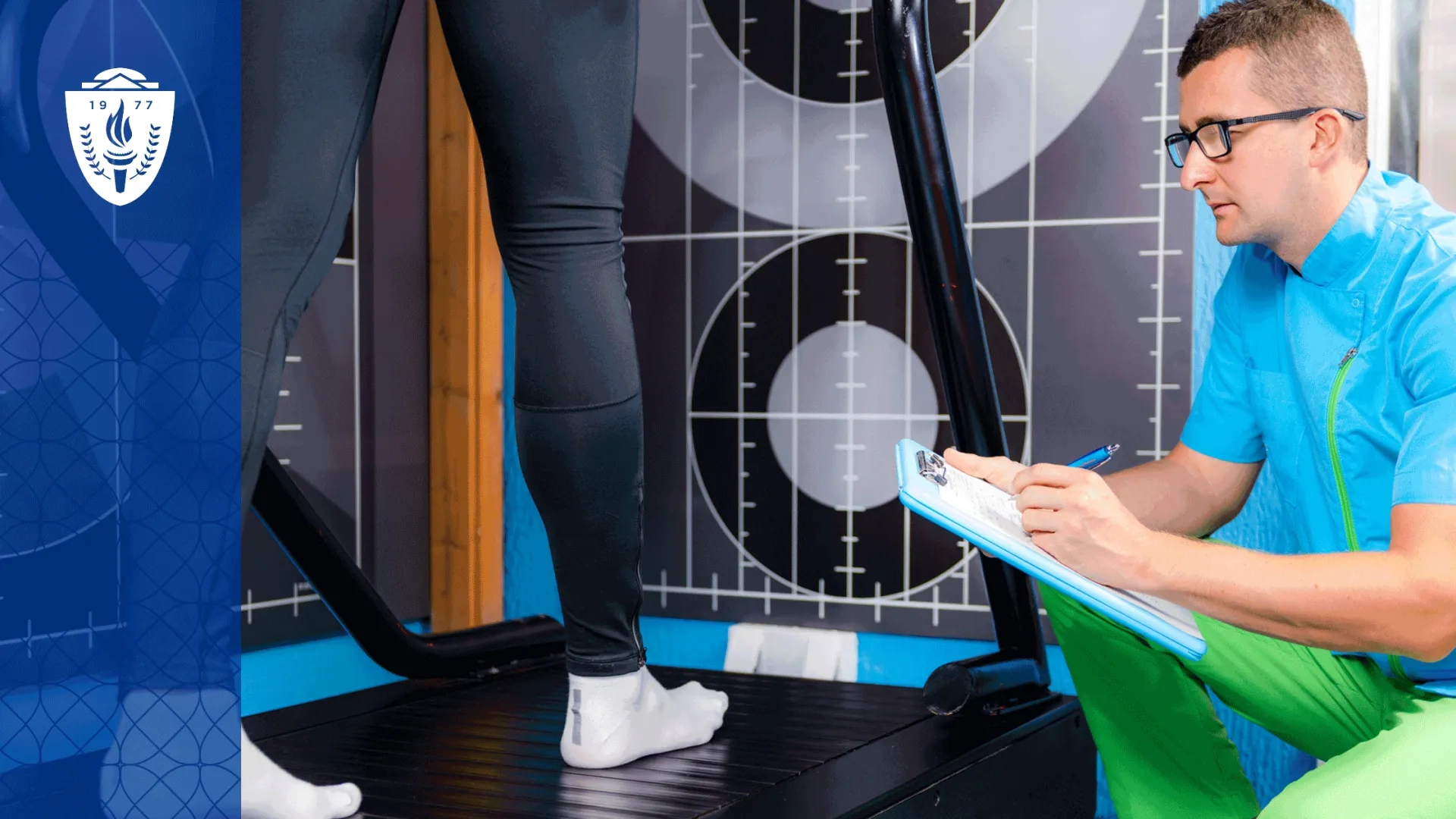


Walking is one of the most fundamental human activities, yet every step carries a digital signature of health. Small shifts in symmetry, stride, or rhythm can reveal early signs of neurological disease, musculoskeletal injury, or cognitive decline. For decades, gait analysis relied on motion-capture laboratories, wearable sensors, or subjective visual scoring. Today, advances in computer vision (CV) are transforming ordinary video into an objective window on human movement.
What Is Computer-Vision Gait Analysis?
Computer vision gait analysis uses AI to extract quantitative movement features directly from video.
Compared with traditional tools, it is:
- Non-invasive: no markers or sensors.
- Scalable: deployable in clinics, homes, or community settings.
- Granular: detects micro-movements such as hesitation, sway, or altered joint angles.
- Continuous: enables longitudinal tracking of recovery or decline.
With standard cameras or smartphones, clinicians can now capture biomechanical data once limited to research facilities.
Clinical Applications Across Medicine
Gait reflects the integrated function of the nervous, musculoskeletal, and cardiopulmonary systems. Computer-vision gait analysis provides new precision across clinical disciplines:
- Neurology: Subtle reductions in arm swing or stride variability can signal prodromal Parkinson’s disease or early cognitive decline in Alzheimer’s.
- Orthopedics & Pain Medicine: Quantitative symmetry and stability measures track recovery after hip or knee surgery and help differentiate compensatory movement from true joint limitation.
- Rehabilitation Medicine: Stroke and traumatic brain injury patients can be monitored remotely, with objective feedback that complements traditional scales such as Fugl-Meyer or 10-Meter Walk.
- Aging and Cognitive Health: Gait speed and variability are among the most sensitive indicators of frailty, fall risk, and functional independence.
- Sports Medicine: Frame-level motion analysis refines return-to-play decisions and reduces re-injury rates.
Across these fields, computer vision enhances clinical judgment by transforming subjective assessment into reproducible, data-driven insight.
Challenges and Next Steps
To support adoption in clinical environments, development must prioritize the following:
- Data Privacy and Security.
Systems should process video either on-device or within secure institutional networks, with raw footage removed after extracting pose and gait parameters. Consent language should explicitly address storage duration, access controls, and secondary use. - Equity and Bias Mitigation.
Model performance must be reported across demographic and mobility subgroups, and training datasets need to deliberately include users with varied assistive devices and gait impairments. Any systematic performance gaps should trigger retraining before deployment. - Validation and Reliability.
Prospective clinical studies should establish test–retest stability, sensitivity to change over time, and agreement with clinician assessments. Thresholds for clinically meaningful deviation from baseline must be defined. - Workflow Integration.
Output should be formatted as a single, interpretable clinical metric or summary panel automatically delivered into the EHR or rehabilitation platform, without requiring additional software or manual upload steps. - Clinical Interpretability.
The system must present results as changes relative to the patient’s own baseline and highlight deviations that require clinical attention, rather than providing raw coordinate trajectories. - Regulatory Readiness.
Documentation of model training, validation data sources, failure modes, and performance boundaries should be made available to support institutional approval and regulatory review.
Future work should establish standardized conditions for video capture, including camera angle, distance, lighting, and walking path, to ensure measurements are comparable across sites. Collaborative datasets with controlled mechanisms for de-identifying recordings should allow algorithm refinement without exposing patient identity. Multi-site prospective studies are needed to determine how well system outputs track recovery, detect decline, and support clinical decision-making in real-world workflows. As these practices solidify, computer-vision gait analysis can transition from research demonstration to a routinely deployed tool for monitoring mobility and functional health across care settings.
Conclusion
Computer vision is giving clinicians a new language for movement. By combining clinical expertise with computer vision, clinicians can measure movement objectively, track recovery remotely, and intervene earlier in disease progression. This technology does not replace observation; it amplifies it. Each step becomes a measurable signal, helping predict risk, personalize therapy, and support healthier aging.