

How to Become a Health Data Analyst: A Career Guide for Healthcare Analytics
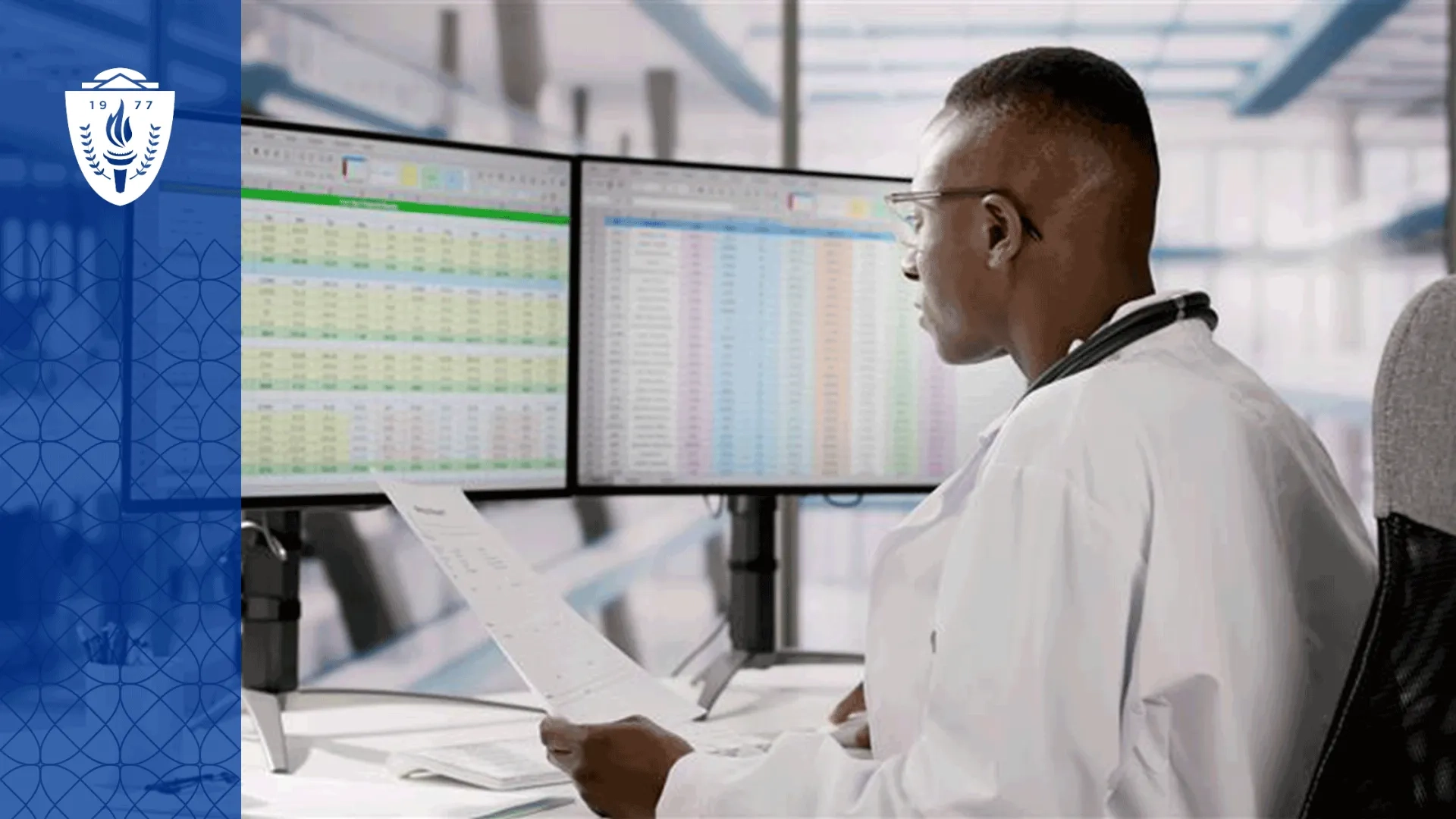


Healthcare runs on decisions: clinical decisions at the bedside, operational decisions across service lines, and strategic decisions about access, equity, quality, and cost. Today, many of those decisions depend on data from electronic health records (EHRs), claims, registries, patient-reported outcomes, imaging, and public health sources.
But healthcare data is not “clean” business data. It is complex, regulated, and deeply contextual. That is why organizations need health data analysts: professionals who can translate messy, high-stakes data into insights that improve care delivery, outcomes, and performance.
If you are considering this career, the pathway is accessible, but it should be intentional. Below is a practical guide to what health data analysts do, what employers actually look for, and the steps that reliably lead to job readiness.
What Is a Health Data Analyst?
A health data analyst (sometimes called a healthcare data analyst or clinical data analyst) uses analytical methods to answer questions that matter to healthcare organizations, such as:
- Which patients are most at risk for readmission, complications, or poor outcomes?
- Are we delivering equitable care across populations?
- Where are there quality gaps, safety issues, or workflow bottlenecks?
- Which interventions measurably improve outcomes or reduce cost?
Health data analysts work across settings including hospitals, health systems, academic medical centers, payer organizations, public health agencies, and health technology companies.
What makes health data analytics different?
In addition to core analytics skills, health data analysts must understand:
- Clinical and operational context: what the data represents in real care workflows
- Health data structures: encounters, diagnoses, procedures, medications, labs, vitals, utilization
- Data quality realities: missingness, coding variability, documentation artifacts, bias
- Privacy and compliance expectations: protected health information (PHI), governance, minimum necessary use
What Does a Health Data Analyst Do Day to Day?
Roles vary by organization, but most health data analysts spend their time in five buckets:
- Data extraction and preparation
Pulling data from EHR reporting layers, claims warehouses, quality registries, and public datasets; validating, cleaning, and documenting it. - Analysis and modeling
Using statistical methods and analytics workflows to evaluate outcomes, utilization, quality metrics, and program impact. - Reporting and visualization
Translating results into dashboards, KPI reporting, and stakeholder-ready narratives for clinical leaders, operations, and quality teams. - Measurement design
Defining measures and denominators, aligning metrics to operational definitions, and ensuring analytic reproducibility. - Communication and decision support
Presenting insights clearly, explaining limitations, and recommending actions that are feasible in real settings.
Skills Employers Expect in Health Data Analysts
Many candidates underestimate what “healthcare” adds to analytics. Employers typically seek a combination of technical skills and healthcare fluency.
Technical skills
- SQL (joins, window functions, performance considerations)
- Python or R (data wrangling, statistical analysis, reproducible workflows)
- Statistics (inference, regression, confounding, sampling, hypothesis testing)
- Data visualization (Tableau, Power BI, or equivalent; communicating uncertainty)
- Data management (data dictionaries, versioning, QA checks, governance workflows)
Healthcare-specific skills and knowledge
- EHR and claims concepts: encounters, utilization, coding patterns, documentation workflows
- Standard vocabularies and coding systems: ICD-10, CPT, HCPCS, DRG, LOINC, RxNorm
- Quality measurement: HEDIS-like measures, readmissions, safety, performance dashboards
- Data privacy and ethics: HIPAA expectations, de-identification, responsible use, bias awareness
- Interdisciplinary communication: working with clinicians, informaticists, quality leaders, and operations
A general analytics toolkit is necessary, but it is not sufficient. The differentiator is the ability to interpret results in a way that makes sense for care delivery and health system constraints.
How to Become a Health Data Analyst: 5 Steps That Work
1. Start with the right foundation (degree plus context)
Health data analysts come from many starting points: health professions, public health, business, IT, research, and career transitions. What matters is building a foundation in analytics plus healthcare context.
A bachelor’s degree can be enough for some entry roles, but many organizations increasingly prefer candidates with graduate-level training for healthcare analytics positions, especially those involving quality measurement, predictive work, and stakeholder-facing reporting.
If your goal is healthcare analytics specifically, prioritize training that includes healthcare-relevant datasets, measurement, ethics, and real stakeholder communication, not only generic analytics exercises.
2. Build core competency in SQL and data wrangling
Health data is relational and messy. The fastest way to become employable is to become highly competent in SQL and data preparation.
Your target competency is the ability to:
- pull cohorts with correct inclusion and exclusion logic
- define time windows and index events
- reconcile duplicates and conflicting records
- document assumptions and build QA checks that catch errors early
3. Learn statistics the way healthcare uses it
Healthcare decisions require statistical reasoning, not only code.
A job-ready health data analyst can explain:
- why confounding matters and how to address it
- what an association does and does not imply
- when to use different models, and what assumptions those models require
- how to communicate uncertainty and limitations responsibly
Healthcare stakeholders do not need a lecture in p-values. They need clear interpretation that leads to appropriate action.
4. Create a portfolio that looks like healthcare work
Portfolios get interviews when they resemble the work organizations need done.
Strong portfolio projects often include:
- a readmission or utilization analysis with clear cohort logic
- a quality dashboard with well-defined measures and documented assumptions
- an evaluation of an intervention or workflow change
- a health equity analysis using stratification and careful interpretation
- reproducible reporting (a notebook, data pipeline summary, and a short stakeholder memo)
If you can produce a concise narrative of the problem, the method, the limitations, and the recommendation, you look like someone ready to support real decisions.
5. Add targeted experience through projects, practicum, or applied roles
Many job postings list “2 to 3 years of experience,” but employers often accept well-structured applied project experience, especially when it demonstrates real-world constraints: messy data, incomplete documentation, stakeholder alignment, and reproducibility.
Look for:
- applied projects tied to healthcare questions
- roles adjacent to analytics in healthcare settings (quality, operations, research, informatics)
- mentorship and feedback loops that improve your analytic communication
Where Graduates Typically Work
Health data analyst careers span multiple tracks. Examples include:
- Clinical quality and safety analytics
- Population health and care management analytics
- Health equity analytics
- Operational and capacity analytics
- Payer and claims analytics
- Clinical research analytics
- Health informatics and reporting
As you gain experience, many analysts move into senior analyst, analytics lead, data product, informatics, or analytics management roles.
Why a Healthcare-Based MSDA Pathway Matters
Many analytics programs teach tools. Fewer teach how to apply them responsibly in healthcare.
A healthcare-centered MS in Data Analytics is designed to build:
- technical depth (SQL, analytics programming, statistics, visualization)
- healthcare measurement literacy (definitions, denominators, validity)
- communication skill for clinical and operational stakeholders
- ethical and compliant analytic practice in regulated environments
If your goal is to become a health data analyst, you should seek a training environment that treats healthcare not as a “domain example,” but as the core context.
Frequently Asked Questions
Do I need to be a clinician to become a health data analyst?
No. Many strong health data analysts come from analytics, IT, business, or research backgrounds. You do need healthcare fluency, and the most effective path is structured training plus applied projects that reflect real healthcare problems.
What tools should I learn first?
Start with SQL and one analytics language (Python or R). Then add visualization (Tableau or Power BI). Tools matter, but the ability to define measures correctly and explain insights clearly matters more.
What is the difference between a data analyst and a health data analyst?
A health data analyst works with clinical and administrative healthcare data and must understand healthcare workflows, measurement definitions, and privacy constraints. The work is more regulated and more context-dependent.
Next Step: Build Toward Job-Ready Health Analytics
If you are motivated by meaningful, measurable impact on patient care and health system performance, health data analytics is one of the most practical ways to contribute. The field rewards people who combine analytic rigor with healthcare context and clear communication.
If you are exploring graduate study, look for an MSDA pathway that aligns technical skill-building with real healthcare datasets, measurement, and applied decision support.