

Supreme Court Decision on Roe vs. Wade “Devastating for the Future of Reproductive Justice”
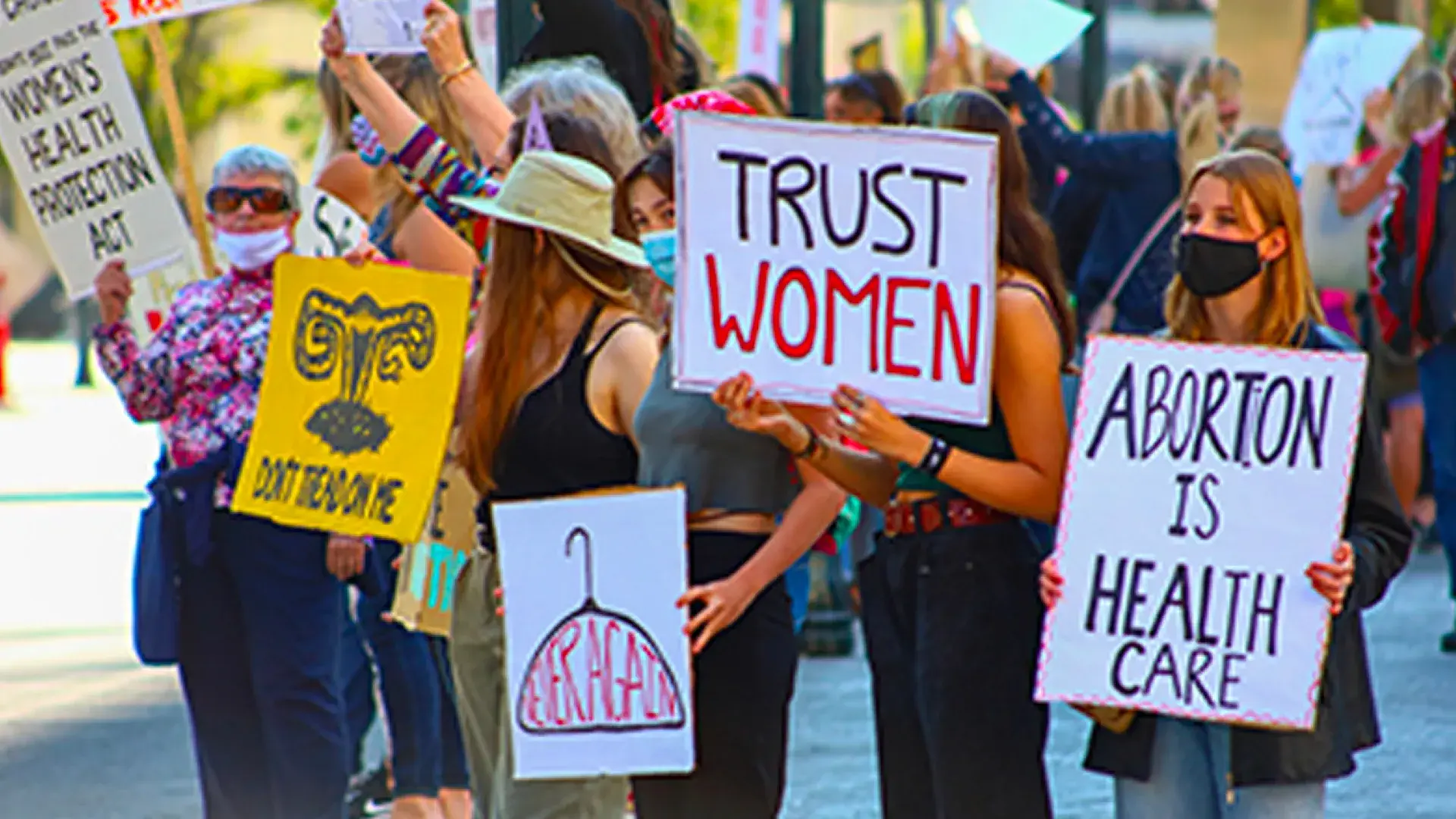


For the first time in nearly a half century, abortion is no longer a constitutional right in the United States, the result of Friday’s historic ruling by the Supreme Court which overturned the 1973 landmark Roe vs. Wade decision.
“This is really devastating for the future of reproductive justice,” said School of Nursing Associate Professor Kathy Simmonds, PhD, who has been an abortion clinician for the past 30 years. “It's extremely sad to see a right people have had for nearly 50 years be taken away. But it’s also not surprising - we’ve been moving in this direction for the last 30 years because there has been a steady chipping away of the rights of people to have an abortion in the U.S., so this is essentially the cherry on top of a policy landscape that's already made it increasingly difficult for people without means.”
The Supreme Court’s ruling now leaves it to states to decide how to regulate – or outlaw – abortion. At least 20states have trigger laws in place that will outlaw abortion immediately. Massachusetts is one of 16 states that will continue to protect abortions rights, a position furthered strengthened when Gov. Charlie Baker issued an executive order protecting those who are providing abortions to people coming in from other states.
“The governor’s executive order is important for reassuring those hardworking front line providers that they will not lose their licenses, they will not face criminal charges, they will not be extradited from the state if they engage in providing abortion services to someone who has come in from out of state,” said Simmonds, who spoke about the ruling to CBS Boston on Saturday morning.
Simmonds says the Commonwealth has been preparing for this ruling for the past couple of years, which is why it passed the ROE Act, which codified the right to abortion, lowered the age requirement for parental consent to have an abortion, and widened the net of abortion providers to include nurse practitioners, nurse midwives and physician assistants. Despite the preparations, the ruling will put a significant strain on the Commonwealth’s healthcare system.
“The impact on the healthcare system is going to be difficult because we are already stretched thin,” said Simmonds, who is a Women’s Health Nurse Practitioner and certified sexual assault nurse forensic examiner. “We have already been seeing an influx of people from states like Texas and Oklahoma that were already severely restricting abortions – if not outright banning them - even before Friday’s decision by the Supreme Court. This is only going to increase and it’s going to be difficult for the healthcare system to immediately respond to the demand, so we’re anticipating a hard time for the abortion healthcare workforce.”
Nationally, Simmonds says a deleterious economic and health impact on women will be an immediate and long-term effect from the ruling.
“We know from the important work of Dr. Diana Greene Foster and her team with the Turnaway study that people denied abortion who must continue an unwanted pregnancy are more likely to experience lasting negative economic effects - debt and bankruptcy, inability to finish planned education, not have enough money to cover basic expenses like food and shelter – and are much more likely to live in poverty overall than those able to obtain an abortion. And we also know that people who have abortions in the US currently are more likely to be poor – roughly 75% of people who have an abortion are considered poor – so by further blocking access to abortion, these people - and their children - are facing even greater threats to their economic security.”
With abortion out of reach for those who cannot access or afford it, the natural domino effect will be a rise in unwanted babies being born.
“More people will wind up continuing unwanted pregnancies, and given the current patterns in the U.S., people are not likely to relinquish children for adoption,” said Simmonds. “They will raise them, but without the kinds of socio-economic support - paid parental leave, a robust childcare system, etc., -without adequate resources to be able to parent in a safe, healthy environment. And for some people that might be even more difficult if they're struggling with substance use, housing instability, or domestic violence. So, children who are born because somebody can't get an abortion face many challenges from the get-go.”
Simmonds predicts an increase in maternal mortality will also follow.
“Abortion is estimated to be 12-14 times safer than carrying a pregnancy to term and delivering, so by denying people abortions we are going to see some increase in maternal mortality since pregnancy is far riskier than abortion,” said Simmonds, who came to the IHP in 2000. “And even if abortion remains legal in some parts of the country, many people will not have the means to travel. We know from history people will do all kinds of things to their bodies to try to end an unwanted pregnancy. And though medication abortion has dramatically increased the ability to have a safe, self-managed abortion, I imagine there is going to be some uptick in people doing things that are not safe in their desperation to end their pregnancy. And there are already anecdotes of this from states where restrictions have been applied.”
Despite the negative impact on women and on healthcare systems in states where abortion remains legal, Simmonds says the Commonwealth will remain a leader and serve as a beacon for other states.
“The abortion healthcare community here in Massachusetts is a very collaborative and collegial,” said Simmonds. “We have support from the large health systems and the Department of Public Health, so people are already in communication about how to bolster their services, how to offer longer hours and more days a week. There will need to be training of other providers who can help bring these services in, so that will be part of the plan going forward.
“It’s a sad day for women’s rights, but the Commonwealth is doing everything possible to not only make sure people have the right to decide, but that access is available to all.”
on women will be an immediate and long-term effect from the ruling