

Students Hold Black Lives Matter Vigil to Remember the Dead and Stand Against Racism


When protests over the killing of George Floyd began to sweep across the country, many members of the MGH Institute community felt the need to show solidarity with the Black community and stand against the pervasive, systemic racism that has afflicted the American people for more than 400 years.
Several student leaders made a decision: to hold a virtual Black Lives Matter vigil. The June 5 event, which was attended by students, faculty, staff, and alumni, was a space for those who wished to speak and share tributes to honor Floyd and the many other Black individuals who have been murdered. The host, Alyx Vogle, a student leader in the genetic counseling program, welcomed participants and encouraged everyone to share their thoughts and feelings.
“This vigil is not meant to be a politically charged event,” said Alejandra Luna, president of the Student Government Association (SGA). “It is meant to be a moment to pause, to acknowledge what has been happening, to grieve together, and to stand in solidarity. A lot of us are hurting, a lot of us are struggling to process, in particular Black students. While we need action, a space to process is also important.”
Nearly 200 people from the IHP community participated in the vigil on Zoom. It was an hour filled with statements, poems, spoken word presentations, resources, and calls to action in which the presenters expressed passion, anger, compassion, and frustration, that allowed the IHP community to grieve and protest the country’s institutional racism. As physical therapy student Kamaria Washington said before delivering an untitled spoken word presentation, “The content of this piece is not going to be comfortable for most – and it shouldn't be." Judging by Zoom chat comments of support from participants, Washington’s words of pain, pride, and protest did not offend; rather, they appeared to meet the moment and capture the “enough is enough” response seen and heard at the vigil and around the world these past two weeks.
“Tonight, we stand in solidarity with our Black siblings at the IHP, Black health care workers, and the entire Black community across the United States that for centuries has been plagued by systemic racism and violence,” said JP Bonadonna, an occupational therapy student representing the Coalition for Occupational Therapy Advocates for Diversity (COTAD). “We hear you and stand with you during these times and always.”
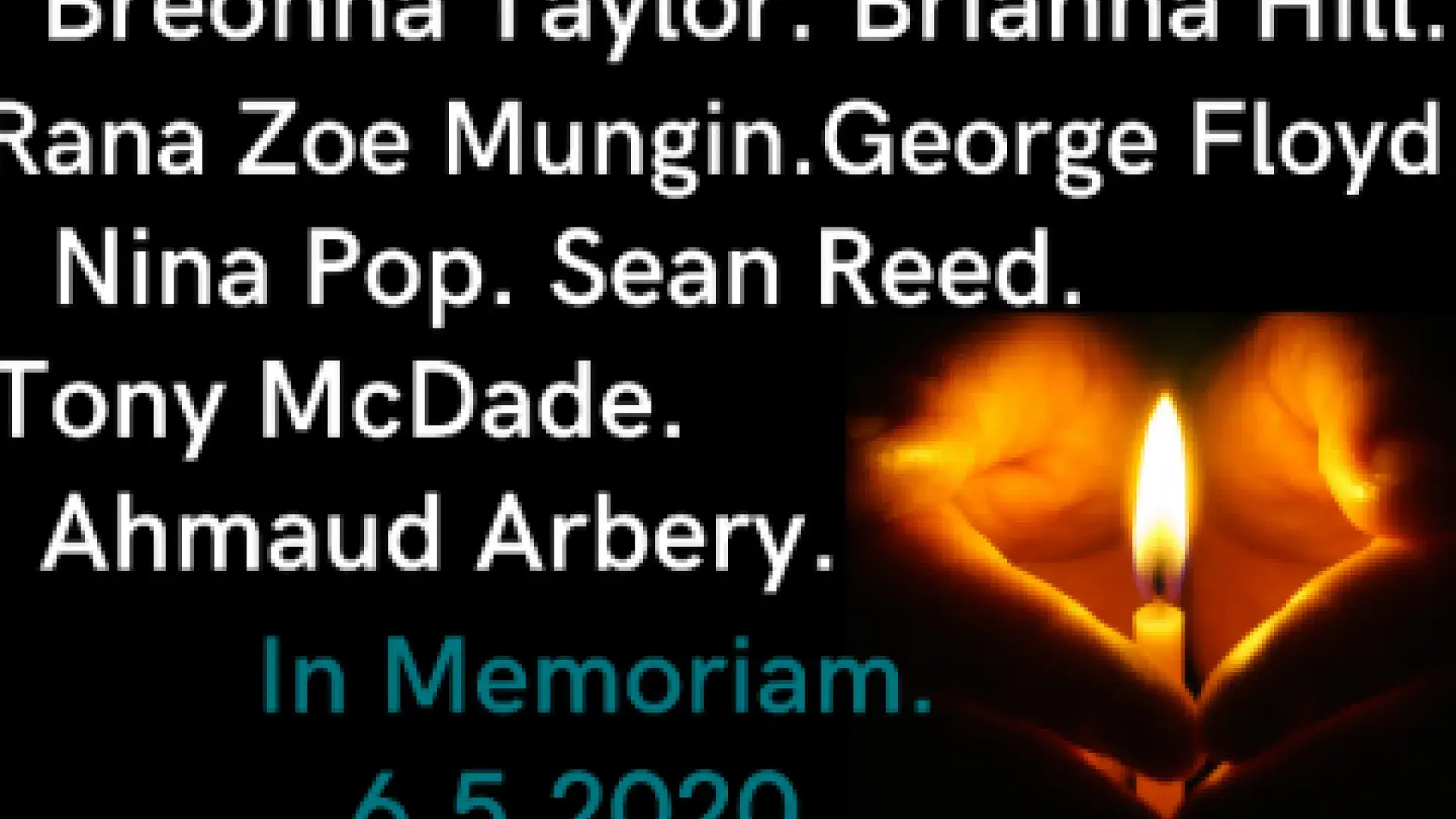
A three-minute video, “Say Their Names,” collaboratively created by nursing student Swarna Gummadi, compelled viewers to acknowledge and remember the Black individuals killed since 2014. It included Breonna Taylor, a decorated EMT killed by Louisville, KY police who used a no-knock warrant in executing a search warrant. Asleep in her home, Taylor was shot eight times. The police, it turns out, had searched the wrong address and their warrant sought someone who was already in police custody. Remembrance of Taylor, who would have turned 27 years old on the day of the vigil, began the ceremony.
“I’m tired,” said Alyssa Torchon, a speech-language pathology student representing Students for Racial Justice in Healthcare (SRJH), one of the event’s sponsors. “Systematic racism is something that is literally killing us, and it’s in every portion of America, including health care.”
The event was also sponsored by student group KinSIHP, the IHP’s LBGTQ+ organization. It had the full support of the Office of Diversity, Equity, and Inclusion (DEI) and the Office of Student and Alumni Services (OSAS), both of which had representatives speak at the event.
Victoria Tilton-Bolowsky, a doctoral research fellow in the Institute’s Cognitive Neuroscience Group and co-chair of SRJH, noted the vigil occurred at a very trying time, especially when the IHP campus is closed and people are scattered because of the COVID-19 pandemic. “It was meant to gather together and find strength in others so that we can muster the strength to keep moving forward,” said Tilton-Bolowsky. “Hopefully it serves as inspiration for deep reflection and asking ourselves how we can take steps towards radical change. This is a moment for us to come together.”
“Our place is by the side of our Brown and Black neighbors," added Richard Monari, a speech-language pathology student representing KinSIHP, “now and forever.”
To Luna, who was recently elected to her SGA president role, the vigil was something that allowed students to put aside their studies, if only temporarily, to focus on issues she believes will – and should – continue to be discussed on campus in the months ahead.
“We spend a lot of our time here and a lot of our energy towards getting our education, so we wanted people to have an opportunity within this community to feel that solidarity from members of this community,” said Luna. “We cannot hug each other. We can't cry together. But it seemed better to do something together than to mourn alone.”
After the vigil, Black students were invited to attend a follow-up forum, led by Torchon of SRJH, to support each other and further discuss the impacts of racial injustice and violence. The message, from so many of those who spoke and commented via Zoom, was clear: everyone, regardless of their race or skin color, has more listening, supporting, discussing, and work to do in the months and years that will follow the vigil.
Here is the complete list of organizers and participants, according to Luna:
SGA: Olivia Rotelle, occupational therapy student; Luna, Vogle, and Swarna Gummadi, nurse practitioner student
COTAD: Bonadonna
SRJH: Torchon and Tilton-Bolowsky
KinSIHP: Monari
Memorium video creation: Gummadi
Those who gave readings and contributed to putting together the event:
DEI
Kay Martinez, associate director of diversity, equity and inclusion
Kim Truong, executive director for diversity, equity, and inclusion
OSAS
Luella Benn, associate director for accessibility resources
Jack Gormley, dean of student and alumni services
Jessica Upton, student services manager, international student advisor
Kamaria Washington, physical therapy student
Brianna Williams, speech-language pathology student
Anna Do, occupational therapy student
Sara Newberry, a physical therapy student, created comprehensive resources for advocacy.