

Stroke Awareness Advocates Raise Awareness and Promote Prevention
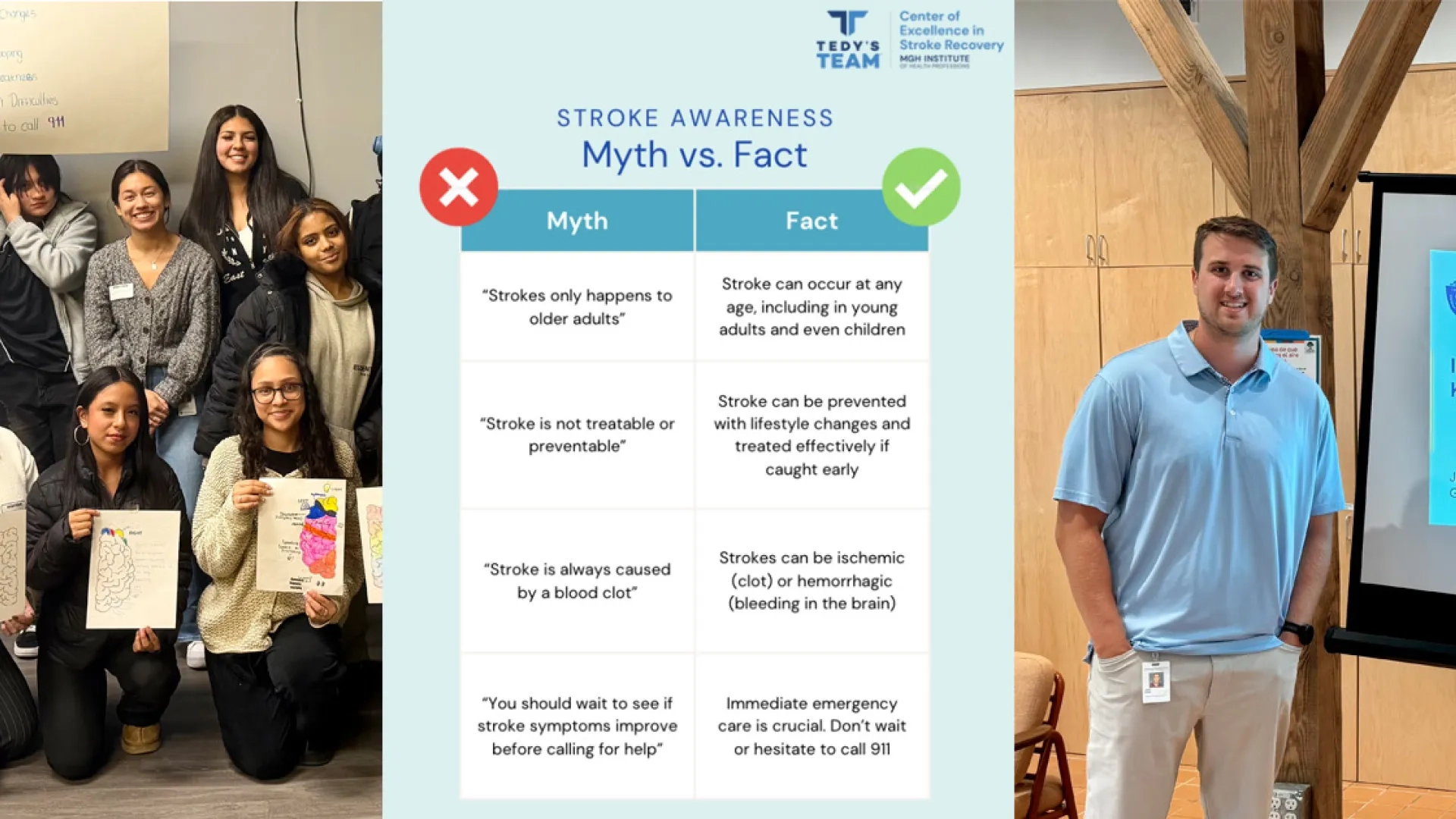


MGH Institute students know it is better to prevent strokes than to treat the effects. Since recognizing the signs of stroke quickly can improve outcomes, three of those students decided to do something about it.
Last January, Gabi Sandoval, DPT ’26, Sidney Capati, NP ’26, and Jack Bush, BSN ’25, each joined the first cohort of the Stroke Awareness Advocacy Program through the MGH Institute’s Tedy’s Team Center of Excellence in Stroke Recovery. Personal reasons motivated them to bring stroke education to communities where access to health information can be more limited and where trusted outreach can make a meaningful difference. They each designed and delivered community-based projects grounded in BE FAST, the evidence-based framework for recognizing stroke symptoms.
Growing up in a multilingual household, Gabi Sandoval, DPT ’26, helped her mother navigate a health crisis by searching for reliable health information online. This experience at a young age motivated her to get involved in the advocacy program to develop easy-to-understand, accurate resources that support equitable access to stroke education for individuals facing health literacy and language barriers. The graphics have reached thousands through posts on MGH Institute social media channels.
Motivated by the loss of a close family member to stroke, Sidney Capati, NP ’26 transformed her personal experience into community education that empowers others with the knowledge and confidence to act quickly in critical moments. She designed an interactive workshop for 14 high school students enrolled in the La Colaborativa Community Health Youth Cohort in Chelsea. She used mini-lectures, games, and poster-making to teach basic brain anatomy, symptoms of stroke, and how to respond in a fun, relatable way.
Jack Bush, BSN 25’, inspired by the impact of community-based initiatives he witnessed growing up and a commitment to community education, collaborated with Green Roots Teaching Kitchen in Chelsea to focus on cardiovascular risk in extreme heat. The workshop included strategies for managing heat exposure and hydration, as well as warning signs of heat-related illness and cardiovascular events.
“Through my education, work experiences, and personal loss, I have come to understand that healthcare does not begin in the clinic — it begins in the community,” shared Capati of her decision to become an advocate. “I have seen firsthand how early education and awareness can shape long-term health outcomes. This opportunity aligns perfectly with my belief that health education should be proactive, accessible, and community-driven.”
Stroke is a leading cause of death and disability, yet many strokes are preventable or can be mitigated through rapid treatment. Tedy’s Team Center of Excellence in Stroke Recovery at the MGH Institute of Health Professions advances stroke prevention, education, and recovery through research, clinical collaboration, and public outreach.
All MGH institute students are welcome to apply for the 2026 Stroke Awareness Advocacy cohort by February 13. Student advocates will partner with the Center of Excellence to design and deliver a BE FAST–based educational project in a community they feel connected to. They will be supported by mentorship, resources, and training in community partnership, needs assessment, and culturally responsive education.