

Standing or Sitting, Clients Are Using Tele-Physical Therapy
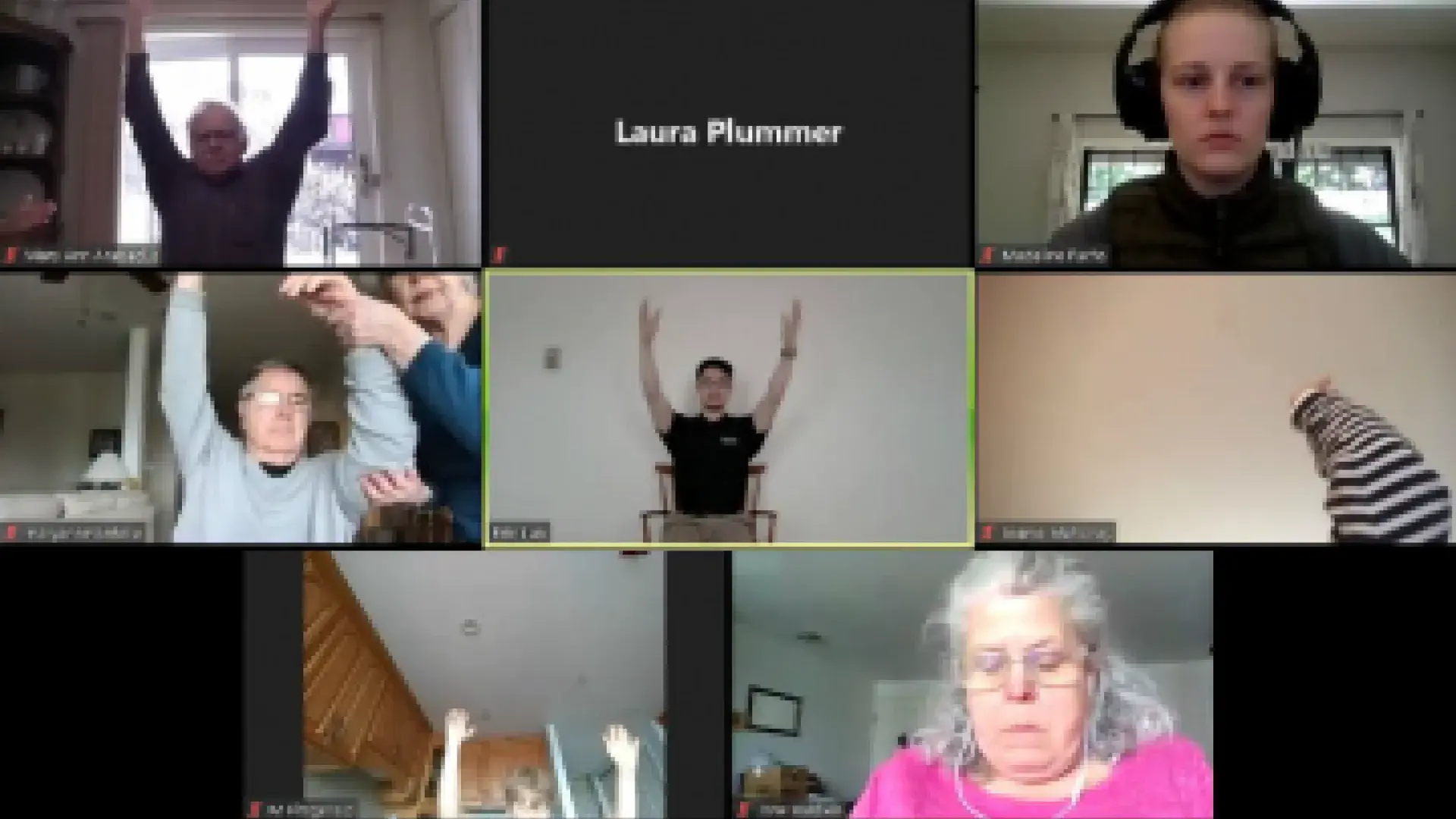


Some prefer to exercise while standing. Others prefer or need to sit. Either way, clients in the Marjorie K. Ionta PT Center for Clinical Education and Health Promotion have pivoted to virtual physical therapy classes during the COVID-19 pandemic.
The clients, working with Doctor of Physical Therapy students who are overseen by PT faculty members, have continued their twice-weekly classes using Zoom. Depending upon a client’s ambulatory status, the clients work out in either the sitting or standing group sessions. As the pandemic has continued, other clients have transitioned to one-on-one virtual sessions.
According to second-year DPT student Eric Luo, clients in the sitting group have decreased lower extremity strength, balance issues, or a combination of the two, so he and other students focus on global strengthening. For standing group participants, they’ve incorporated exercises such as squats and simple balance exercises. While they are effective, it’s quite different from the on-site sessions.
“The virtual experience is very different from our in-person treatment sessions, as we are not able to challenge these clients near the limits of their ability as we would be able to in the clinic with appropriate guarding,” said Luo, who noted that clients were sent exercise bands to expand their home routines in-between sessions with students. “Overall, this has been a great opportunity to connect with the clients during this time and an excellent way to help them maintain their current levels of function.”
Second-year student Maddy Fuchs said while she misses seeing her clients in person within the Sanders IMPACT Practice Center, there have been unanticipated benefits. “We get to become a little more familiar with each client’s environment and are better able to tailor exercises to suit them,” she said. “Perhaps most importantly, it provides us the opportunity to maximize retention of physical fitness and overall function.”
According to Assistant Professor Jane Baldwin, who runs the PT center, expanding physical therapy to a virtual platform began even before the COVID-19 pandemic began. “The current situation has expanded that need,” said Dr. Baldwin, noting that students will continue to work remotely with clients throughout the summer. “This will provide them with a unique opportunity to experience telehealth and virtual visits that many of their peers will not have experienced, which will be an asset to wherever they choose to practice after they graduate.”