Simulated Participants Lauded at Appreciation Night, and Get Training in Too
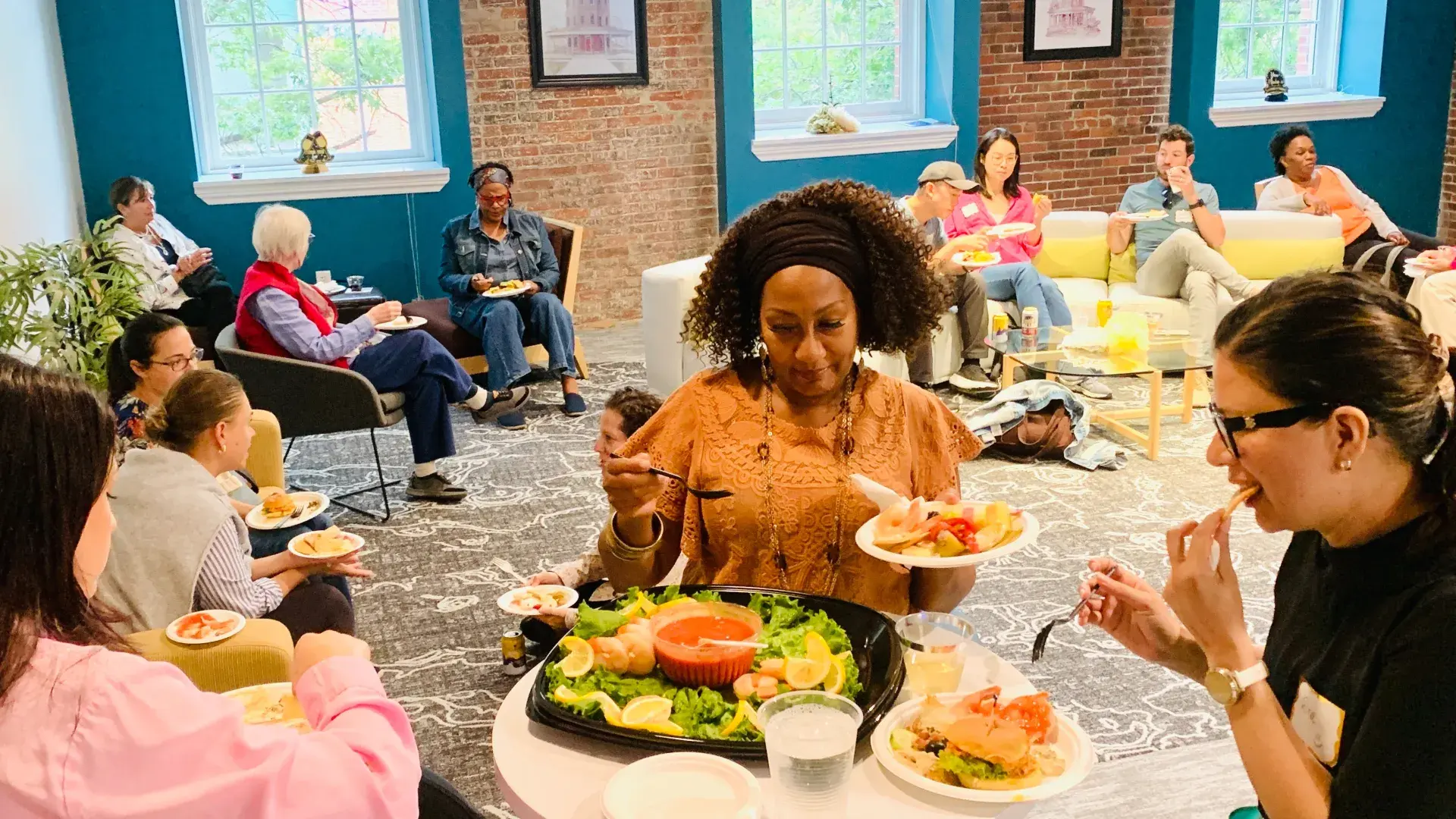


They are a critical facet of a student’s experiential learning at the MGH Institute – simulated participants – the role players who bring a clinical scenario to life. And for the first time, an appreciation event was held to celebrate all that they do.
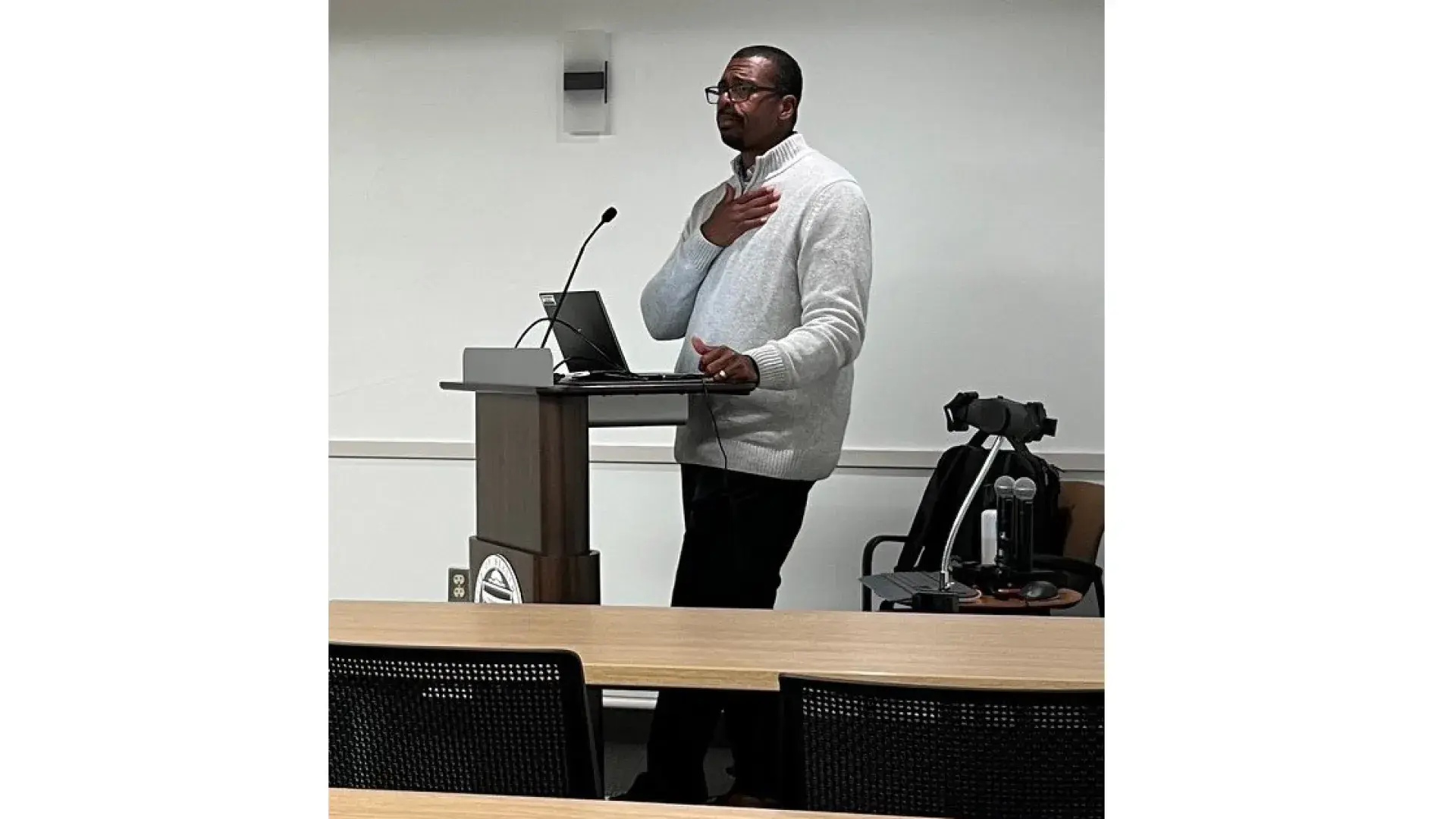
“We felt it was long overdue,” said Simulated Participant Program Manager Tony Williams. “It’s time to just recognize the invaluable contribution that they make to our simulation program and to the IHP experiential learning for our students.”
Inside Shouse last Tuesday, the Center for Interprofessional Education and Practice (CIEP) hosted the first-ever Simulated Participant (SP) Appreciation Night — an evening dedicated to honoring those who bring realism, empathy, and humanity to simulation-based education at the MGH Institute. Faculty and staff from across the Institute came out to express their gratitude.
“If you think about all that our students are learning from a didactic or classroom setting and then try to carry that over into the clinical setting, that can be daunting,” noted Williams. “Simulated participants provide a safe learning environment where students can develop these people skills with trained human role players, individuals who understand the learning objectives.”
Simulated participants play a vital role in preparing future health professionals. Through their authentic portrayals and thoughtful feedback, SPs help students develop not only clinical examination skills but also their ability to listen, connect, and care — essential qualities for compassionate healthcare.
The MGH Institute started its formal Simulated Participant program in 2018 (although SPs had been working at the Institute prior). They have grown in popularity not only within the Institute – nursing, physical therapy, physician assistant, occupational therapy, communication science disorders, and genetic counseling all work with them – but within the Mass General Brigham system as well. So far, simulated participants have been partnered with Brigham and Women’s Hospital (BWH) Nursing, Massachusetts General Hospital (MGH)/BWH Emergency Dept, BWH Psychology, STRATUS Center, BWH Pulmonary and Critical Care, BWH Radiology, and the MGH Knight Center.
The SPs have also worked with programs outside of the MGB System – Bedford VA, Schlesinger-Farm Design, American Association for the Study of Liver Diseases, and PA Consulting.
“It's been tremendous and unexpected, to be honest with you,” said Williams of the SP program growth within the Mass General Brigham system, and outside it. “With continuing education being such an instrumental part of the health care field, other individuals caught wind of what we were doing here and that we have this resource of SPs and word spread. We didn't advertise it. We didn't market it in any way. It was just a kind of word-of-mouth thing. And then before you knew it, we were getting inquiries and requests for SPs from MGB programs and then were even being referred to groups outside of Mass General Brigham. It's been unexpected because that was never really the targeted purpose of what we were doing.”
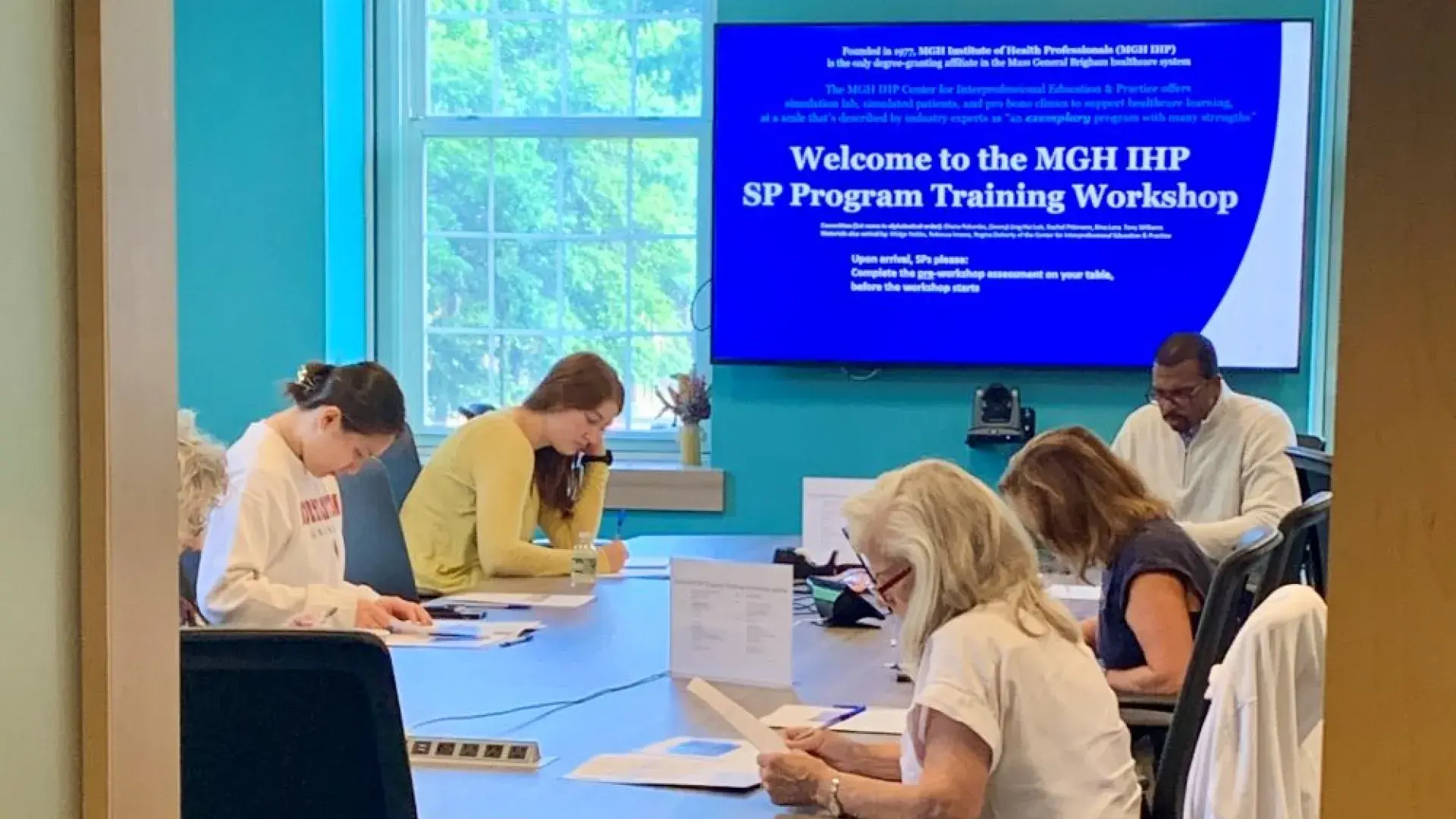
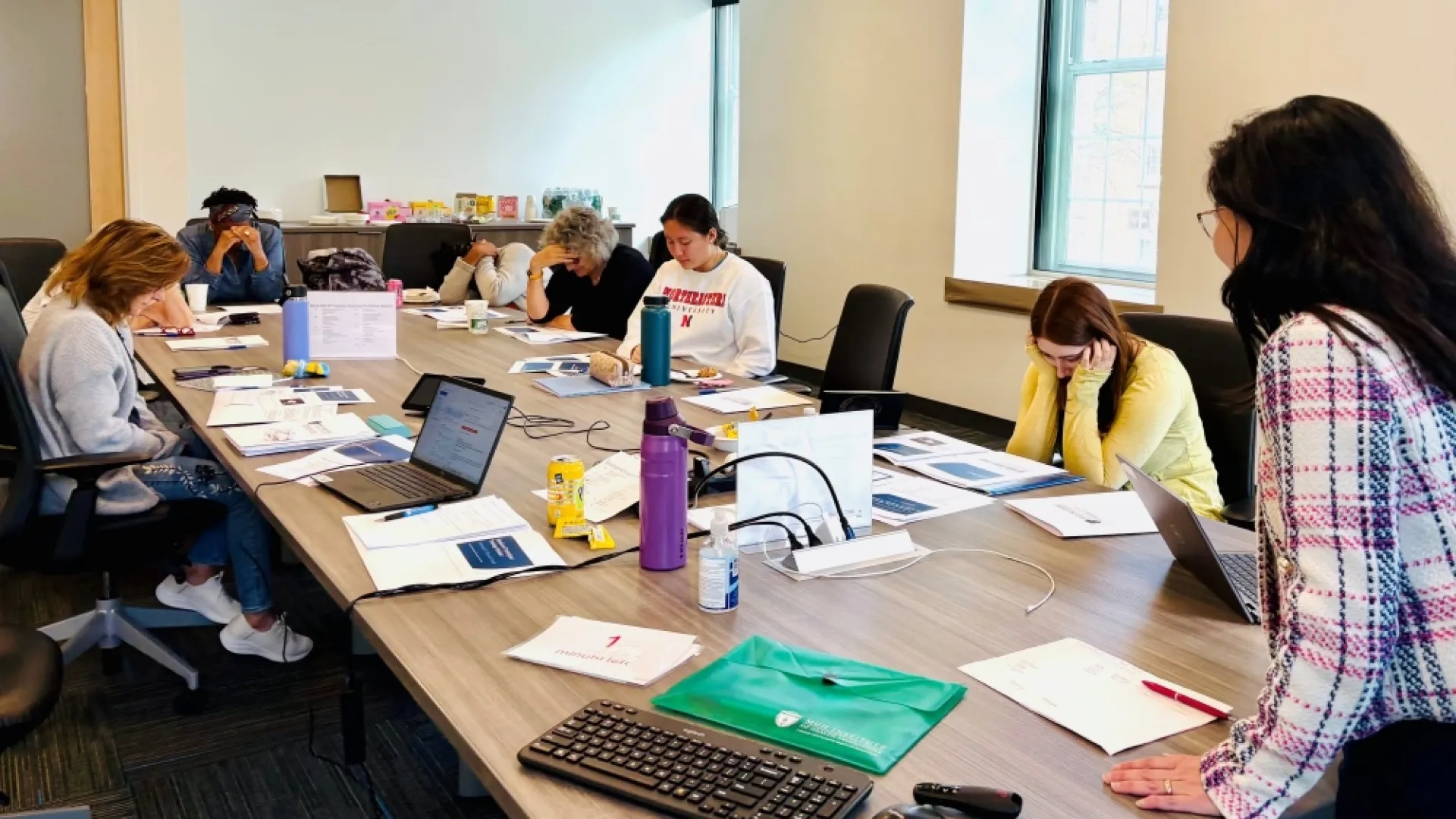
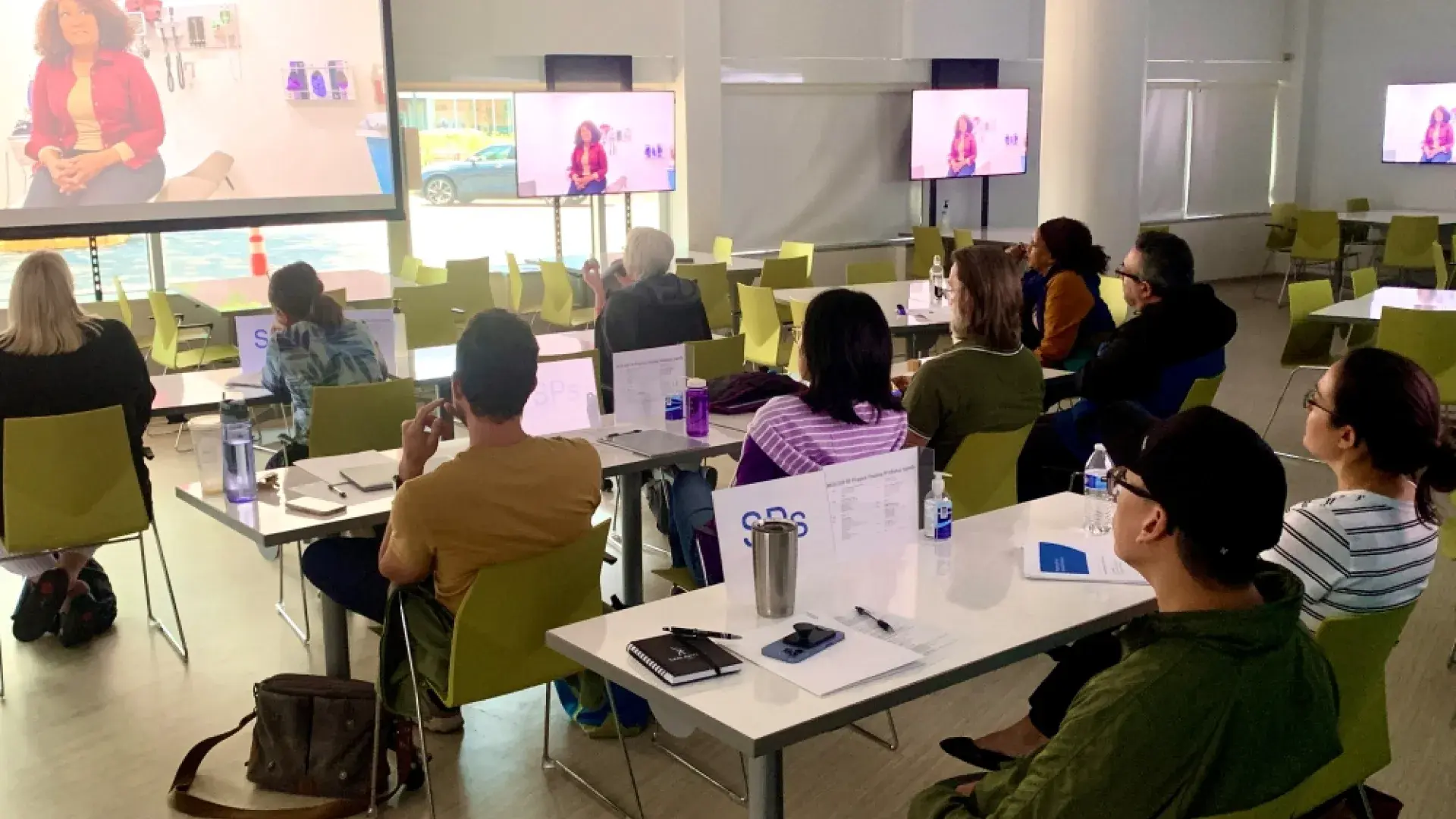
Prior to the celebration, two days of training were held for Simulated Participants, who focused on four modules: the concept of the SP practice in general, administrative policies and procedures, physical exam presentation and portrayal, and providing written and verbal feedback to MGH Institute learners.
To date, more than 100 Simulated Participants have worked at the MGH Institute, and even though technology is playing more of a role in patient diagnosis, removing the need for Simulated Participants, Williams sees a strong need for what his team brings to the table.
“Think about the need to communicate certain concepts like breaking bad news to a patient who has terminal illness or who is going to have a child that may have a birth defect or dealing with conflict resolution and de-escalating an agitated patient,” observed Williams. “All of these are different skills that go into healthcare that a lot of our students will encounter. Having actual humans doing many portrayals reflects what our future health care providers will encounter in their practice.”