

On Reversing Burnout During the Pandemic
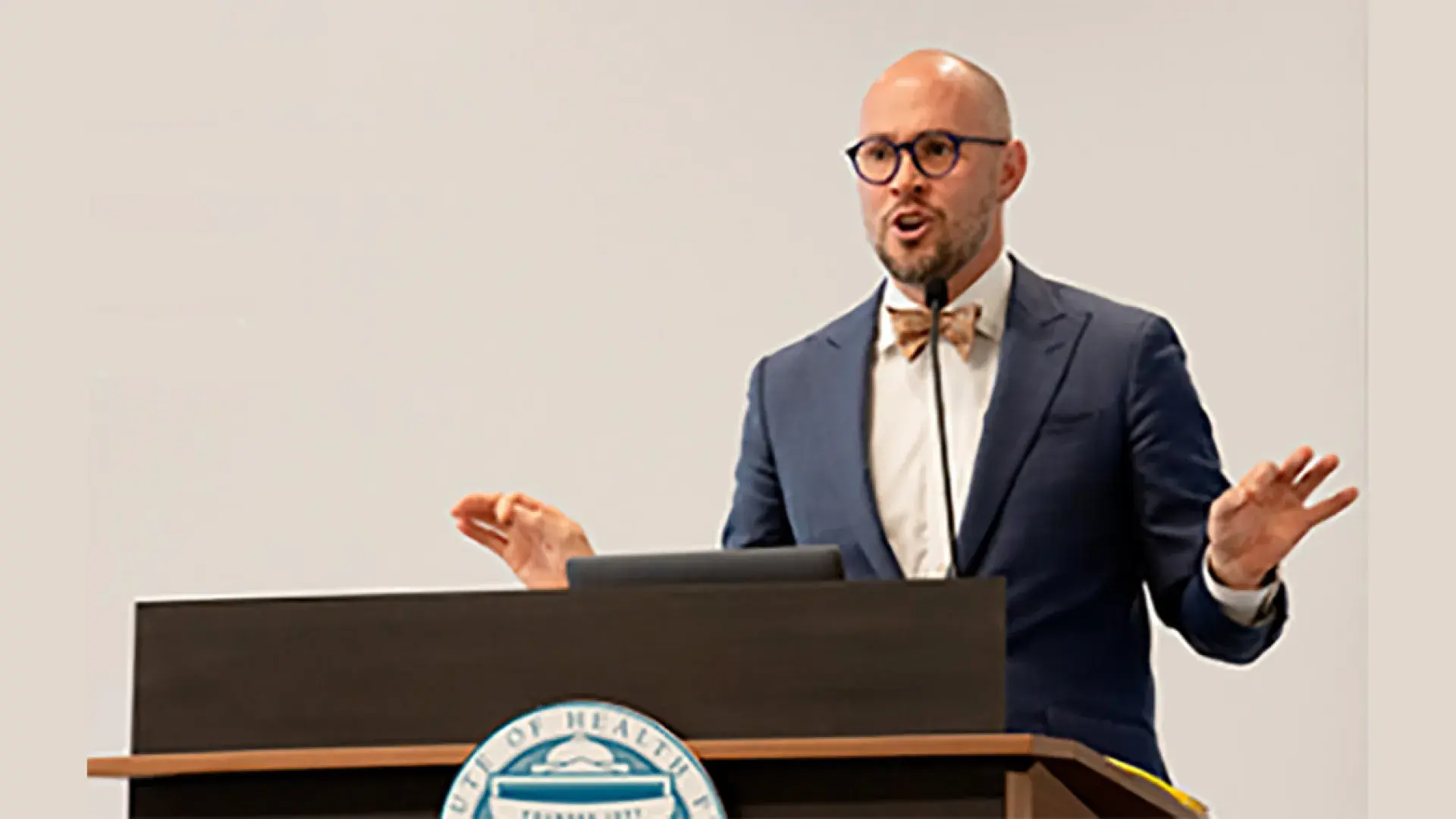


Dr. Tim Cunningham of Emory Healthcare discussed how nurses and other healthcare practitioners can mitigate the negative effects of isolation and separation at the MGH Institute's annual Natalie Petzold Endowed Lecture.
Tim Cunningham has found a way to turn empathy, compassion, and humor into some much-needed remedies for healthcare workers who have been living under the burden of a deadly pandemic.
Cunningham, RN, DrPH, MSN, FAAN, Co-Chief Well-Being Officer and Vice-President of Practice and Innovation at Emory Healthcare in Georgia, told approximately 100 nursing and other healthcare professionals at the MGH Institute’s annual Natalie Petzold Endowed Lecture on May 2 that nurses are increasingly feeling the effects of isolation and separation caused by more than two years of Covid-19. The talk was co-sponsored by the School of Nursing and the IHP Wellness Council.
“We know burnout is on the rise. That is unquestionable,” Dr. Cunningham told the group during his lecture on the school’s Charlestown Navy Yard campus. “We’re really good about measuring burnout but what are we doing about it?”
The lecture, “Through the Mask, Through the Pandemic and Towards a New Workforce: Post-Traumatic Growth and Keeping Well-Being Relevant,” touched on topics that ranged from creating personal strength and more meaningful relationships to being more appreciative of others – ways to lessen the strain health professionals feel.
“When we feel disconnected from people and we’re covered by masks and we’re separated from humans, separated from what we know, we feel an increase in burnout,” he said.
Cunningham also urged attending leaders from hospitals throughout Greater Boston to think about leadership differently. “Leadership needs to be relationship focused and transformational,” he said, adding that leaders should look for ways to express and practice gratitude and encourage their workers to do the same. One way to do that, he said, is by urging colleagues to think of three good things that happened each day. He also encouraged attendees to pause and take time to think about a situation. “We have to keep our minds open,” he noted.
Adding a touch of humor, Cunningham recalled his younger days when he dressed up as a clown called “Dr. Bumble” to visit local hospitals, among them Boston Children’s Hospital. It was his interaction with nurses during that time that led him to becoming a nurse.
Today, Cunningham, who still jokes about his “Hospital Clown” career, is better known internationally for his expertise in resilience and self-care. An adjunct Associate Professor at the Neil Hodgson Woodruff School of Nursing at Emory University, he collaborates with interprofessional teams to support structural and systemic well-being change for healthcare staff and other professionals.
Cunningham is the first lecturer to speak at the Petzold lecture since the beginning of the pandemic more than two years ago. He was introduced by Dr. Ken White, Dean of the MGH Institute’s School of Nursing.
Prior to his talk, Cunningham met with members of the Wellness Council where he shared suggestions on how to engage the community on proactive wellness strategies.
The lecture series was named for Natalie Petzold, a Lawrence native who attended the Massachusetts General Hospital’s former School of Nursing and who would later become a leader in nursing education and nursing operations. She was also the last director of the former nursing school. After it was closed in 1981, she became the MGH Institute’s first director of student services in 1982, where she welcomed the first class of students in the school’s Master of Science in Nursing program.