Nurses Week Message from Jeanette Ives Erickson


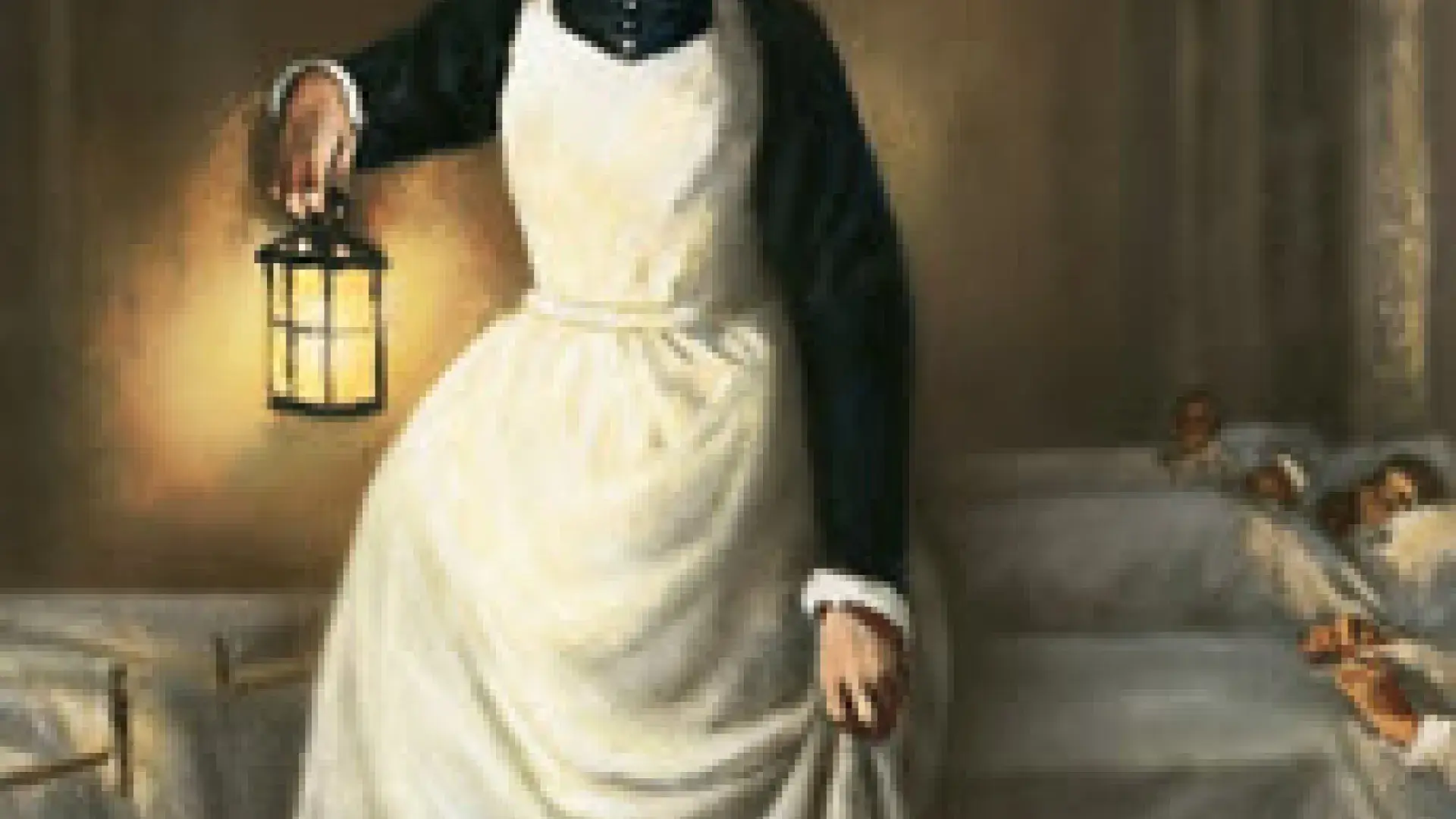
Today is the 200th birthday of Florence Nightingale, the founder of modern-day nursing. Nightingale is best known for her work in a field hospital in Scutari, Turkey during the Crimean war. However, prior to this, Nightingale worked in a London hospital. Her work proved challenging as she and her colleagues dealt with unsanitary conditions and a cholera outbreak. This was the beginning for Florence who made it her mission to improve hygiene practices and significantly lower the death rate at the hospital.
The outcomes in London led to her notoriety as a health care reformer. In 1854, Nightingale was asked by the British Secretary of War to organize a corps of nurses who could tend to the sick in Crimea. The 34 nurses found soldiers being cared for in despicable conditions, a cesspool filled with rodents and bugs. Florence, with her knowledge and experience, immediately focused on the need to improve sanitary conditions, track the rate of injuries and address hospital-acquired conditions. It soon became evident that more soldiers were dying from poor sanitation than from their wounds. Her work is said to have reduced the death rate by two-thirds.
She was impactful because she used scientific methods and data as guides to her practice. Florence wrote, “To understand God’s thoughts one must study statistics for these are the measure of his purpose.”
Nightingale’s work remains valid today at our Boston Hope field hospital and in hospitals across Massachusetts and throughout the world. COVID-19 is spreading due to factors we have not previously understood and due to the poor implementation of evidence-based practices: washing your hands, social distancing, cough etiquette, wearing a mask and effective screening criteria. Having knowledge of the patient and the community are all important parts of how we can make a difference in the lives of those we serve.
Lessons from Florence are important as we think about our war against an invisible enemy. Like the 34 nurses who sailed from London to help in the Crimean War, Boston Hope came together in 9 days to improve the lives of those affected by this coronavirus. Like our colleagues in our hospitals, none of us knew what it would mean to care for patients in makeshift wards, wearing PPE and working with colleagues from varying organizations and a variety of clinical specialties. More than one thousand nurses, physicians, students, military personnel and support staff have come together to help our hospital colleagues in the fight.
Working together, driven by data and managing the care of the victims stricken by this most modern battle, we are still guided by the principles of Florence Nightingale who would be incredibly proud of today’s nurses.