

MGH Institute PhD Candidates Share Innovative Rehabilitation Sciences Research
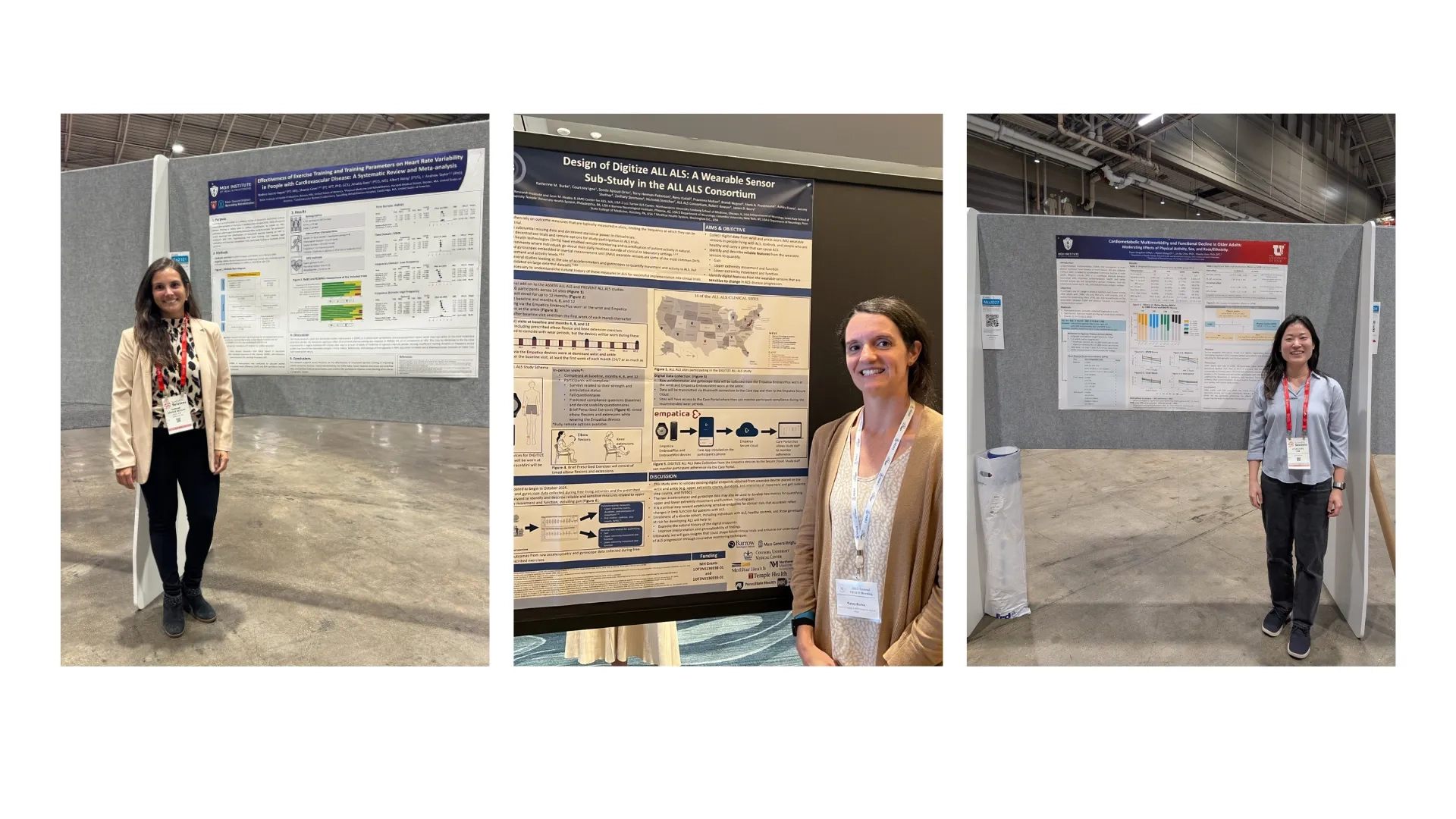


Three PhD candidates in the MGH Institute of Health Professions’ Rehabilitation Sciences program recently presented their latest research at leading national conferences, highlighting the Institute’s growing impact in aging, neurological conditions, pain science, and digital health.
Hyun Jung Examines Cardiometabolic Multimorbidity and Functional Aging
PhD candidate Hyun Jung presented new findings at the American Heart Association’s Scientific Sessions on how combinations of cardiometabolic conditions—specifically heart disease and diabetes—shape mobility and physical function in older adults. Using three years of nationally representative National Health and Aging Trends Study data from 360 adults aged 65 and older, Jung’s poster, Cardiometabolic Multimorbidity and Functional Decline in Older Adults: Moderating Effects of Physical Activity, Sex, and Race/Ethnicity, demonstrated that individuals with diabetes or multimorbidity showed lower physical performance scores, engaged in less moderate-to-vigorous physical activity, and experienced faster functional decline.
Physical activity emerged as broadly protective, while women and non-white older adults with diabetes experienced disproportionately lower function—underscoring persistent disparities. Jung noted the urgent need for tailored rehabilitation and accessible activity interventions for those with cardiometabolic conditions.
“Sharing this work at AHA was a meaningful opportunity for me to highlight how cardiometabolic conditions shape functional aging," said Jung. “I also appreciated the chance to engage with colleagues whose work spans basic science, clinical trials, and population health within the cardiovascular sciences.”
Katherine Burke Advances Digital Health Tools for ALS Measurement
At the 2025 Northeast Amyotrophic Lateral Sclerosis Consortium Conference, PhD candidate Katherine Burke presented three posters showcasing progress in developing digital tools to capture limb movement, gait changes, and disease progression in amyotrophic lateral sclerosis (ALS). Her research highlights new sensor-based algorithms and the integration of actigraphy into a large natural history study—work that demonstrates the strong potential of wearable technology to serve as sensitive, real-world endpoints in ALS clinical research.
“It was a privilege to share our work at NEALS,” said Burke. “It’s a truly collaborative community united by the goal of curing ALS.”
In addition, Burke presented with colleague Mel Krause, CCC-SLP, at the American Physical Therapy Association Massachusetts Conference, where they reviewed exercise recommendations for people living with ALS, with emphasis on respiratory exercises and the devices used in clinical care. Their session sparked meaningful dialogue about the challenges of implementing individualized exercise programs across disease stages.
“Engaging with local therapists at the APTA MA conference who also support people living with ALS in home and outpatient settings reminded me how vital interdisciplinary collaboration is for optimizing functional outcomes and quality of life for our patients,” noted Burke.
Nadine Aranis Explores Autonomic Regulation in Phantom Limb Pain and Cardiovascular Health
PhD candidate Nadine Aranis shared two major research projects focused on autonomic regulation and rehabilitation outcomes.
Her first study, Autonomic Regulation in Phantom Limb Pain and its Correlation with Maladaptive Plasticity, examined how heart rate variability (HRV) reflects autonomic dysfunction in individuals with chronic phantom limb pain. The findings suggest that reduced HRV may capture maladaptive autonomic integration linked not only to pain severity but to broader markers such as depression, Body Mass Index, and medication use—positioning HRV as a promising surrogate measure for future mechanistic and therapeutic studies.
“Sharing this work has been a valuable opportunity to take our findings beyond the lab and into real-world conversation,” observed Aranis, “and reinforced the importance of connecting mechanistic research with clinical relevance.”
Aranis also presented a systematic review and meta-analysis on Effectiveness of Exercise Training and Training Parameters on Heart Rate Variability in People with Cardiovascular Disease. Results showed reliable improvements in autonomic balance, especially through structured aerobic exercise, supporting exercise as a key component of cardiovascular rehabilitation.
“Presenting this work at the American Heart Association Conference was incredibly motivating,” said Aranis. “It allowed me to take our findings beyond the academic setting and see how they resonate within the broader cardiovascular research community. Engaging with world leaders in the field, learning from parallel work, and connecting with other research helped expand my perspective and reinforced the importance of contributing to the global conversation on autonomic health and rehabilitation.”