

End to Grad Plus Loans Means Challenges with Accessibility to Financing
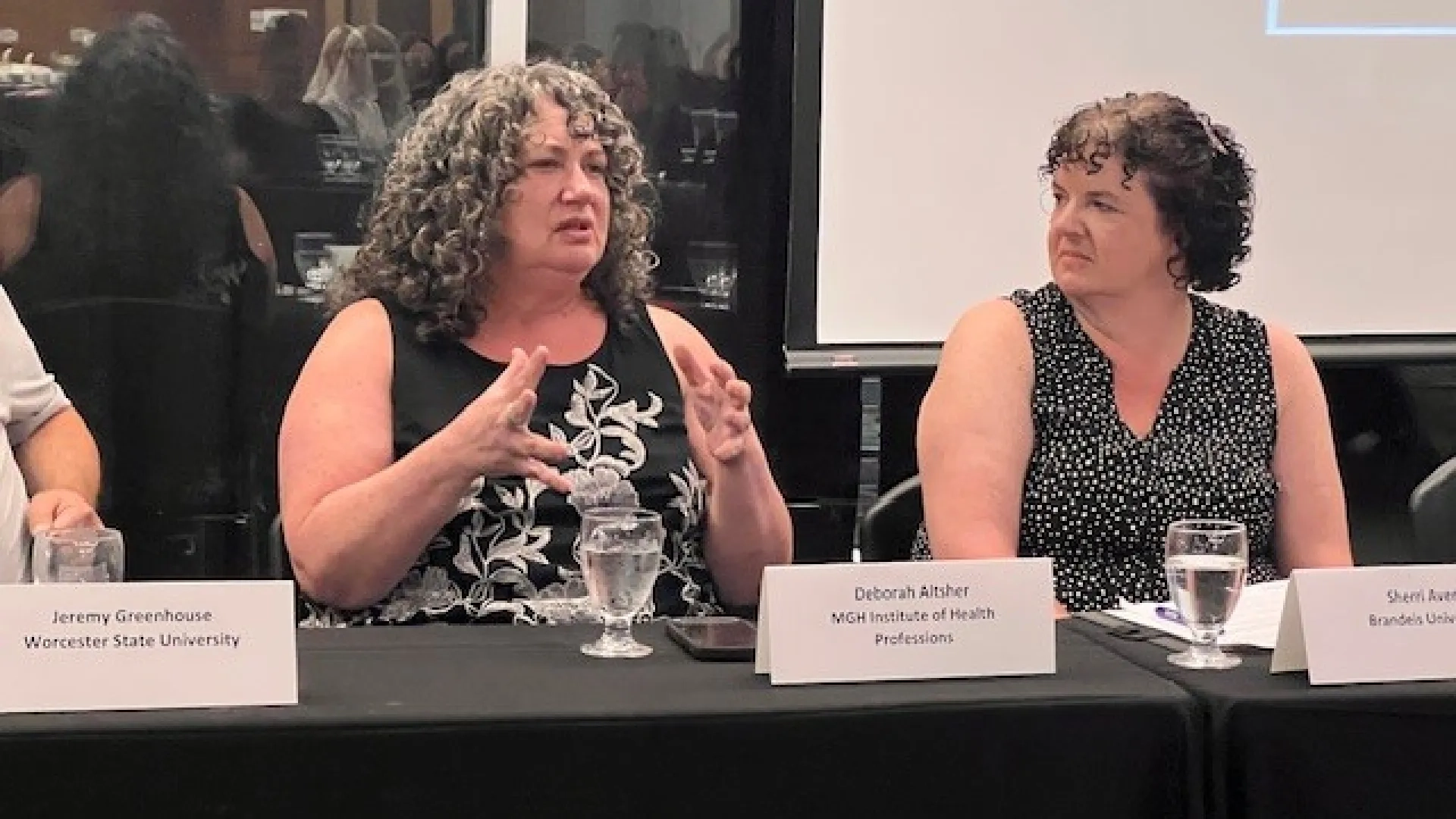


Director of Financial Aid Deborah Altsher worries about impact to future students and Institute
On July 1, the 20-year-old Grad PLUS loan program will end, phased out by the Congressional approval of the One Big Beautiful Bill.
The program provides tens of thousands of dollars in additional lending for graduate students to cover not only the attendance of graduate school, but also room, board, and other expenses.
OSC caught up with Director of Financial Aid Deborah Altsher about what the change means for the MGH Institute and its students. The interview has been condensed and edited for clarity.
Grad PLUS is going away for new borrowers but those who already have loans or who have started program are still eligible for those loans, correct?
That’s correct. As of July 1st, there is no new student borrowing. Any student who is already here, who has borrowed under a federal program, is grandfathered for up to three years, or the published length of their program, whichever is shorter. So, for our current students who are here and already borrowing, if they finish on time, they'll be okay, because they're grandfathered in. There is a caveat though, that if a student takes a break from enrollment, they are out of the grandfathering. So, if a student needs to take leave, when they return they are no longer grandfathered in.
When Grad PLUS is eliminated, there’s going to be heavy reliance on private lenders. What does the prospect of private lending mean to prospective students?
The scary part is accessibility for us. With these private loans, some people are going to be left behind, and that's what we're most nervous about. Grad PLUS opened up accessibility. You could be disadvantaged, low income or even no income, and still get the loan, as long as you didn't have poor credit. Now you have to actually show a minimum credit score. Unlike the government, these lenders are mostly for profit, except for a few exceptions, and they're not going to take any unnecessary risk and lend to students who can't pay them back.
The Massachusetts Educational Financing Authority and other private landers are starting to roll out plans that are, among other things, geared towards the health professions. Talk about that.
MEFA is one of only a handful of non-profit lenders and they offer great rates. MEFA did come out with specific health professions loans and medical loans, but they haven’t said yet who is going to qualify for it. Other lenders have done the same. Everyone is now looking at risk, right? I am hoping these lenders are going to loosen the credit scores so that they can lend to people based on expected income, rather than current income.
For us, thankfully, we have a super low default rate and a high placement rate. Our students earn more, so we're less risky, and the lenders know that. So, they're designing loans for health profession schools, which is great for us.
Talk about how your office is steering students in the right direction.
We’re sending lenders three pages of questions that will answer the big questions such as: What are your rates? What are your terms? What's your repayment? And those questions will supply us with other data points too. And then we’ll put together a preferred lenders list. We already have a process in place to steer students to the best lenders because you don't want to send anybody out into the private market without any guidance. There are going to be so many lenders who will be entering the market; our students need to be protected. When direct lending with the government happened, and the lenders were squeezed out, a lot of them left the student loan industry. Now they're going to come back. We want to direct students to our preferred lender list as we’ve already done the work to vet them. That said, a student can borrow from any lender they choose.
Bottom line, the student loan landscape is about to change dramatically, and that’s going to impact the MGH Institute.
It is. What I’m most worried about as the financial aid director is accessibility to financing which we know leads to accessibility to a healthcare education. We're afraid we are going to have students who, in the PLUS program, were able to be approved but with private lenders won’t be approved. A lot of students may need a co-signer, which could be a good thing because a co-signer with good credit will drive down the interest rate. But I also understand that it's really hard to find a co-signer to co-sign a six-figure loan.
For details on the loan changes, check out this information page.
Two Town Halls will be held to address any questions and concerns; they will be held:
Monday, March 16, 2026, 12:00 pm
Thursday, March 19th, 2026, 6:00 pm