

EMT Students Complete Compassionate Care Training at IHP
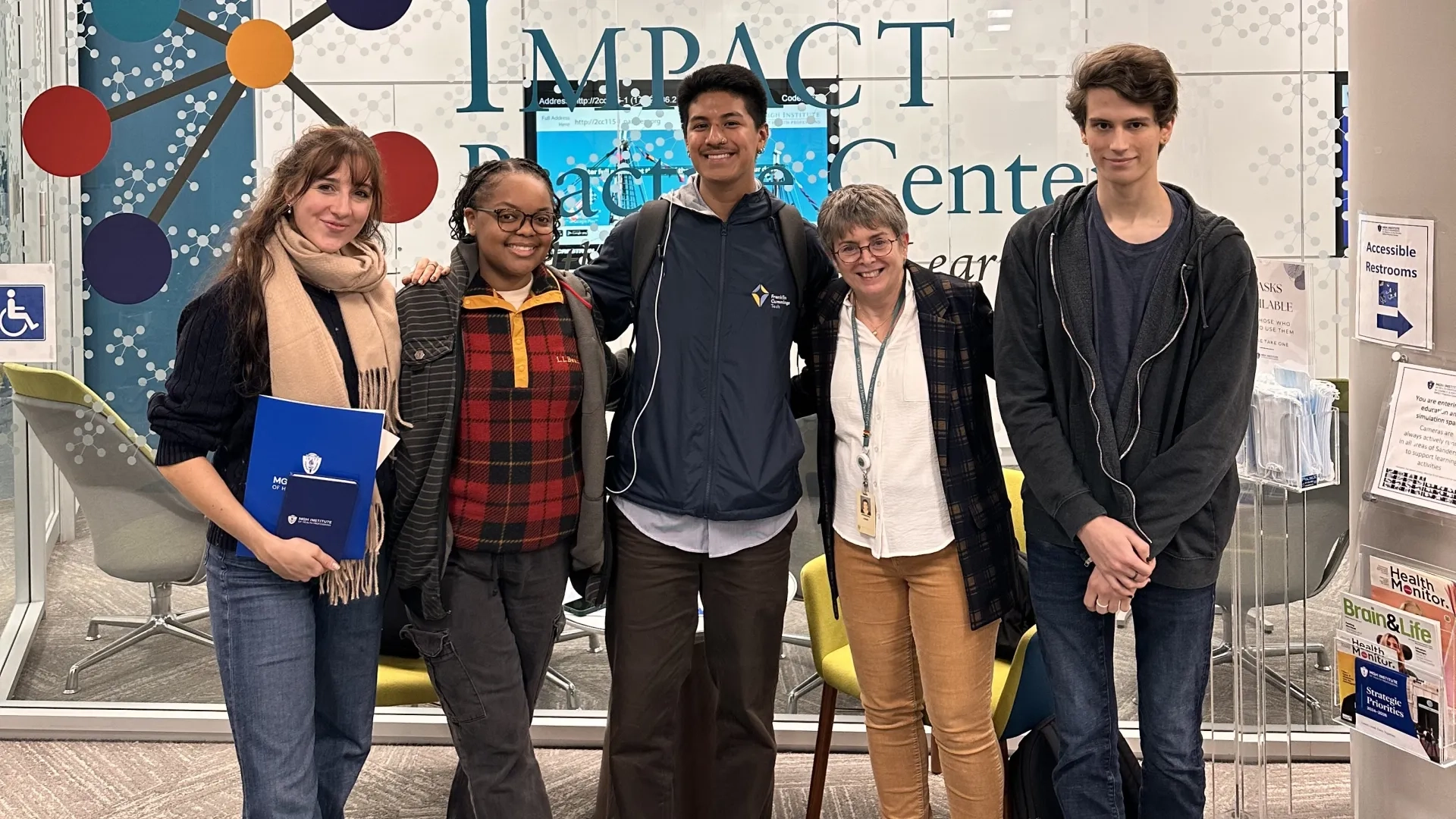


Four students from Bay Path University visited the MGH Institute of Health Professions on Monday, November 24, to complete the final module of a grant-funded, intercollegiate course called Cultivating Connection, Compassion, and Communication Skills for EMTs, designed to train Emergency Medical Technicians (EMTs) in compassionate care
“As we began discussing the course with our EMT collaborators, it was clear that our focus would be the human side of emergency care,” says Midge Hobbs, Assistant Dean of Interprofessional Education and course designer.
Drawing on various theoretical models, this program – taught by Hobbs - helps EMT trainees understand and practice essential relational skills for clinical practice. Visual Thinking Strategies (VTS) encourage learners to slow down and clarify what they observe; Narrative Pedagogy guides them to interpret and find meaning in those observations; and Kolb’s Experiential Learning Theory promotes application and reflection to foster growth and more purposeful, compassionate action. Together, these frameworks help cultivate humanistic care vital to emergency medicine.
“We wanted to help students understand that compassion and connection are just as important as technical skills when caring for patients, families, colleagues, and ourselves,” said Hobbs. “This is why we affectionately gave the course the nickname of ‘Heart Skills.'
After completing two asynchronous modules, the course concluded with a simulation and facilitated debrief in the IPC’s functional living space, where students responded to a home call-out scenario and combined their communication and clinical skills to provide compassionate, person-centered care in realistic conditions.
“Using this approach consistently will help me connect sooner, ease fear, and create a more compassionate environment for both patients and their families,” said Bay Path student Louise Hautefeuille following the simulation.
Added Bay Path student Byron Gonzalez: “I plan to incorporate brief grounding moments before patient contact, use VTS-informed observation to detect distress, and communicate with calm, validating clarity. Applying these skills intentionally strengthens rapport, supports more accurate assessment, and helps create a sense of safety during high-stress encounters.”
The course will be offered again in spring and summer semesters to new cohorts of EMTs.