

E. Lorraine Baugh Visiting Faculty Lecture: Health Equity, The Challenge of Our Time
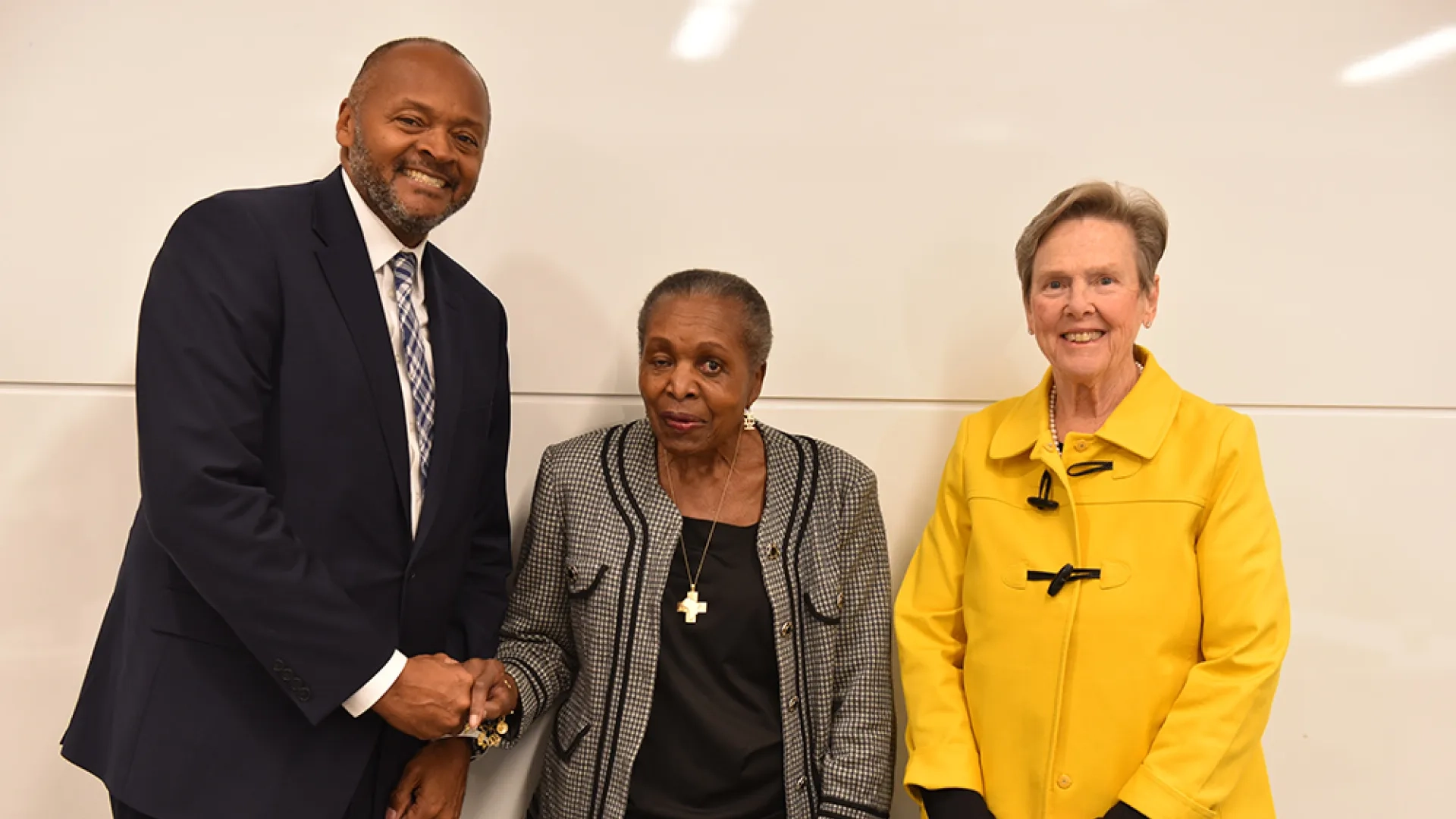


History and science are very different subjects but when it comes to health professions, it is vital to know both. That was the central message of this year’s E. Lorraine Baugh Visiting Faculty Lecture which featured the President and CEO of the Massachusetts League of Community Health Centers, Michael Curry, Esq., who shared why historical perspectives can influence how people are treated in the health care system and why it’s important for healthcare professionals to be aware of that influence.
“The whole purpose of my presentation is to … get them to connect the dots to why people are desperately poor, unhoused, unbaked, higher mortality, higher morbidity, the zip code you live in, the schools you get access to, all those things have a context, and there's history attached to that,” said Curry, who spoke of Quantum Leaping (in reference to the television show Quantum Leap) into historical situations to understand the context of what happened and what that can teach us about what is happening now.
“There's a reason why you Quantum Leap, because nothing is new,” explained Curry. “Literally, history repeats itself, and I think it repeats itself even more so because we don't know it. Because we don't know it, we don't learn it, we don't quantum leap to it, to understand that actually we can change the trajectory of a thing if we actually understood it.”
The past president of the Boston Branch of the NAACP, Curry co-chaired the Massachusetts Health Equity Task Force which addressed the health disparities that were realized and magnified by COVID-19. He shared his experiences on the task force that illustrated how historical and cultural views impacted the vaccine that people received. He also mentioned two books that are valuable for health professionals to read: Out in the Rural: A Mississipi Health Center and Its War on Povery, which tells the story of the Tufts-Delta Health Center, which was the first rural community health center in the United States when it opened in 1966 in Mound Bayou, Mississippi; and WEATHERING: The Extraordinary Stress of Ordinary Life in an Unjust Society, by Dr. Arline Geroniumus, a professor of public health at the University of Michigan, which discusses the cumulative toll that chronic stressors have on health which leads to increased vulnerability to chronic diseases.
The lecture series honors E. Lorraine Baugh, a long-serving trustee and first chair of the Institute’s Board of Trustees who is now an Honorary Trustee; she attended the lecture. Established in 2012, the visiting faculty speaker series emphasizes health equity and inclusion in the health professions. Hosted by the Office of Mission, Values, and Community Excellence, the event is made possible by the support of MGH Institute Honorary Trustee Carol M. Taylor and her husband, John H. Deknatel.