Data Analytics Program Takes Leading Role in NIH Challenge Around Data Sharing


MSDA faculty and teaching-team members named on team that finished among winners of national competition
The foundation of discovery isn’t the research papers that populate the academic landscape, it’s the underlying data. And the only way for the data to be effective is if it’s validated, scored, and shared. But how is that effectively handled?
Master of Science in Healthcare Data Analytics (MSDA) faculty and teaching-team members Dr. Allison Goff, Dr. Pedram Safari, and Shivani Pimparkar, MS, were named on one of the winning teams in the National Institute of Health’s S-Index Challenge, a national competition designed to find the best, most rigorous, well-engineered approach to measure scientists and their data.
The team was led by the MSDA Program Director Shuhan He, MD. Seven teams reached the final round: Yale University, Mount Sinai Hospital, Oregon Health & Science University with the University of Michigan, the California Medical Innovations Institute with the University of Washington, and a group from Harvard Medical School that included the director of the MIT Press, co-founder of bioRxiv and medRxiv, and scientific director of arXiv.
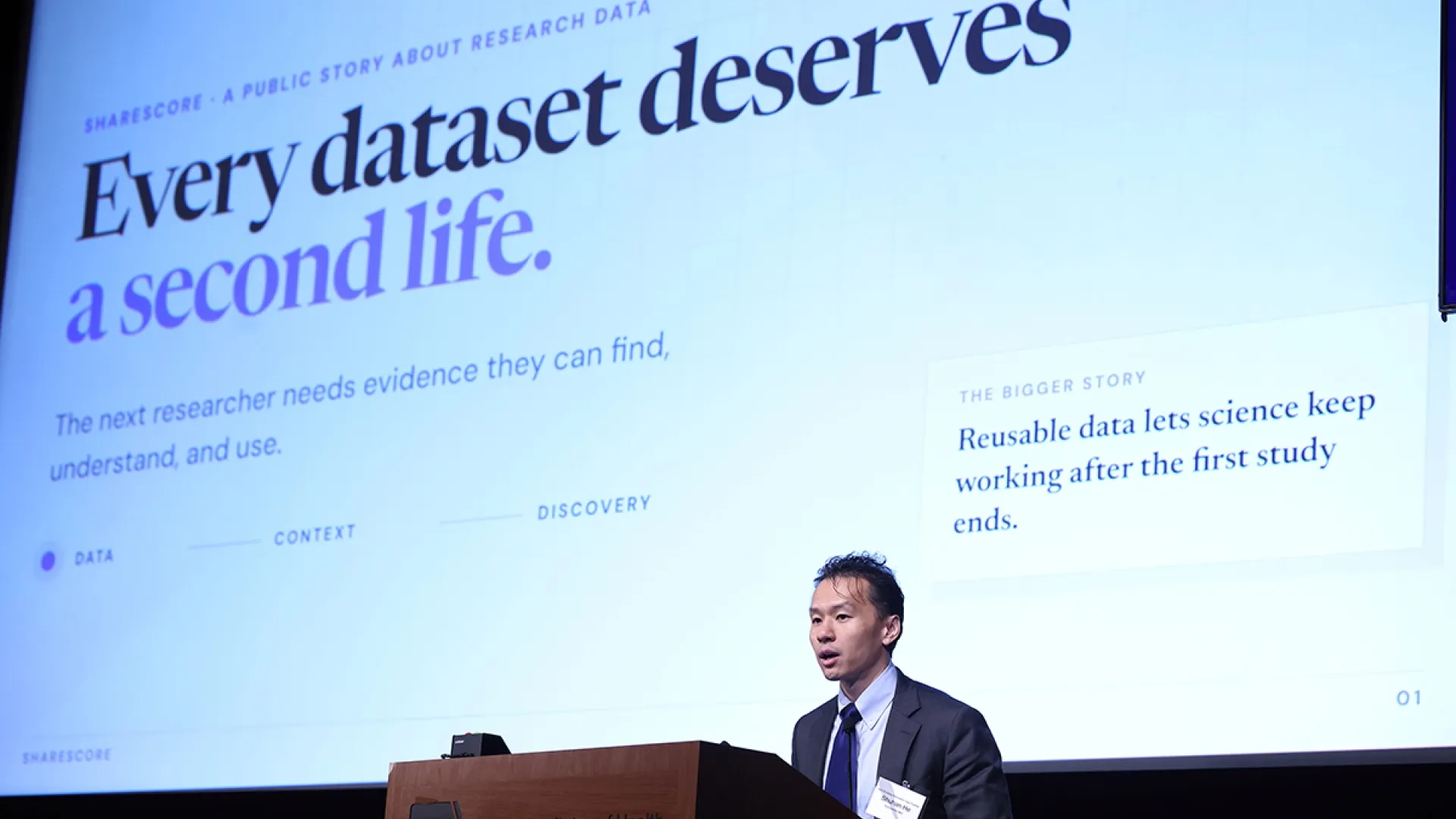
“This is a win for the Institute,” said He, who has led the Master of Science in Healthcare Data Analytics (MSDA) program for nearly four years. “Creating and validating new metrics is what this program does, and it is why our people get named to national efforts.”
Traditionally, a researcher’s impact has been measured by the H-index, which reflects the productivity and influence of their published scholarly work. The S-index recognizes the scientific impact of creating and sharing high-quality datasets that serve as foundational resources for the research community. Shared datasets can enable many future discoveries by supporting hypothesis generation and results validation.
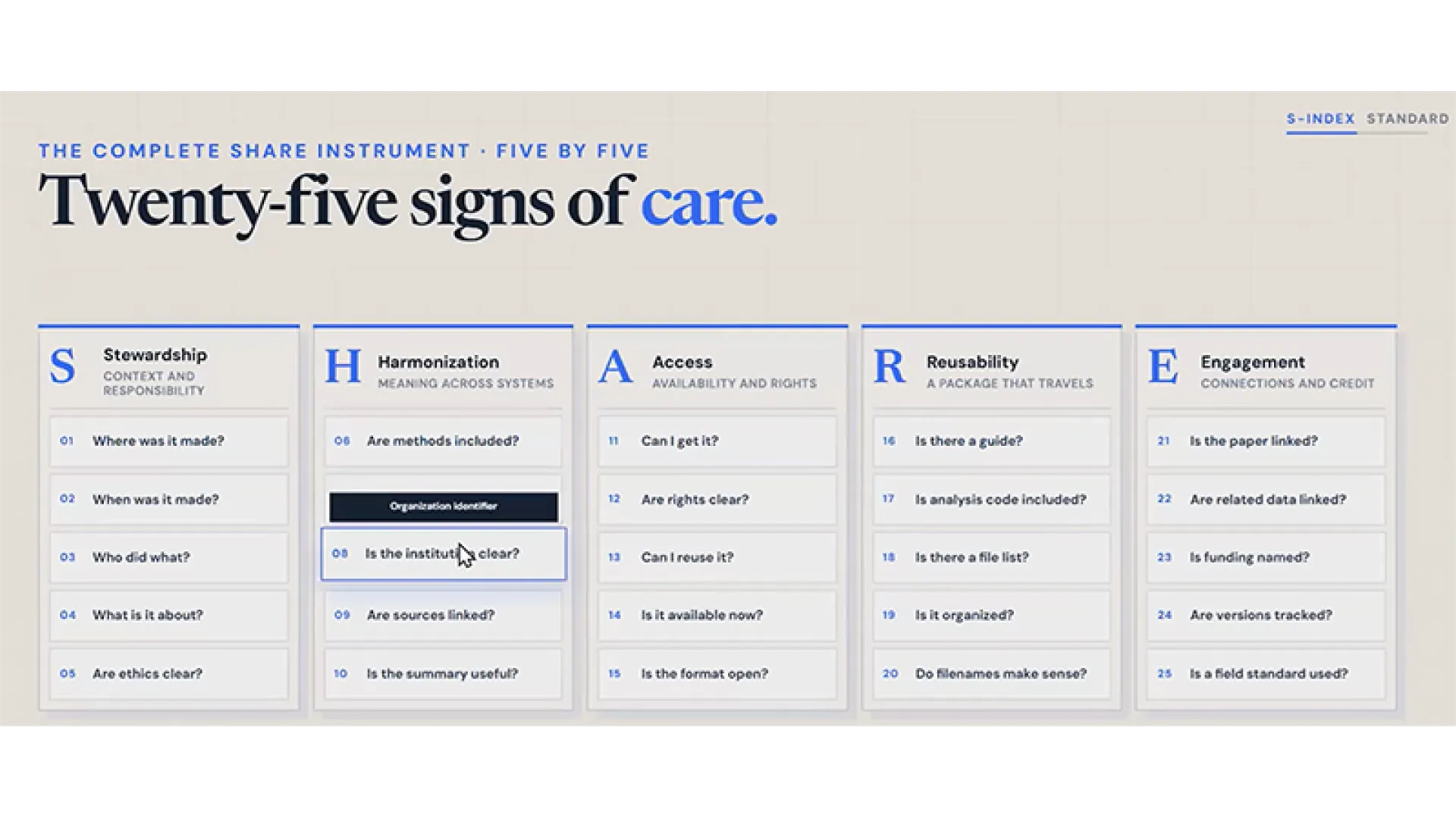
With that in mind, He led a team of researchers and analyzed 76-million pieces of data using 25 categories that document, shepherd, and upkeep high-quality data that can be reused later. They built and validated a new framework for measuring the quality and impact of biomedical research-data sharing, helping create new ways to recognize and reward the data that make discovery possible. The goal is the kind of widely usable recognition metric for data sharing that the H-index became for publications.
The result is the website sharescore.org.
This was a national, trans-NIH effort led by the National Eye Institute with contributions from multiple institutes, centers, and offices. NIH Director Dr. Jay Bhattacharya was present at the final event.
“Every AI model is downstream of the data it learned from. Until we can tell good data from bad at scale, we cannot tell a good model from a bad one, and that is the question the whole field is standing in front of. Students who come here learn from the people answering it. If you want data analytics that sets the national standard, this is where you come.”
More than Sending an Email
He points out that data sharing is much more complex than you might think. While some might think of file sharing, that’s just the beginning.