

Coronavirus-Created Telehealth: IMPACT II Course
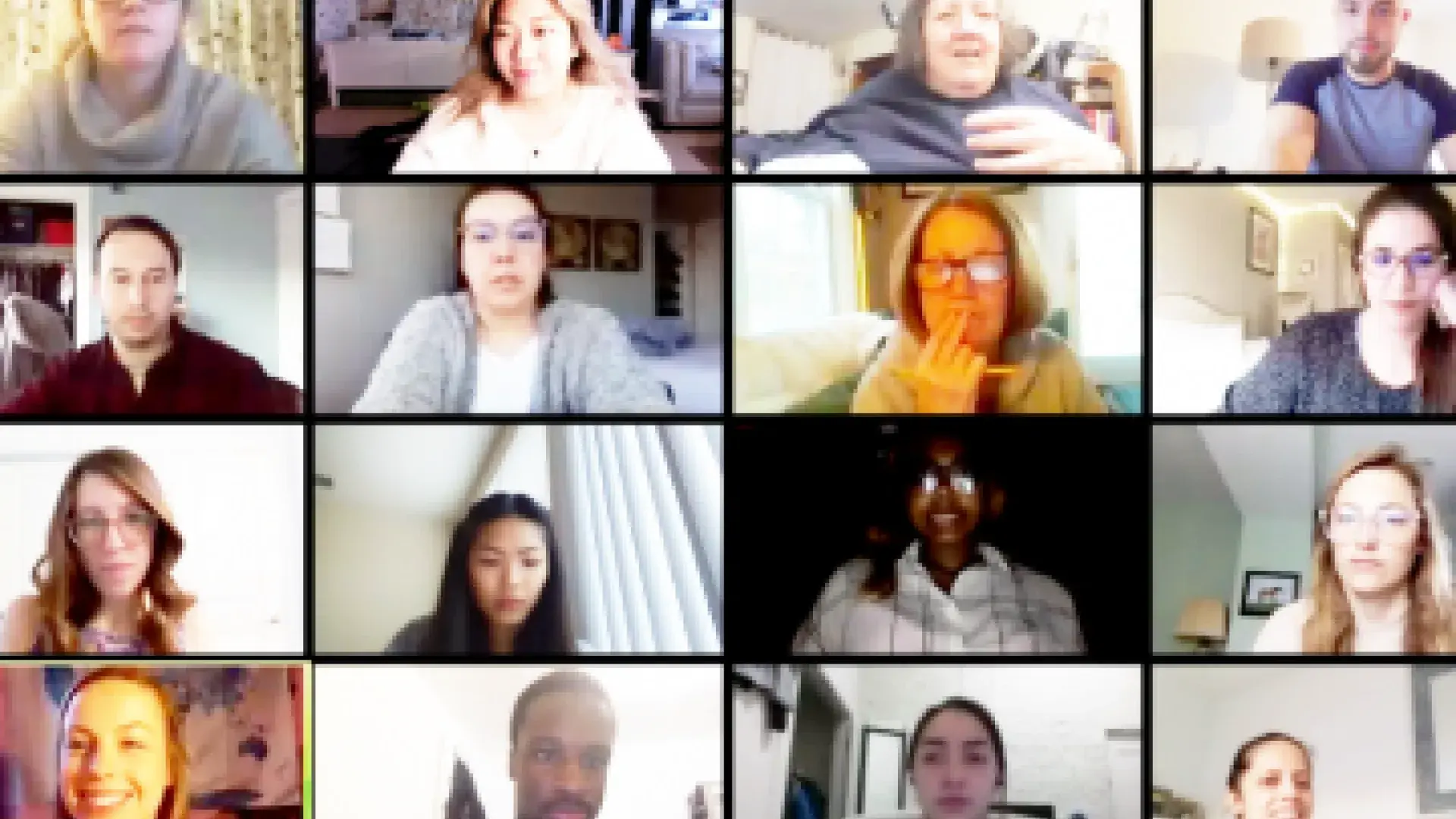


Community health mentors are individuals from Charlestown and Greater Boston living with chronic health conditions or disabilities who volunteer to share their stories to help MGH Institute of Health Professions students learn the importance of coordinated health services delivered by interprofessional teams of providers. The IMPACT II course, part of the Institute’s interprofessional core curriculum, was preparing for its final session where 350 students assemble to interview the mentors and view pre-recorded home visits, simulating an interprofessional patient encounter. The event was planned for April 6. And, it happened on schedule.
A few tweaks were required due to the COVID-19 pandemic since the traditional face-to-face meetings were out of the question. The challenge was to pivot this class to a virtual session in less than a week, without disrupting the complex schedule and while still meeting the learning objectives. It was a matter of setting mentors up with computers and giving them a working knowledge of Zoom so they could join the virtual class session. It required organization, a detailed plan, and effective communication – all hallmarks of interprofessional collaborative practice.
Eliza duPont, OTD ’21, was one of the student peer facilitators for the event. She describes the process of quickly moving an enormous in-person event online. “IMPACT II was a success story and involved much planning and preparation,” she said. “It definitely took a village.”
DuPont said there were several benefits to holding the event virtually. “There was a level of ease that came from the health mentors being in the comfort of their own homes. They were very open and relaxed, and everyone was very engaged. Before the question and answer period, Jodi Bornstein, an occupational therapist and IMPACT term lecturer, shared a comprehensive video of the client’s house and daily life that was created last year, giving a level of detail you wouldn’t see even if you had an in-person visit.”
For duPont, what really made the event special was the dedication of the health mentors. “They did a wonderful job. Opening up their world so we could benefit from it was clearly meaningful for not only the students but for the mentors as well.”
IMPACT Practice Curriculum Director Midge Hobbs led the team that converted the final IMPACT II class to an online learning experience. Instead of 350 students in several large classrooms, Zoom sessions of 45 students each met with the health mentors, who participated in several back-to-back sessions. Students, facilitated by peer facilitators and faculty, asked questions and follow-ups, just like they would have been able to in an onsite session.
Hobbs has advice to academics around the world who are now moving similar events online: “Planned class components run much faster online as there’s no room set-up or transition time. Make a detailed plan in advance so you can stay focused on the learning. This will enable seamless transition from one activity to another.”
When first-year students in nursing, occupational therapy, physical therapy, speech-language pathology, genetic counseling, and physician assistant studies programs begin the IMPACT Practice curriculum each fall, they build foundational skills by observing an interprofessional team of clinical faculty interview a simulated patient before participating in simulations themselves to gain first-hand experience of working in a team. In IMPACT II, they apply these skills by engaging in more complex simulations, joined by students from Harvard Medical School. Finally, students learn about living with chronic disease and disability through the recorded home visits and their live interviews with the health mentors from the community – the capstone of their IMPACT Practice experience.
Just like the IHP’s unique curriculum prepares students for the interprofessional teams that health care systems are moving toward, it is preparing students for the online world that has already arrived. Hobbs says, “This is a taste of telehealth. It’s really telemedicine training and practice for the health care of tomorrow.”
- By Andrew Criscione