

Coordinating Care at the Intersection of Nurse Practitioner Work and Behavioral Health
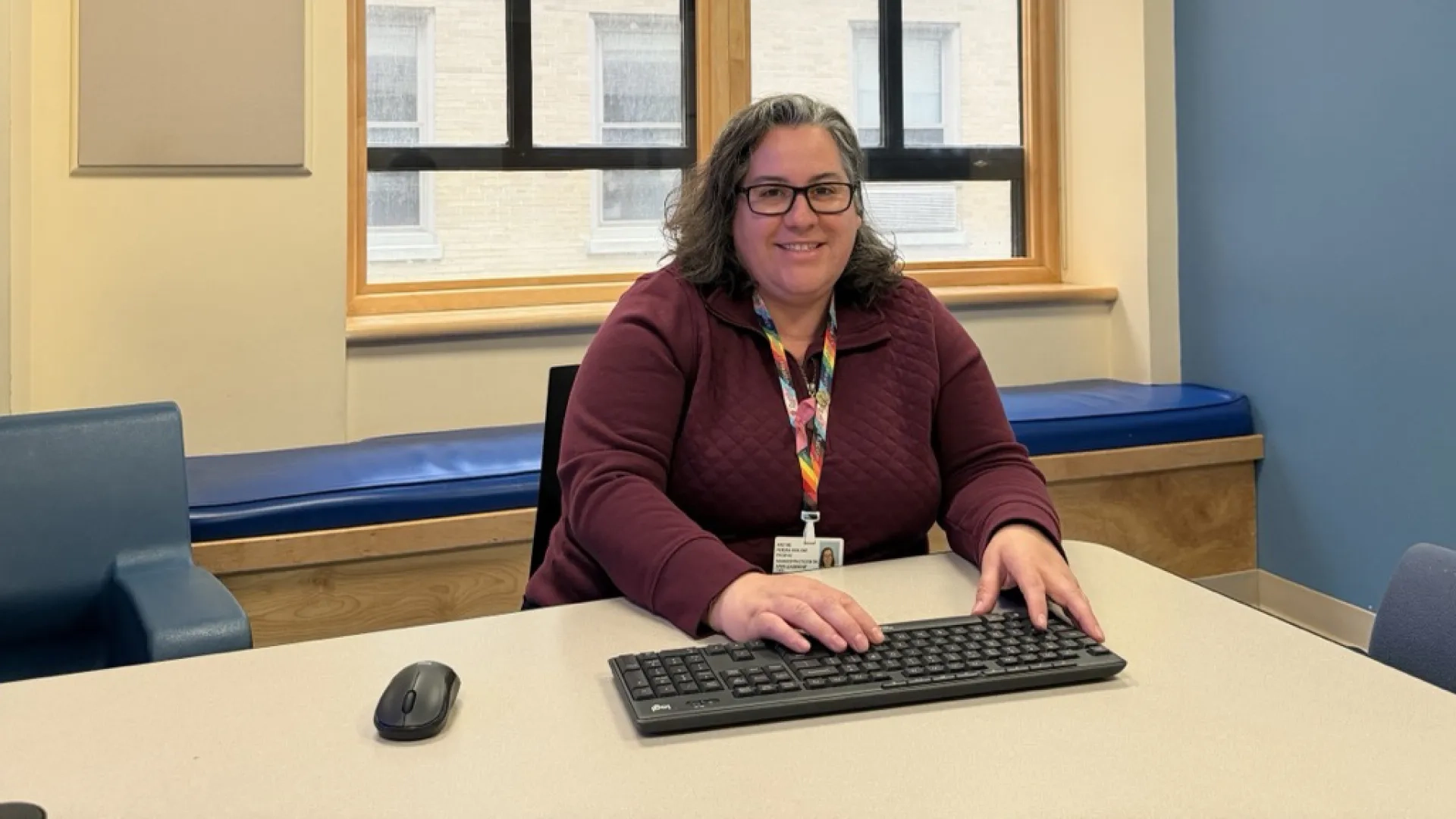


Kristine Pereira-View discovered her niche as a bridge for patients with both complex behavioral and medical challenges.
When Kristine Pereira-View (MSN ’05) was a student in the pediatric nursing track at the MGH Institute back in 2005, she thought she would focus on primary care. Instead, her experiences at the MGH Institute and early in her career led her to a niche she hopes will interest more NPs in the future: the intersection of pediatrics and behavioral health.
While she didn’t start out on her current path, she was able to experience several different clinical settings as an MGH Institute student. “That was helpful for me to see how an NP can be either independent in a clinic or school or working alongside an MD in something like a pediatric practice,” she explained.
During her time at the MGH Institute, she was an RN at Longwood Pediatrics, where she continued to work for more than a decade after completing her NP program. Then, she heard of an intriguing opportunity at Boston Children’s Hospital to be an NP on the inpatient psychiatric unit.
"It was a change and an opportunity, at the time, for me to be a nurse practitioner independently and do more,” said Pereira-View. “So, I thought, ‘I can't turn this down.’"
It proved to be a move that continues to inform her clinical and advocacy work today.
“Within that first year at Children’s, I really started to see how needed it was for people on the medical side to understand the interplay of psychiatry and medicine,” explained Pereira-View. “When I first started, I could see a clear stigma toward patients with behavioral health issues and how that affected their medical care. My passion has grown over the years as I’ve worked and seen that you can’t treat the psych and medical sides in silos, you need to treat them together and look at the whole person."
She has been at Children’s for 11 years and is currently Director of Advanced Practice Nursing for Psychiatry, Psychiatry Medicine and Emergency Services. She serves as one of 13 Advanced Practice Registered Nurse (APRN) directors overseeing over 700 nurse practitioners. She also practices clinically managing medical care for patients on the inpatient psych unit.
“I help manage medical care for kids with behavioral health needs. I think it's a very niche group of providers who do it, because there aren’t many of us that work in both fields,” shared Pereira-View. “It has really given me insight into how difficult it can be for patients who have both medical and behavioral comorbidities to access care. It's almost near impossible, to be honest, and so being able to provide a space or to be a person that can help with both of those aspects have really been rewarding,” she reflected.
During this time, she also received her Doctor of Nursing Practice (DNP) from Simmons University and earned her Pediatric Primary Care Mental Health Specialist (PMHS) credential.
In March, she joined the board of the Massachusetts Coalition of Nurse Practitioners (MCNP), a non-profit professional membership organization focused on the education of and advocacy for Massachusetts nurse practitioners, where she works with three other MGH Institute alumni. Her passion for advocacy was something Pereira-View can directly attribute to her time at the MGH Institute.
“My experience really pushed me to want to be a leader and do more. During my time as a student, I took a legislative class called Healthcare Policy, and I'll never forget that. For the semester, we had to do mock presentations as though we were advocates presenting to the state. I had never done something like that before. Going through the steps and learning the process were instrumental in helping me feel, ‘wow, I can do this.’ It gave me confidence, and I think that class is where I realized I can be an advocate, get up there, and say we need to do more.”
Pereira-View hopes to highlight her dual lens expertise to the MCNP board: "My goal is to support the nurse practitioners in the state, but also to have a focus on supporting our patients with behavioral health needs. As a director, I will try to see how I can be an advocate for that population and bring my experience to the table.”
Through both her advocacy and clinical work, she hopes more providers will specialize in this niche in the future. “I am looking forward to the future of building a cohort of NPs who are trained in the medical side but also have a subspecialty in behavioral health and can be the bridge of managing a very complex patient population, she stated. “We need intermediaries that are looking at the whole patient and coordinating care, ensuring that their needs are met from both perspectives.”