

On Coordinating Care for Children with Special Healthcare Needs
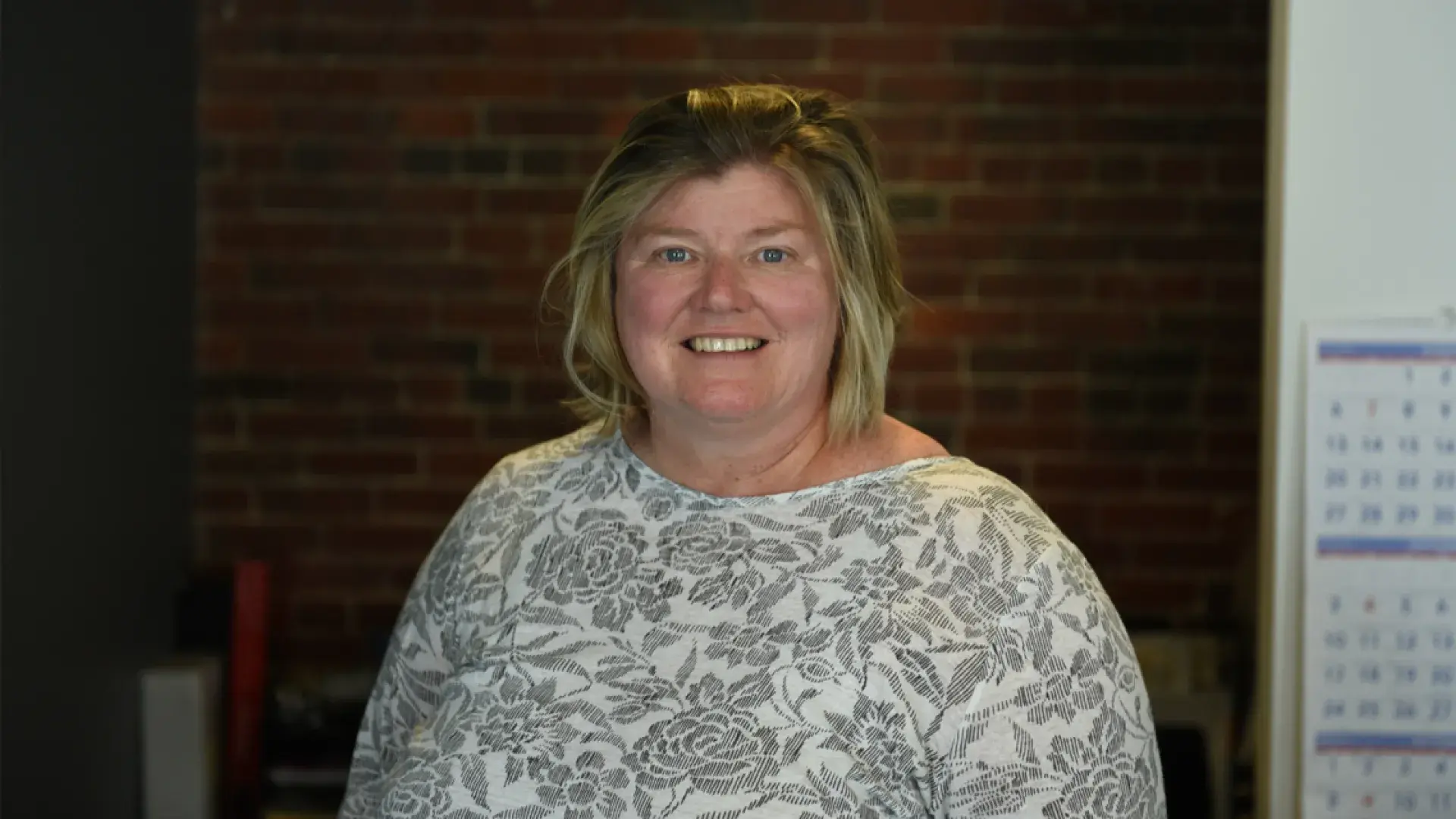


Dr. Mary Beth Coughlin teaches her students that well-child visits are simply the tip of the iceberg when providing pediatric primary care.
Dr. Mary Beth Coughlin knows that her nurse practitioner students will take on a variety of roles as pediatric primary care providers. Among those many roles, is the crucial job of coordinating care for their patients with special healthcare needs.
Often called “complex care,” the role of coordinating care for children with chronic illnesses and disabilities can been an asterisk at the end of pediatric nurse practitioner preparation that most often focuses on the well child and management of common acute illnesses. A new course, Primary Care of the Child with Special Healthcare Needs, focuses on how PNPs can coordinate the myriad of care needed to treat the growing number of children with chronic illnesses and disabilities.
“Most children with special healthcare needs see a variety of specialists to manage those needs,” says Coughlin, an assistant professor of nursing who co-teaches the course with Professor Jennifer Durning, a part-time faculty member in the school of nursing. “Someone needs to ensure that everyone is communicating with each other and organizing the child’s care, so it doesn’t all fall on the family.”
Coughlin and Durning teach their students to provide care via the family-centered medical home model of primary care. According to the Centers for Disease Control and Prevention, the medical home model encourages a coordinated, team-based approach that provides integrated care across a variety of specialists and disciplines. The major focus is on partnering with families in delivering care. “Our job as their primary care provider is to help the family manage how that disease or illness impacts their child’s overall health as well as their growth and development,” she says.
The IHP’s advanced practice nursing programs’ core courses are broken up into three parts. Parts one and two cover the care and development of the well child as well as common childhood illnesses and events like the common cold, influenza, and broken bones. It is this third part, the course that students take right before graduating and becoming providers, that Coughlin and Durning have revamped.
"The literature suggests that schools are lacking in preparing pediatric providers to manage children with medical complexity in the primary care setting. ,” she says. Our course answers that call.
“We know that every day our students will be asked to be innovative in the care that they provide their patients,” she adds. “Part of preparing them to be independent providers, is ensuring that we as educators are teaching in an innovative way.”
While patients with special healthcare needs typically only account for a fraction of a nurse practitioner’s caseload, their needs are often greater and more complex than other patients which leads to a bigger time commitment and requires additional attention. To meet those needs, Coughlin encourages her students think about a possible wider range of options when working with them.
“Do they need different or more vaccines?” she asks. “Could you refer them to additional therapy like physical, occupational, or speech therapy that might be helpful?”
Coughlin and Durning teach their students to create a “home” for all these different therapies and specialists.
The National Survey of Children’s Health found that less than 50% of families with children who have special healthcare needs report feeling like their primary care provider provides adequate coordination for their child’s healthcare needs.
“We want that number to be 100%,” says Coughlin, “But we also must acknowledge and prepare for the fact that each year, the children we see are less and less healthy.”
The cause of that is two-fold, she says. On the one hand, thanks to advances in research and technology, children with special healthcare needs are spending less time in the hospital or at a specialist’s office. Their care, often still complex, is then coordinated by their primary care provider. On the other hand, there are more children developing chronic illnesses previously only seen in the adult population thanks to things like the obesity epidemic.
“I teach managing high blood pressure and high cholesterol in children,” says Coughlin. “That was not a part of the curriculum that I learned while training to be a pediatric provider almost 30 years ago.” Coughlin also teaches her students how to manage chronic conditions like ADHD, and anxiety and depression, things that, ten years ago might have required a trip to a pediatric neurologist or psychiatrist.
Some of this shift is another by product of the COVID-19 pandemic. Early on, Massachusetts Governor Charlie Baker passed an emergency order allowing nurse practitioners to function as fully independent providers, alleviating the need for physician oversight.
“Nurse practitioners today have more responsibility than ever before,” says Coughlin. “As a result, we as educators have an even greater responsibility to ensure that our students are well-prepared to provide that level of care.”