

Changing the Rehabilitation Model in the Country of Georgia
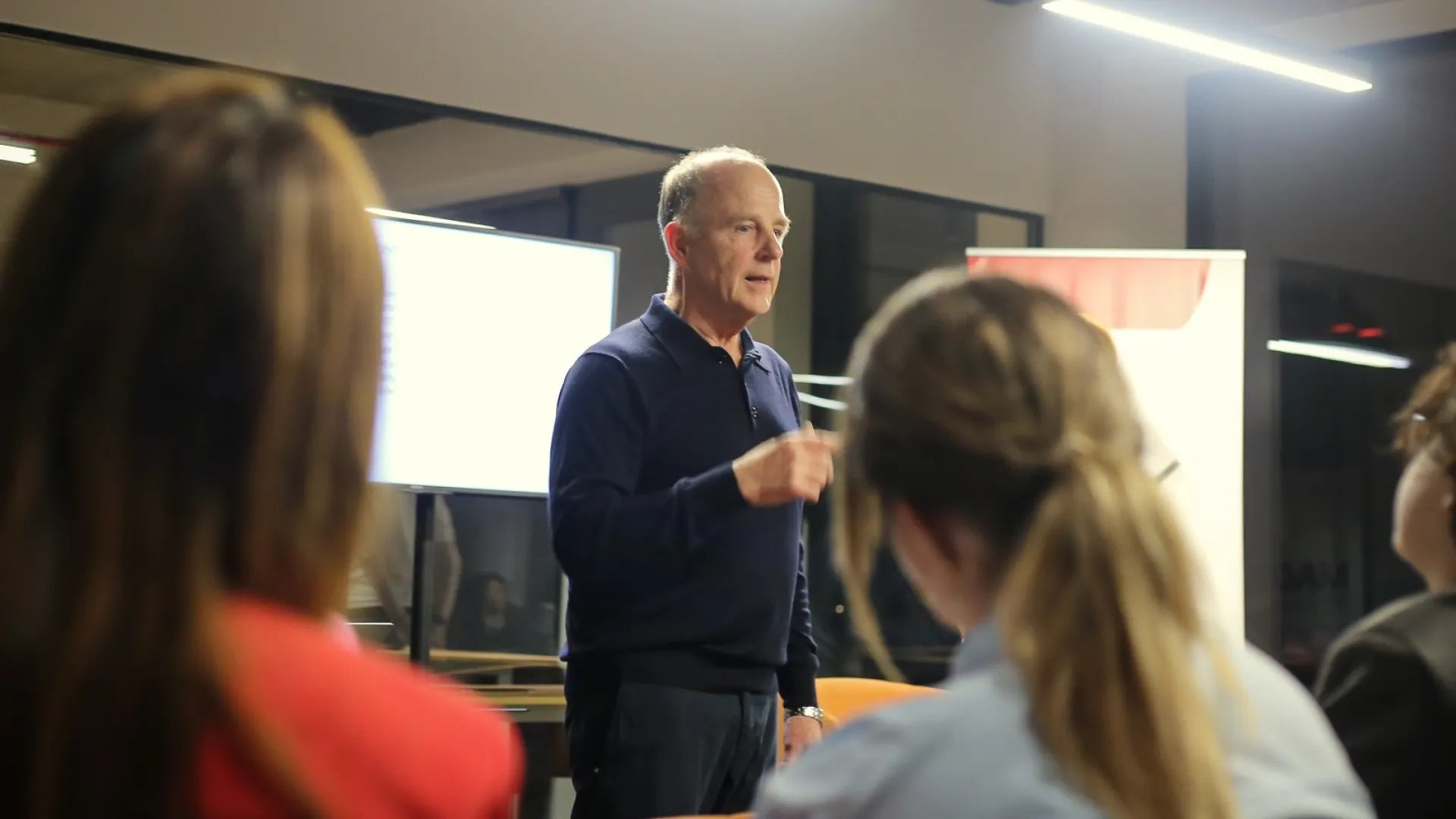


MGH Institute’s Tom Hallahan completes needs assessment during Fulbright Specialist trip
In the Eurasian country of Georgia, it’s the children who get the bulk of the money and attention when it comes to rehabilitation. Because of Georgia’s restrictive healthcare policy, if an adult suffers a stroke or brain injury, there are no rehabilitative services offered.
The MGH Institute’s Tom Hallahan is hoping to help change that. The veteran policymaker just returned from Georgia where he served as a Fulbright Specialist, helping reshape how rehabilitation services are delivered.
“The rehabilitation model within Georgia is disability-based, and focused on children,” said Hallahan. “There is no focus on adults, particularly around rehabilitation - post-stroke, trauma, neurodegenerative - and that's what we’re trying to change. Because if you don't change healthcare policy, and if there's no money behind the services, then only those with financial means will get the services.”
Hallahan worked closely with the NGO McLain Association for Children (MAC), which serves children with disabilities but wants to launch programs for adults, especially those who are neurodegenerative or post-stroke.
“Part of MAC Georgia's desire is not just to influence the government and its policies, but they also would like to start their own quality clinic, offering rehabilitative services,” Hallahan explained.
During his 41 days in Georgia, the maximum time for a Fulbright Specialist, Hallahan completed a needs assessment through MAC Georgia, working with large clinics and hospitals, as well as private practitioners. The NGO will now make recommendations to the Georgian government based on the findings.
While many effects of Hallahan’s visit will be seen long-term or will require more action from the MAC Georgia, he was able to accomplish something substantial during the visit: connecting with the World Health Organization (WHO) to begin developing hearing and vision screenings in Georgian schools using iPads and apps. The goals of Hallahan and the WHO aligned well for this project, which is expected to continue for the next two years.
"It is happening right now because so much of hearing screenings can be done on iPads now, with apps that are available,” marveled Hallahan. “That was a quick win of my time in Georgia.”
Hallahan boasts an extremely impressive list of international projects, having previously worked and/or consulted in the countries of Cambodia, Iraq, Jordan, Kuwait, Lebanon, Qatar, and South Africa. Back in 2012, he received a Fulbright Scholar Award to the University of Jordan.
Because of Hallahan’s background, it was important for him to meet with professional associations within physical therapy (PT), occupational therapy (OT), and speech therapy (ST). He met with practitioners, large clinics, hospitals, as well as private practitioners. It was also important for him to connect with the Deaf community while in-country.
“That’s how policy changes,” noted Hallahan. “It’s typically through these professional membership groups that create advocacy based on best practices or the standard they would like to see the government aspire to and fund.”
The Fulbright Specialist Program sends over 400 U.S. citizens who share expertise with host institutions abroad each year. Serving as an adjunct assistant professor in the Health Sciences Online Prerequisites Program for the MGH Institute, Hallahan has worked in numerous audiology positions as an academic and clinician. Much of his work now is focused on inclusive education, education policy, and social justice.
“I was a clinician for over thirty years, and now my work over the last 15 years has been policy and advocacy. I'll continue to do that advocacy work, locally and with the MGH Institute,” he said.
Hallahan hopes to visit Georgia again this year and says a long-term goal is to establish a connection between MAC Georgia and the MGH Institute.
"We are looking at what we can do to either have Georgians come to the Institute and/or have faculty and staff do things in connection with Georgia, either virtually or in-country,” said a hopeful Hallahan. “MAC Georgia has a strong interest of sending students to the MGH Institute in the fields of occupational therapy, physical therapy, and speech-language pathology. This would be such a great partnership to make real changes and impact people's lives.”