Celebrating Careers, Community, and Lasting Impact
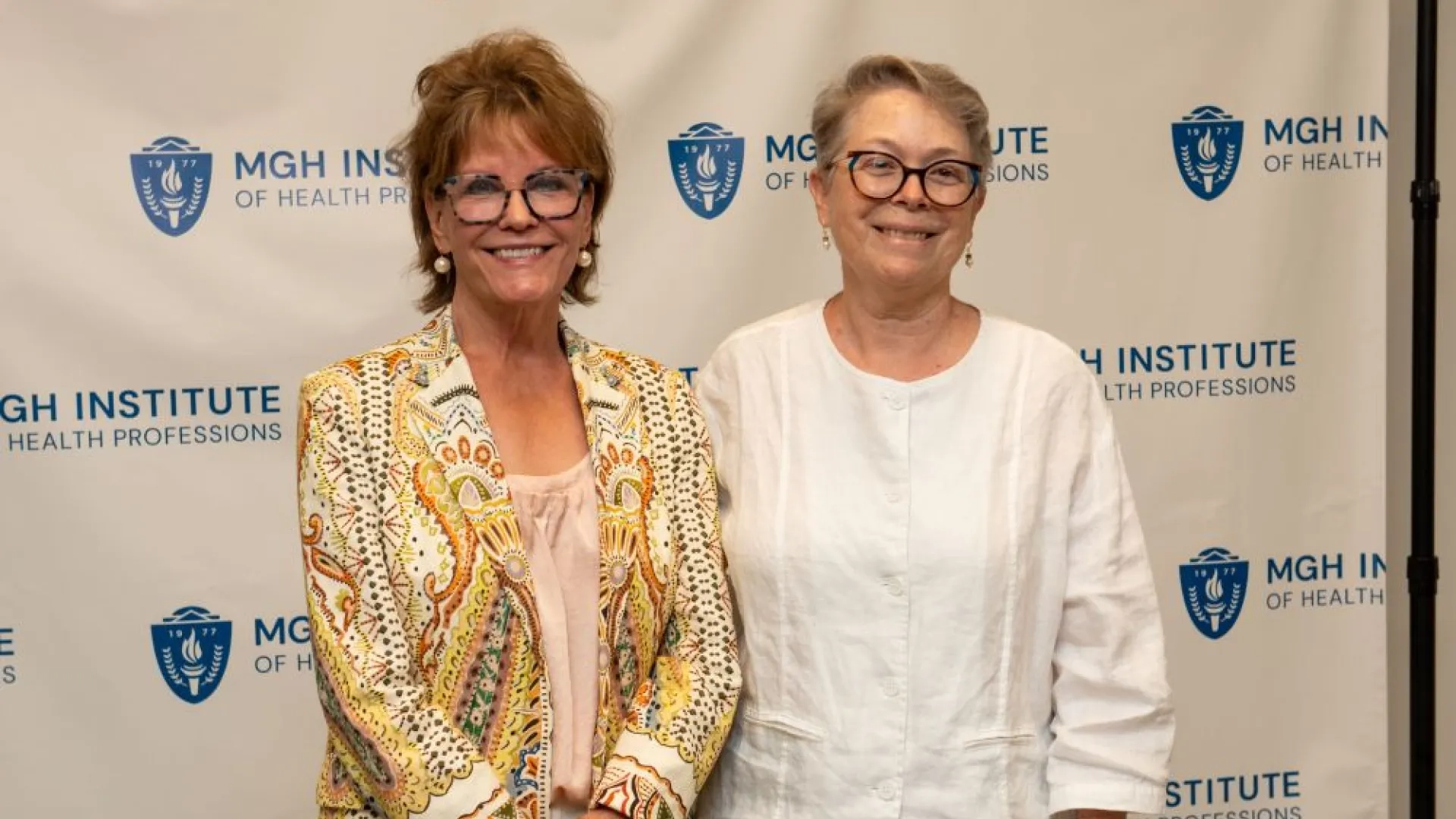


The careers and global achievements of two School of Nursing faculty members were honored on Tuesday during the MGH Institute's Retirement party, held at 1 CW, where colleagues, spouses, and friends from throughout the Institute came to celebrate nursing professor Elissa Ladd and assistant professor Antonia Makosky. Along with laughs and shared memories was a love-at-first-sight story and the bonds they built along the way.
School of Nursing Dean Maura Abbott, Assistant Dean of Nursing Kathryn Hall, and Provost Reamer Bushardt offered tributes to the retirees' lasting influence on the nursing profession, on campus, and beyond.
"Together, Antonia and Elissa represent the very best of academic nursing and the very best of the School of Nursing," said Abbott. "Your impact will continue long after today through the thousands of nurses' careers you've helped shape."
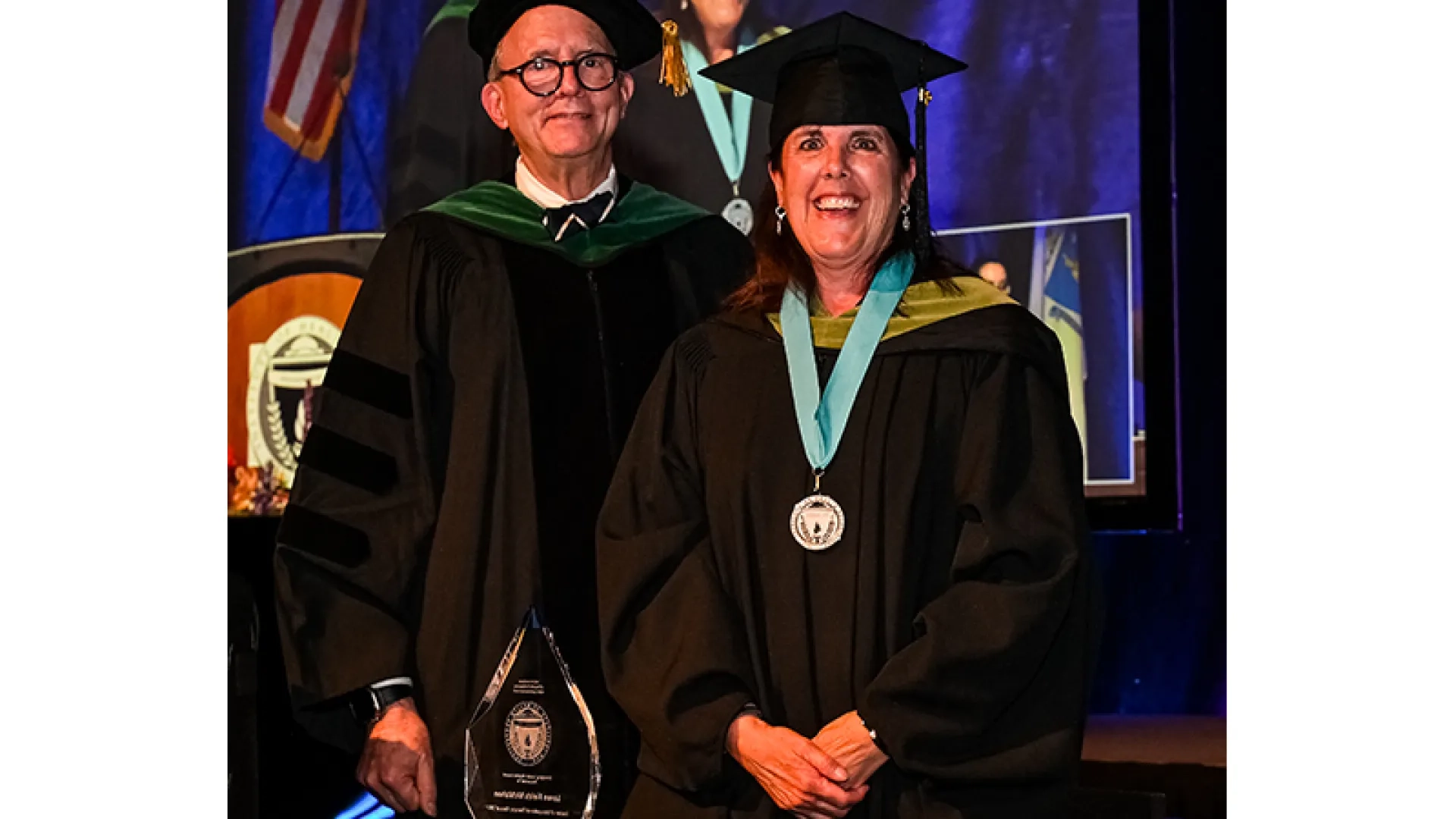
Assistant Professor of Communication Sciences and Disorders Mary Riotte is also retiring. She was unable to attend Tuesday's ceremony but was recognized during this year's Commencement.
Dr. Antonia Makosky
Over the course of her tenure at the Institute, Antonia Makosky became a cornerstone of the Adult Gerontology Primary Care Nurse Practitioner (AGPC) program and a guiding light for generations of students, who knew her for her patience, practicality, and calming presence.
"Every decision you made began with the same question: what's best for the student?" said Hall, who co-led the AGPC and Women's Health track alongside Makosky for many years. "She was the person who could help untangle a very complicated problem, reassure an anxious student, and keep everyone moving forward."
A continuous theme in Makosky's career was generosity. Colleagues reflected on her willingness to lend a hand, her unwavering sense of purpose amid the logical complexities of nursing education, and her persistence in the face of the ever-present challenges of securing clinical placements.
In her remarks, Makosky noted that this generosity was the driving force behind her journey at the Institute — one that began 32 years ago when she enrolled as a student. She joked that classrooms and offices were located at 101 Merrimac Street at the time, and "e-mail wasn't even invented yet."
As the audience shared a laugh, she expressed immense gratitude to her family, longtime partner, and colleagues who stood by her through the hardest stretches of her career — across varied healthcare settings, from the Peace Corps to hospice care, homeless shelters, and long-term care group homes. But she was open that this superwoman adventure wasn't always easy, particularly when she contracted Guillain-Barré Syndrome during COVID.
During that time, she spent months as a patient at Faulkner Hospital, the Brigham, and Spaulding Rehabilitation Hospital in Charlestown — the very institution where many of her own students trained.
In the most challenging moments, she took this away: "It certainly taught me that not only are we a team, we are a family."
Dr. Elissa Ladd
Ladd began her love story with the Institute in June 2004. She recalls a daylong interview in the Shouse building, followed by a moment of wandering through the Navy Yard. Unfamiliar with the area, she felt drawn to explore on such a gorgeous day.
Ladd found herself on the cobblestones of Second Avenue thinking, "Oh my gosh, this place is so cool, I think I'm in love." She went on to spend 22 years at the Institute.
Throughout those years, Ladd built her career as a family nurse practitioner, educator, researcher, and global health advocate. Though her love for the Navy Yard was clear, her work took her far beyond the harborside campus. Some of her fondest memories date back to the first time she brought a group of IHP students to India for a month, stemming from research she conducted at Manipal University on a Fulbright scholarship awarded in 2012.
That international work was only part of the picture. One of her most memorable roles was with the Indian Health Service on the Navajo Reservation, where working alongside nurses, physicians, and local medicine men led to a lasting revelation: "I came to understand the deep impact that belief and hope can have on patient outcomes," Ladd noted.
Her work in underserved communities locally and abroad fueled a passion for health policy, which she brought to faculty governance with what Provost Bushardt described as an admirably uncommon seriousness of purpose.
"She never settled for simple answers or quick brush-off answers and was always willing to dig deeper to understand the facts, the context, and the implications of a decision," said Hall. "Sometimes we didn't really get to the root cause of things until you asked those thought-provoking questions."
"I know this is a lot about the School of Nursing, and you have been anchors and pillars, but you have also each contributed to the interprofessional mission — you've touched many spaces beyond, " Bushardt said. "When we have two phenomenal people like you who live character-driven lives, who teach by example, people feel it, and they see it."
Both Ladd and Makosky were offered a gift donation to a nonprofit of their choosing — an Institute tradition — and a "forever invitation" to return.
Mary Riotte
Riotte joined the Institute in 2004 as a Clinical Instructor and has developed and taught courses on pediatric feeding and swallowing disorders in the Department of Communication Sciences and Disorders since 2008. She dedicated her career to providing clinical education to graduate students within the Speech, Language, and Literacy Center.
"I retire deeply grateful for the privilege of learning alongside students as they grew into compassionate, capable clinicians," said Riotte. "Witnessing their progress has been the greatest reward of my career, enriched by the friendships formed with such dedicated and knowledgeable faculty."