

Cardiothoracic Resident Hopes MSDA Program Can Help Advance Surgery and Lung Cancer Profession
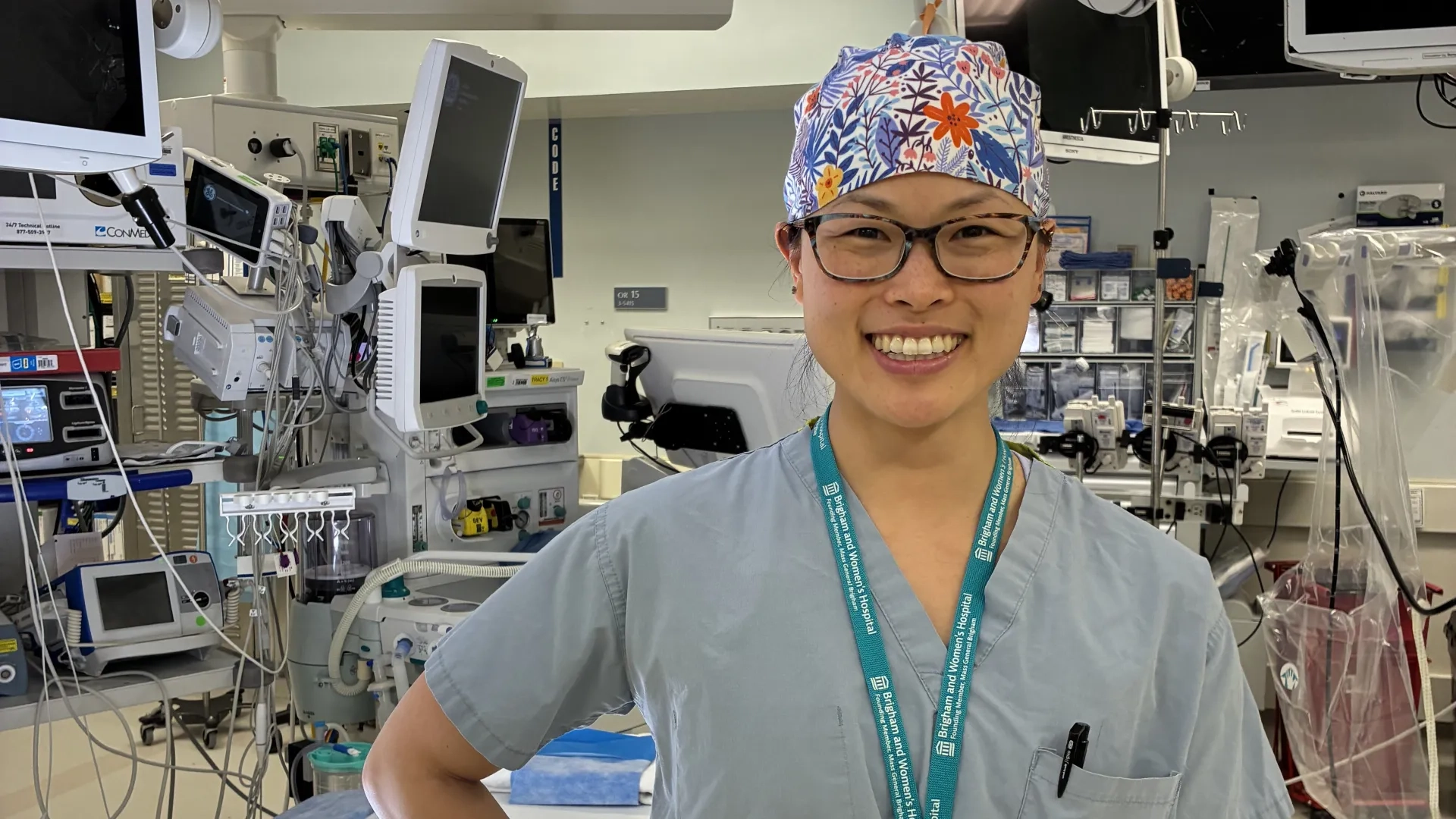


Vivian Wang of Brigham and Women’s Hospital says data analytics can lead to unchartered areas and insights
Dr. Vivian Wang is a cardiothoracic surgery resident who wants to make surgical education and lung cancer treatment more data driven. And she’s turning to the MGH Institute of Health Professions to help her get there.
“Surgeons in particular are a very skeptical group of people,” said Wang, who’s also interested in lung cancer along with surgical education. “Data is the only way to change their mind. Specifically, good data. They're very skeptical about study design and analytic methods.”
The resident at Brigham and Women’s Hospital is learning all about study design and analytical methods in the MGH Institute’s Masters of Healthcare Data Analytics program, which has provided new insight on how information can drive decisions.
“I'm only halfway through the MSDA Program, and I already feel like I have a completely different perspective on how to approach and understand data,” marveled Wang. “I think the most important thing is understanding machine learning at a different level because I don’t think our field is up to speed.”
Wang has been immersing herself in projects to close that gap, including one that uses motion tracking and neural networks to help surgeons improve their technique.
Wang says her project work has made her much better bridge between our analytic part of the team and the bigger picture thinkers. “I've already seen an enormous impact from the MSDA program.”
She’s also collaborating with program director Shuhan He, whom she considers “brilliant” and incredibly supportive.
“We’re working on some new projects together that are on the cutting edge of machine learning in a way that really hasn't been done much in cardiothoracic surgery,” noted Wang. “While oncology tends to pioneer this space, but I think from the surgical perspective, there's a lot of uncharted territory where we can gain a lot of insights we couldn't before in our particular field.”
The MSDA’s online format and compressed timeline made it possible within the constraints of her residency training. Wang is in the midst of a six-year integrated cardiothoracic surgery program but has a research fellowship that opened a window to pursue a data analytics degree.
“I was already one year into my two-year research fellowship, so I really didn't have time to do a two-year program,” said Wang. “The MGH Institute program allowed me to condense everything into a year and achieve the goals that I wanted, and it really fit what I was looking for.”
Wang is looking to make her mark not just in cardiothoracic surgery and lung cancer, but in how those fields can be influenced with data analysis.
“We still do a lot of things anecdotally, but if there's strong evidence, with good study design, which shows that an alternative approach would be better for this patient or that patient, I think that could actually change a surgeon’s clinical management,” said a hopeful Wang. “We're personalizing medicine in a way that we never did before, particularly in cancer care, where we're developing new treatment-based algorithms based on molecular signatures. Technology has allowed us to see so much more than we were before. The question is how to process all that data and how to use it to treat patients.”
Wang says because there aren't a lot of surgeons who do machine learning and data analytics, the new degree will allow her to create a niche.
“I came in thinking I was just going to learn how to code, but it's actually a much more comprehensive, holistic teaching that you get because there's a lot of emphasis how you use analytics properly,” concluded Wang. “These AI experts are missing a lot of the foundational groundwork. You can use all the shiny tools and analytics, but one of the things that I've learned is I've really developed a good foundation that helps actually make those analytic techniques more reliable and more useful.
“I feel the MSDA program has created so much more opportunity for me in my career than I expected.”