

Bringing Vision and Drive to Oncology Care
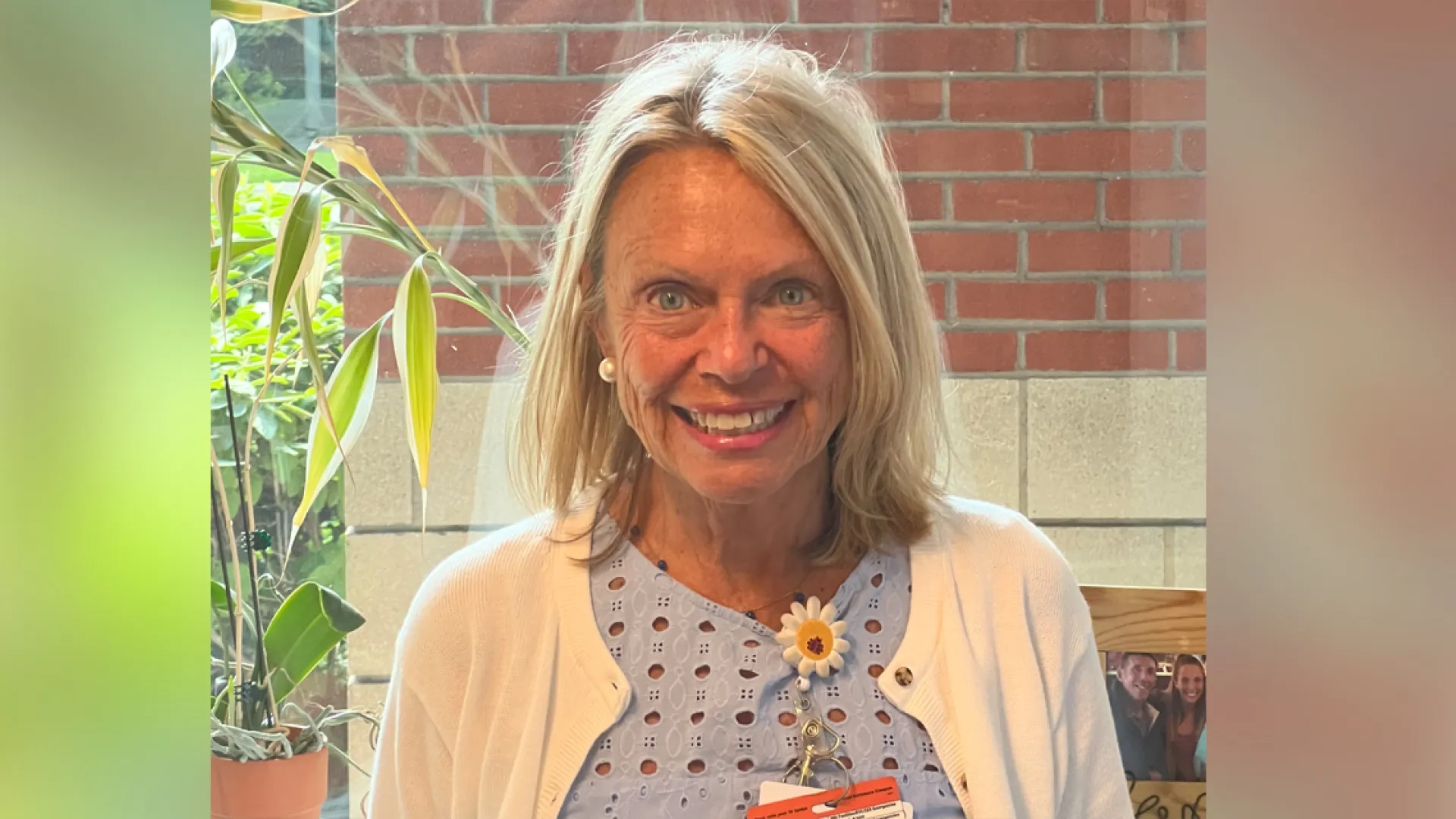


Donna Berizzi combines experience, knowledge, and a passion for helping oncology patients
Donna Berizzi is a nurse leader who has known what she wanted from the beginning of her career. As a result of her vision and drive, combined with her experience and Doctor of Nursing Practice (DNP) degree from the MGH Institute, she is now the first Associate Chief Nursing Officer for the oncology service line at Johns Hopkins Medicine, where she is involved in instituting important new programs for cancer patients.
Berizzi’s career started as a surgical ICU and critical care nurse, where she loved the sense of urgency and ability to connect with people at their most vulnerable. Her focus turned to oncology when she returned to full-time work after stepping back to have her children.
“I love the connection you build with a clinically complex patient, the ability to really know that I am going to be with this patient and their family for the trajectory of their disease,” said Berizzi. “I also love that the work is so steeped in science and research. I’ve got to be on my toes, and I've got to be ready to pivot because things change very rapidly in the oncology world.”
Berizzi also wasted no time moving into leadership roles from the very start of her career, serving as a nurse manager while still in her 20s.
“I very quickly was drawn to leadership roles. It's sort of in my DNA,” shared Berizzi. “I believe that foundation gave me the credibility both to make clinical decisions and to lead other nurses in making clinical decisions and critically thinking at a really high level.”
Advancing with the Help of the MGH Institute
Eventually, Berizzi could see that a doctoral degree would help her to reach her goals.
“Because I had so much real-life experience, I already knew where I was and where I wanted to be,” said Berizzi. “But the doctoral degree and specifically the degree at MGH Institute rounded out everything for me.”
The MGH Institute DNP program’s hybrid schedule gave her the flexibility she needed to maintain a busy full-time role and family life while earning her degree. She also really valued the on-campus and synchronous learning opportunities which gave her a chance to build relationships face-to-face.
“The weekly synchronous course was something I looked forward to,” said Berizzi. “It forced me to be present and engaged, which was very helpful because it was extremely busy at work, it was extremely busy at home, but that was my time.”
An important component of her success in achieving her degree at MGH Institute the support and relationships she built with her professors, her cohort of fellow students, and especially her advisor, Dr. Margie Sipe.
“She was my advisor, but more importantly she just got me. Never did she not support me, never did she not encourage me.”
Applying Lessons from the Classroom to Clinical Situations
As part of her thesis and final DNP project, Berizzi decided to tackle one of the greatest challenges in nursing: preventing patient falls. This issue is particularly pressing for oncology patients because a fall-related injury can derail their treatment plan — and ultimately their prognosis.
Berizzi drew on her experience and evidence-based research to create the Tailoring Interventions for Patient Safety (TIPS) program, which guides providers on how to work with patients to create a customized, visual fall prevention plan that is shared with, and has buy-in from the patient, their family/caregivers, and other providers. The program was so successful that Berizzi was able to introduce it at Johns Hopkins, where it’s still going strong.
She also took the lessons she learned in building TIPS to lead the creation of another very successful program at Johns Hopkins known as the Oncology Evaluation and Treatment Center (OETC). The Center offers specialized care 24/7 for oncology patients to help keep them out of the emergency room, where they could face heighted risk of infection in crowded waiting rooms, staff may not be able to triage them appropriately or recognize treatment-specific toxicities and complications and may be admitted unnecessarily.
“Emergency departments are wonderful for acute medical emergencies,” she said, “but they aren’t equipped to manage the nuances of oncology care. Our patients often don’t appear as ill as they are, and they can deteriorate quickly.”
Both TIPS and OETC have been presented at nursing conferences as model programs.
Berizzi says the lessons she learned at MGH Institute were important in helping her plan and implement these projects and think through issues like stakeholder buy-in, change process, and customizing for different roles.
“It makes you think not just in the moment, but for the big picture and what it looks like for the future. My DNP experience really gave me that fundamental approach to problem-solving and pivoting. You have to design and redesign your project at every step of the way.”
Because of her real-world experience, her passion for helping oncology patients, her leadership skills, and most of all her clear vision for her future, Berizzi was able to get the most out of her experience at MGH Institute and implement what she learned to continue going from strength to strength in her career.
“Working full-time, raising a family, and just life is a very challenging to balance with completing a DNP degree. And I don’t think I could’ve done it with the level of success that I feel like I received from that degree without people like Margie and others at MGH really guiding me along the way.”