

BRIEF: Physical Therapy Alumni Wrap up Black History Month with Panel Discussion on Workplace Experiences, Lessons Learned
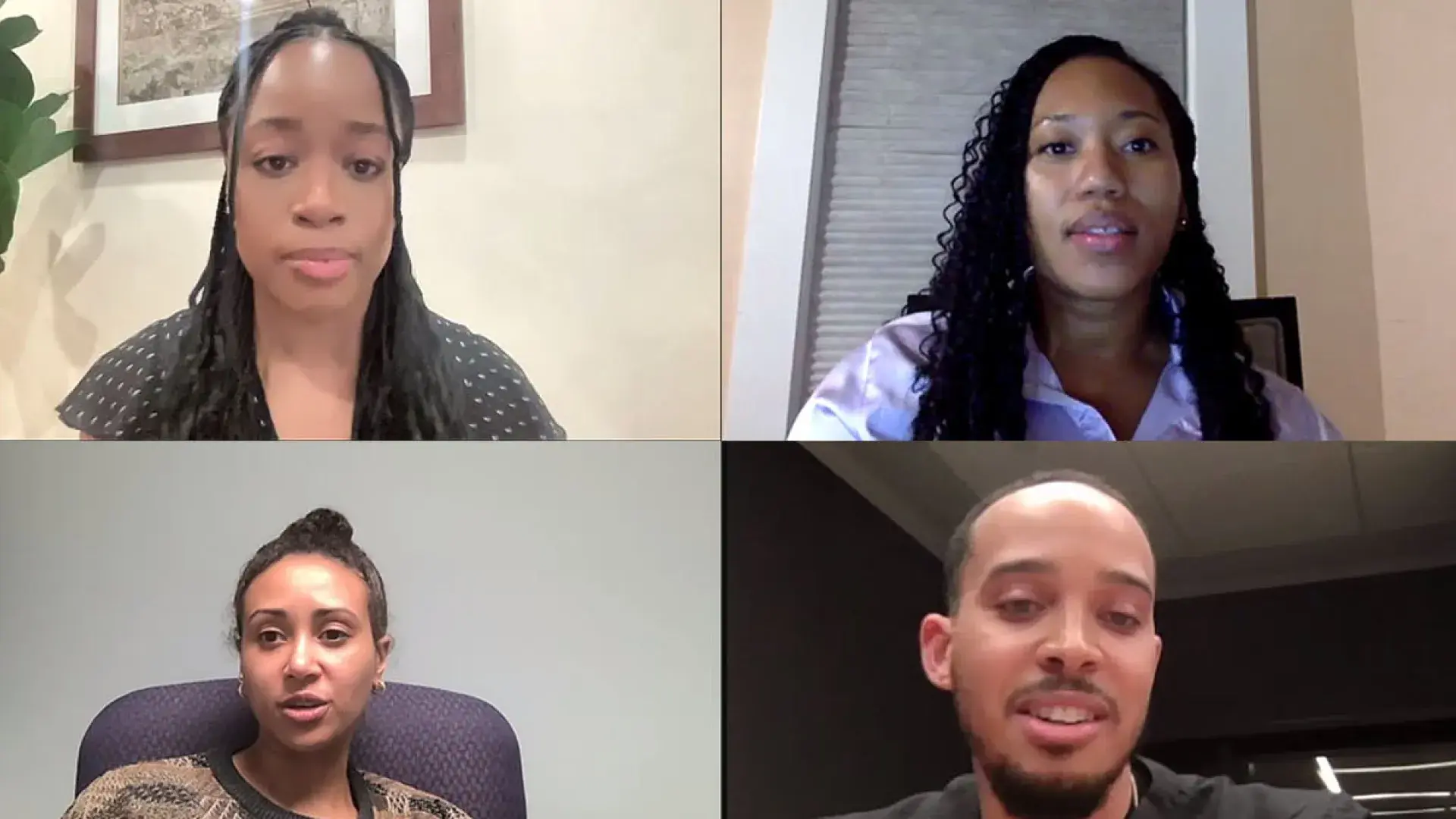


Ensuring equitable healthcare, speaking up, motivating others, advocating for patients of color, cultural nuances, mentorship, and utilizing one’s network — just some of the topics touched upon during last night’s conversation with Black physical therapists to coincide with Black History Month.
The hour-long conversation featured four MGH Institute DPT alumni: Fay Etienne, DPT ’21, Corey Green, DPT ’23, Kristen C. Portis, DPT ’18, and Briana Williams, DPT ’19. The panel spoke about their experiences and achievements as Black physical therapists and the importance of talking through uncomfortable moments.
“It helps to have been in similar circumstances,” said Williams. “It’s keeping the doors open to students and letting them know that it's OK to come and chat with me personally about anything that they're concerned about in the clinic or in within their own interpersonal interactions at school just having an outlet and someone to talk with. It mostly just lets them know that they're not crazy or wrong for feeling uncomfortable when these things happen. A lot of times microaggressions against people of color can feel small in the moment but when you're experiencing those multiple times a day every day, it might not be easy to turn to someone who isn't experiencing the same thing.”
Green, who works at Spaulding Rehabilitation Hospital in Charlestown talked of the importance of advocating for your patient and making them feel comfortable.
“Having conversations about culture and making them feel that they're wanted here, that they belong,” said Green. “This is important, especially when you can pass that education and those experiences on to your colleagues as well, especially if they have a challenging time connecting with the patient. It can be as easy as telling a patient what your favorite music is or what types of food you like to eat. It's about just sticking up for people that look like you, sharing those experiences and making them feel like they're human.”
Etienne touched upon the importance of patience, educating a patient, and investing time to overcome any mistrust someone may have.
“I think trying to extend the education that I'm providing and help these people feel more comfortable in the situation that they're in feels like my first responsibility as a Black therapist working in this environment,” noted Etienne. “Patience is another thing I try to move with, which we all do as therapists. You have somebody going through a situation that may be one of the worst experiences of their life. The amount of time that I spend with someone also feels like I'm doing my due diligence of trying to make this person feel like someone is spending more than just the kind of bare minimum. They feel like someone's connecting to them, and that’s important given the degree of mistrust that black and people of color can have within our medical system. It’s trying to make sure that this person feels like they have time to ask me questions.”
Last week, the Occupational Therapy Department had a similar alumni event. Helina Samson, OTD ’24, Saskia Darnley, OTD ’22, Hiba Hashim, OTD ’20, and Nikki Ephraim, OTD '17 shared their experiences, the importance of representation, and how the profession is evolving.