

BRIEF: Financial Aid Director Altsher Appears on State Panel Discussing Future Loans for Students
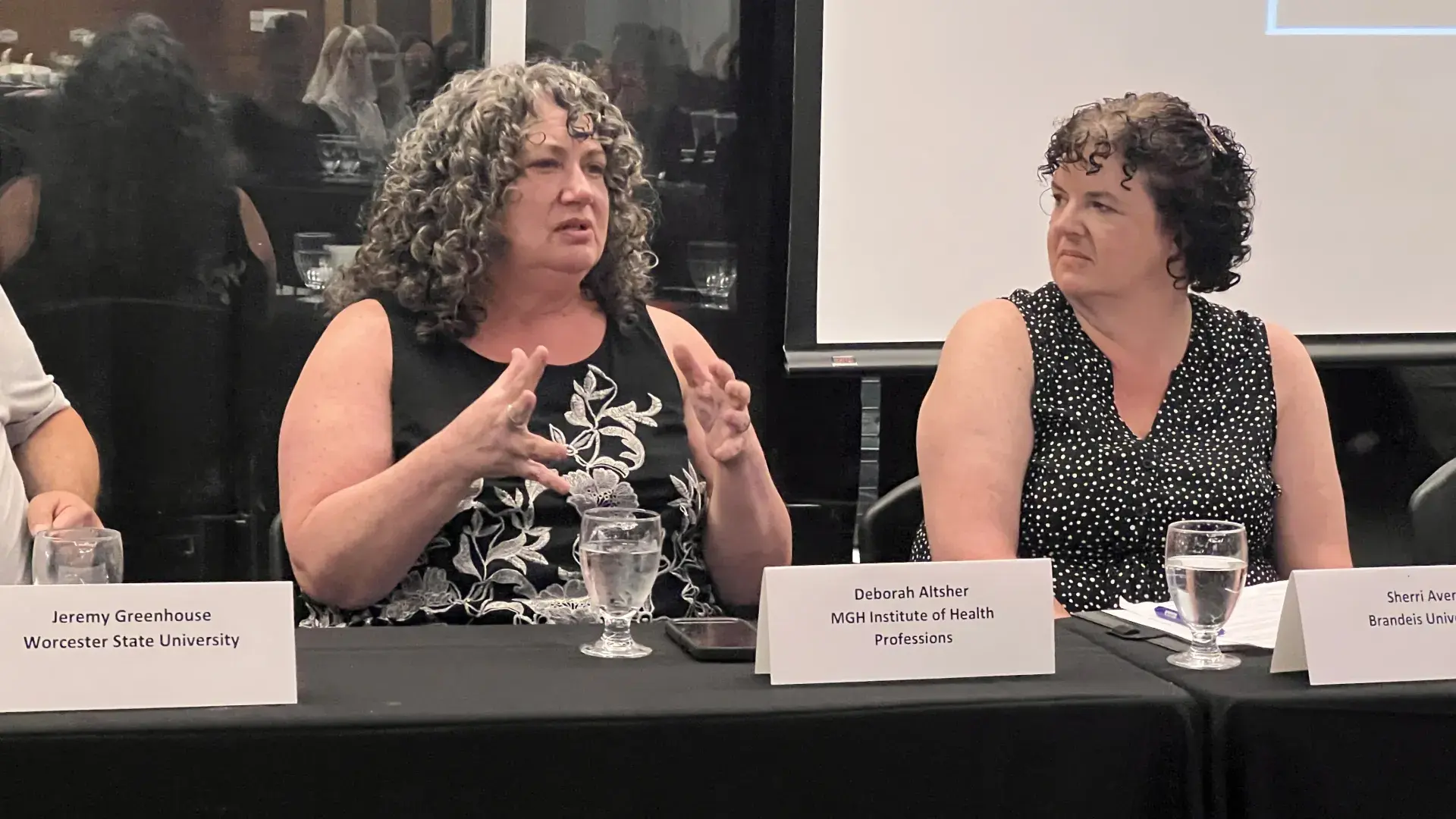


What will happen next after cuts to financial aid? What does the reconciliation bill before Congress mean for students? Those were just some of the questions posed before an expert panel Thursday that featured Deborah Altsher, Director of Financial Aid for the MGH Institute of Health Professions.
Sponsored by the Massachusetts Association of Student Financial Aid Administrators (MASFAA), the panel discussion focused on the reconciliation bill, and implications for students, particularly student loans. Four sectors were represented: private undergraduate institutions, public undergraduate institutions, community colleges, and graduate and professional schools, which Altsher represented.
“I was honored to be chosen among my peers at MASFAA to speak about the reconciliation bill and its impact on all students’ ability to access and afford higher education,” said Altsher, who joined the Institute in 2017. “This is a critical moment, as this bill is more than just policy; it’s about real students, real futures, and our responsibility to ensure they’re not left behind. This affects us all.”
Altsher and her fellow panelists spoke about how, what, who, and when they are preparing for the ever-changing financial air landscape. Among the most significant developments is the proposed elimination of the Graduate PLUS loan, which can help students pay for education expenses not covered by other financial aid.
“Removing access to the Grad PLUS loan for graduate students will only worsen the shortage of healthcare providers, teachers, and other essential professionals across the country,” noted Altsher, who has more than 34 years of financial aid experience. “Accessibility remains a major concern, especially for students who will be forced to rely on private loans.”
Altsher is currently meeting with private lenders to advocate for better access, affordability, and repayment options.