

Annual Caldwell Lecture Focuses on Climate Health and Interprofessional Advocacy
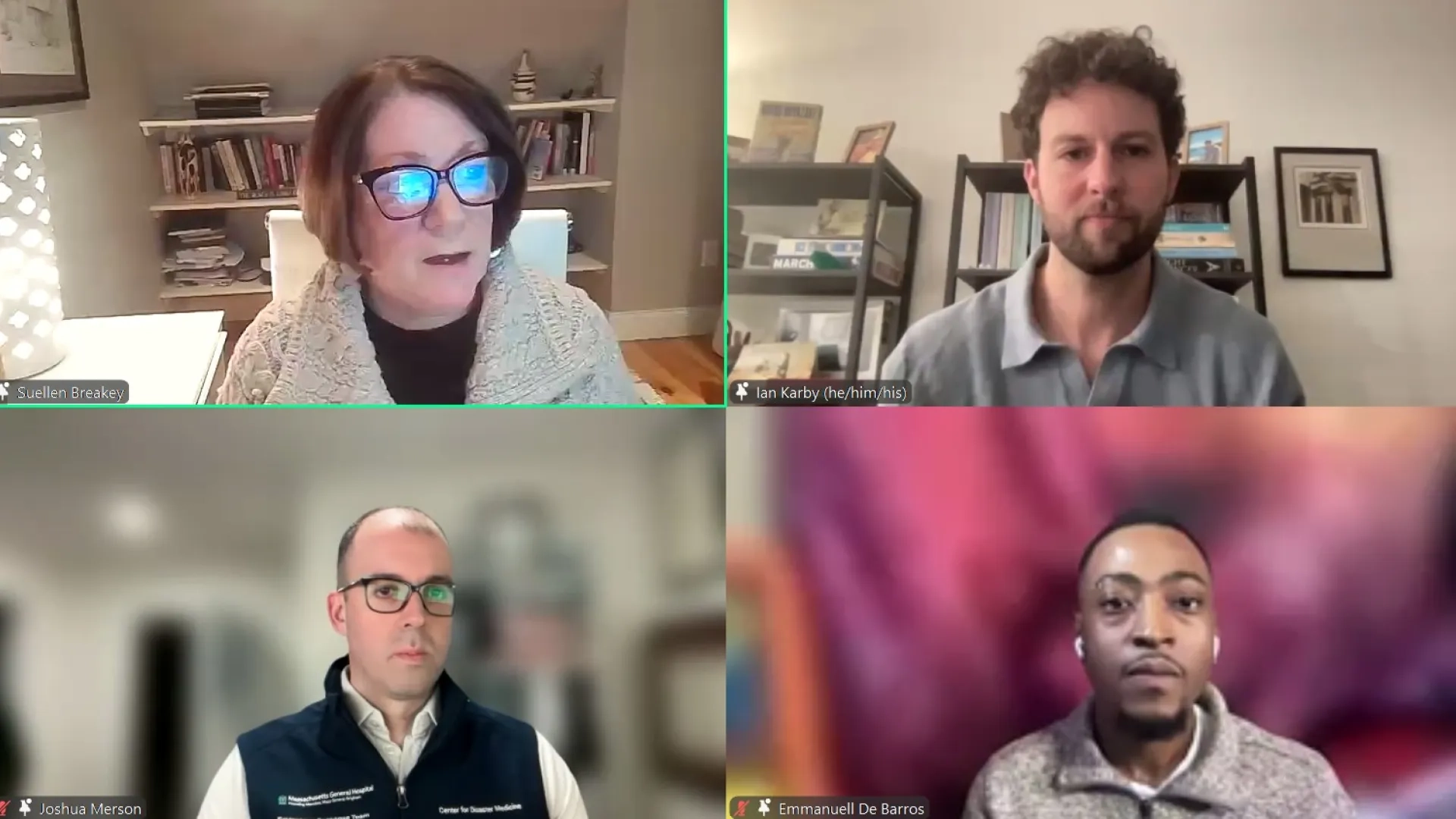


Students, faculty, alumni, and community leaders came together virtually at the annual Ann W. Caldwell President’s Lecture and Interprofessional Rounds to examine the growing intersection of climate change, health, and equity. This year’s program, Climate Health: Exploring Stories of Impact and Advocacy Through an Interprofessional Lens, highlighted how environmental change shapes health outcomes and how interprofessional collaboration can advance advocacy and justice.
“I think back on the patients I cared for in the community and recognize the profound impact the environment had on their health,” said President Emerita Paula Milone-Nuzzo, as she opened the event named for Ann W. Caldwell, the Institute’s fourth president, whose leadership helped establish the Institute’s strong academic and community-centered foundation.“Today, because of climate change, those realities are even more precarious.”
The panel was moderated by Suellen Breakey, associate professor in Nursing and director of the Center for Climate Change and Health Equity, who framed climate change as a critical health and equity issue.
“Climate change is not only an environmental issue, it is a health equity issue,” Breakey said, “and it requires interprofessional, community-centered solutions.”
Breakey also underscored the growing evidence linking access to green and blue spaces to improved health outcomes.
“Green and blue spaces are not just good for the planet; they are essential for physical, mental, and community health.”
Throughout the discussion, panelists and moderators challenged students and future health professionals to engage in advocacy, educate patients and communities, and collaborate across disciplines to address climate-related health challenges. The lecture reinforced the Institute’s commitment to preparing graduates to lead with equity, resilience, and interprofessional collaboration
Panelist Ian Karby, senior advisor to the Coalition for a Resilient and Inclusive Waterfront and an MGH Institute DPT alum, shared how his work connects healthcare training to environmental justice and community wellness.
“You can do a lot of different things with your healthcare degree,” Karby told students. “The skills you’re learning, communication, education, understanding people, translate directly into community and population-level impact.”
He also highlighted inequities in access to beneficial outdoor spaces.
“If people aren’t able to access spaces that we know are beneficial to health, that inequity becomes a health issue itself.”
Joshua Merson, associate clinical professor and director of Extreme Medicine at Northeastern University, brought a disaster preparedness and workforce mental health perspective, drawing on recent climate-related disaster response experiences.
“This isn’t a once-every-ten-years disaster response anymore,” Merson said. “Climate change is becoming part of our everyday healthcare reality.”
Merson encouraged students to see advocacy as a core professional responsibility.
“Advocacy isn’t lobbying, it’s telling your story, contacting your legislators, and using your voice as a healthcare professional to create lasting change.”
Community advocacy and environmental justice were central themes in remarks from Emmanuel De Barros, director of Development and Community Engagement at Alternatives for Community and Environment (ACE).
“Environmental justice is about community power and bringing people together, using data and lived experience, and turning that into policy change,” De Barros explained.
He also emphasized the compounding inequities faced by many communities.
“Many of the communities most impacted by climate and environmental harm are also the ones with the fewest healthcare resources.”